Follow Us on Google Discover
- From a single vision in 2013 to a growing multidisciplinary healthcare platform, Grandville Medical Group reflects on 13 years of expansion, innovation, trauma care development, and the future of healthcare delivery in Nigeria.
Nigeria’s healthcare sector continues to face enormous gaps in specialised care, emergency response systems, diagnostics, manpower retention, and healthcare infrastructure. Yet within these challenges lies an emerging generation of indigenous healthcare institutions attempting to redefine healthcare delivery through innovation, resilience, and long-term systems thinking.
One of such institutions is Grandville Medical Group.
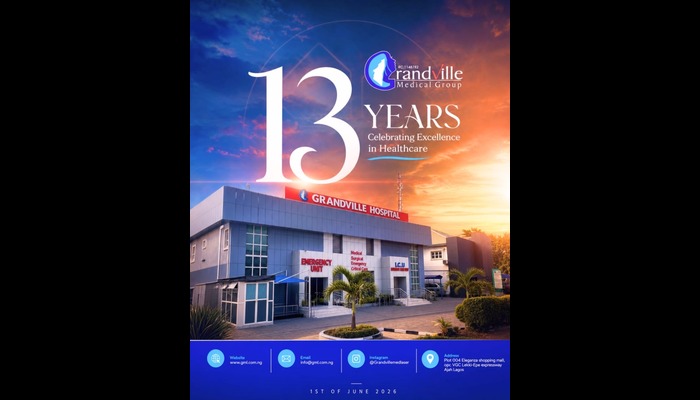
As the organisation marks its 13th anniversary, Grandville Medical Group reflects not only on its journey but also on the evolving realities of healthcare entrepreneurship and infrastructure development in Nigeria.
Founded on June 1st, 2013, by Plastic and Reconstructive Surgeon, Dr. Aranmolate Rasheed Ayobami, Grandville began during a pivotal transition period in the founder’s medical career.
Also Read
“At the time, my original plan was actually to relocate fully to the United States for further training,” Dr. Ayobami explained. “I had already completed my USMLE Step 1 and Step 2 CK examinations and was preparing for the next phase of my medical journey.”
However, delays in career progression and changing realities led to a strategic pivot that would eventually become the foundation of Grandville Medical Group.
Rather than pause his ambitions, Dr. Ayobami proceeded to South Africa to further study laser medicine while simultaneously establishing Grandville Medical Group in Nigeria.
What started initially as a vision for a network of specialized plastic surgery centers gradually evolved into something much larger.
According to Dr. Ayobami, exposure to advanced reconstructive and burn care systems abroad significantly shaped his perspective on the opportunities and deficiencies within Nigeria’s healthcare ecosystem.
“When I returned from international exposure, I realized there were many areas where our healthcare systems needed to improve — from burn care protocols to emergency systems and specialized infrastructure,” he said.
Originally conceived as a multi-location plastic surgery brand, Grandville’s strategic direction changed over time as the organization encountered broader healthcare realities including manpower shortages, specialist gaps, emergency care limitations, and increasing patient demand for integrated services.
Today, Grandville Medical Group has expanded beyond aesthetics and reconstructive surgery into emergency and trauma care, diagnostics, critical care services, laser medicine, imaging, laboratory services, and multidisciplinary healthcare delivery.
The organization currently operates across multiple locations in Lagos and Abuja and has continued investing aggressively in healthcare infrastructure development.
One of its major milestones was the establishment of a trauma and critical care facility in Lagos, supported at a point by significant intervention financing from the Federal Government of Nigeria.
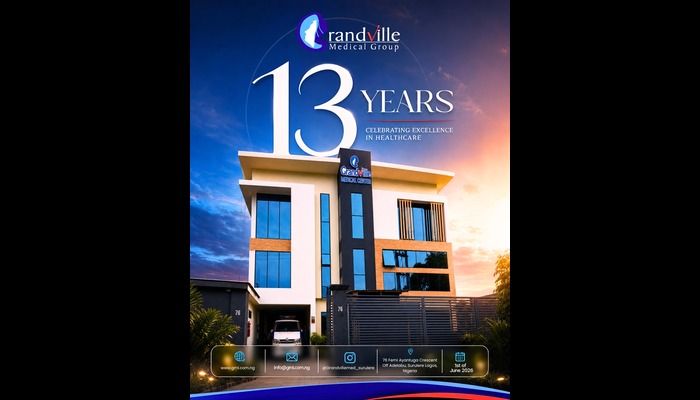
Over the years, Grandville has also expanded its physical asset base, particularly within the Lekki axis of Lagos, where the organization now operates across multiple buildings while planning additional healthcare infrastructure expansion.
“Our long-term vision remains building healthcare systems that can compete globally while serving local realities,” Dr. Ayobami stated.
Beyond infrastructure growth, Grandville says social impact remains central to its mission.
Over the past thirteen years, the organization has carried out numerous free surgical interventions, supported underserved patients, created employment opportunities for healthcare professionals, and contributed to expanding access to specialized healthcare services.
According to the management team, healthcare delivery in Nigeria requires a combination of private sector innovation, infrastructure investment, technology adoption, and sustainable human capital development.
This philosophy is now shaping the institution’s next phase of growth.
Grandville Medical Group says it is increasingly focused on healthcare digitalization, integrated healthcare systems, telemedicine expansion, operational automation, and technology-enabled healthcare delivery.
“The future of healthcare is deeply connected to technology and systems integration,” Dr. Ayobami noted. “Digital healthcare, operational efficiency, emergency response coordination, diagnostics integration, and patient management systems will play major roles in the next phase of healthcare transformation in Africa.”
The organization also maintains long-term ambitions of expanding across Nigeria’s six geopolitical zones as part of a broader healthcare accessibility strategy.
Despite its growth trajectory, the founder acknowledges that the journey has not been without setbacks and difficult lessons.
“There were manpower challenges, operational realities, difficult leadership decisions, and moments where we had to completely rethink strategy,” he said. “But entrepreneurship teaches you adaptation. Every challenge forces you to evolve.”
Reflecting on the institution’s journey, Dr. Ayobami expressed appreciation to healthcare workers, partners, patients, and former team members who contributed to Grandville’s development over the years.
“Some stayed, some left, some challenged us, and some helped build important systems along the way. Every phase carried lessons that helped shape the institution into what it is today.”
As Nigeria continues to confront rising healthcare demands, growing medical tourism, specialist shortages, and infrastructure deficits, institutions like Grandville Medical Group represent a growing category of indigenous healthcare enterprises attempting to bridge critical gaps within the healthcare ecosystem.
For Grandville Medical Group, the past 13 years represent more than an anniversary milestone.
They represent the continued evolution of a vision — one focused on healthcare infrastructure, innovation, resilience, and building sustainable healthcare systems for the future.