Follow Us on Google Discover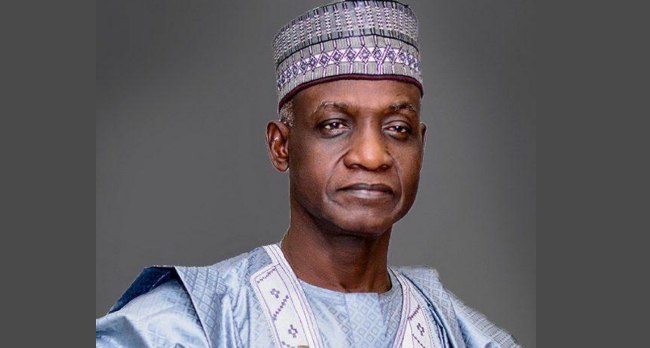
Zenith Bank Plc has appointed Engr. Mustafa Bello as its new Chairman, following the retirement of its founder and long-serving chairman, Jim Ovia, after the expiration of his tenure.
The transition, disclosed in a corporate notice issued in Lagos on May 5, 2026, comes in line with regulatory requirements mandating a 12-year tenure limit for chairmen of financial institutions.
Bello, who joined the Board in December 2017 and is currently the longest-serving director, steps into the role at a critical time as the bank seeks to sustain its market leadership and strategic growth.
What they are saying
The Board credited Ovia with providing strong leadership, strategic direction, and effective oversight, noting that his contributions significantly strengthened the bank’s position in Nigeria’s financial services sector.
Also Read
- In announcing Bello’s appointment, the bank said he brings extensive leadership experience, a deep understanding of corporate governance, and a proven track record in strategic oversight and organisational growth.
- According to the bank, Bello has demonstrated integrity, independence, and sound judgment during his time on the Board, positioning him to lead the institution into its next phase.
The appointment has received the approval of the Central Bank of Nigeria and is expected to ensure continuity, stability, and alignment with the bank’s long-term objectives.
Mustafa Bello’s career experience
The 72-year-old engineer and public sector leader brings decades of experience spanning engineering, public service, and investment promotion.
Bello, who is a cousin of the retired army officer Colonel Sani Bello, began his career in the Directorate of Quartering and Engineering Services of the Nigerian Army between 1978 and 1979, before moving to the Niger State Housing Corporation, where he worked as a Senior Civil Engineer from 1980 to 1983.
- Bello rose to national prominence when he was appointed Minister of Commerce under former President Olusegun Obasanjo, serving between 1999 and 2002. He worked closely with Obasanjo, who described him as a “dutiful minister” in one of his books.
- After leaving the administration, he became the candidate of the newly registered People’s Redemption Party (PRP) for governor of Niger State in December 2002. He came second in the 2003 election, behind the then-incumbent governor, Abdulkadir Kure.
However, his role in economic policy and investment promotion remains more defining, shaping much of his national relevance and reputation.
He later transitioned into investment promotion, serving as Executive Secretary and Chief Executive Officer of the Nigerian Investment Promotion Commission (NIPC) from 2003 to 2014.
- At the NIPC, Bello was instrumental in driving foreign direct investment into Nigeria, facilitating partnerships with global institutions, and positioning the country as a competitive investment destination.
- His tenure saw increased engagement with international investors across sectors such as manufacturing, agriculture, and tourism, while also promoting policies aimed at economic growth and poverty reduction.
Beyond public service, Bello currently serves as Chairman of Invest-in-Northern Nigeria Limited, a special purpose vehicle focused on driving economic transformation in Northern Nigeria.
Mustafa Bello’s career experience
The 72-year-old engineer and public sector leader brings decades of experience spanning engineering, public service, and investment promotion.
Bello, who is a cousin to the retired army officer Colonel Sani Bello, began his career in the Directorate of Quartering and Engineering Services of the Nigerian Army between 1978 and 1979, before moving to the Niger State Housing Corporation, where he worked as a Senior Civil Engineer from 1980 to 1983.
- Bello rose to national prominence when he was appointed Minister of Commerce under former President Olusegun Obasanjo, serving between 1999 and 2002. He worked closely with Obasanjo, who described him as a “dutiful minister” in one of his books.
- After leaving the administration, he became the candidate of the newly registered People’s Redemption Party (PRP) for governor of Niger State in December 2002. He came second in the 2003 election, behind the then incumbent governor, Abdulkadir Kure.
However, his role in economic policy and investment promotion remains more defining, shaping much of his national relevance and reputation.
He later transitioned into investment promotion, serving as Executive Secretary and Chief Executive Officer of the Nigerian Investment Promotion Commission (NIPC) from 2003 to 2014.
- Bello’s role in scaling Nigeria’s Foreign Direct Investment (FDI), which hovered around $1 billion and $1.87 billion between 1999 and 2002 is worth mentioning. Upon his assumption of office as NIPC CEO, FDI jumped to $2.01 billion in 2003.
- FDI inflows would experience a staggering surge just two years later, growing by over 166% to reach $4.98 billion in 2005. Although the country witnessed mild, intermittent dips, a recovery began in 2010, which saw FDI reach an all-time peak of $8.84 billion in 2011.
- This shows that within the eleven years under review (2003 to 2013), Nigeria’s FDI saw substantial, though inconsistent, increases from its base level, before experiencing post-peak declines that saw the figure drop back to $5.56 billion by 2013, following a shift in focus toward portfolio investment.
- However, since he left office, FDI into Nigeria dropped by over 70% between 2014 and 2024.
Beyond public service, Bello currently serves as Chairman of Invest-in-Northern Nigeria Limited, a special purpose vehicle focused on driving economic transformation in Northern Nigeria.
More details
Born on January 31, 1954, Bello holds a Bachelor of Engineering degree in Civil Engineering from Ahmadu Bello University, where he graduated with Second Class Upper Division and won the Shell Prize for the best engineering project and thesis in 1978.
His education at the university was funded through a scholarship by the then North Western State.
He has participated in numerous international conferences, trade missions, and policy engagements, representing Nigeria in global economic and investment discussions.
His professional contributions also include involvement in key national initiatives such as the Corporate Affairs Commission (CAC) online project and the development of trade policies aligned with global standards.
What you should know
Bello assumes leadership at a time when Zenith Bank must sustain strong earnings while navigating tighter regulatory expectations and a more complex operating environment.
The bank remains one of Nigeria’s most profitable lenders, delivering a pre-tax profit of N1.26 trillion in its 2025 full-year results, despite a slight decline linked to regulatory forbearance adjustments mandated by the Central Bank of Nigeria.
- Performance was largely driven by robust interest income growth, which rose to N3.6 trillion, supported by expansion in loans and advances as well as earnings from treasury instruments.
- The bank has also maintained momentum into 2026, posting a pre-tax profit of N360.92 billion in the first quarter, reflecting resilience despite rising costs and loan impairments.
This performance underscores the scale and complexity of the institution Bello is now tasked with overseeing—balancing profitability, regulatory compliance, and sustained growth in an evolving financial landscape.