Follow Us on Google Discover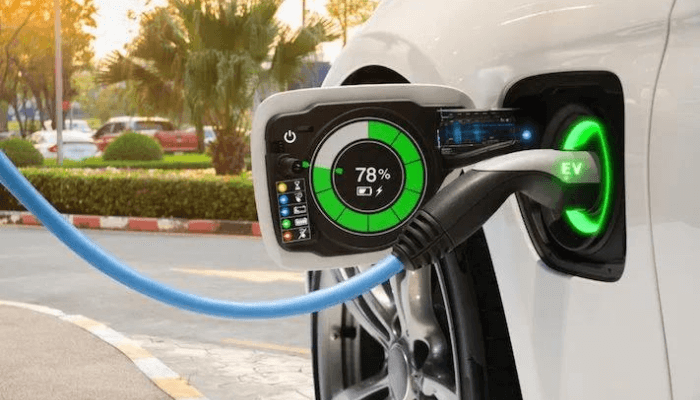
The Federal Government’s decision to remove import duties on electric vehicles (EVs) has triggered optimism across the mobility sector, with industry players projecting lower prices and faster adoption, even as concerns grow over intense competition and market disruption.
The policy, introduced under President Bola Ahmed Tinubu’s administration in mid-April, eliminates the 5% import duty on EVs and exempts them from green taxes imposed on high-emission vehicles.
While the move is expected to ease inflationary pressures and promote clean mobility, stakeholders say it could also usher in a highly competitive phase that may reshape the structure of Nigeria’s emerging EV market.
What they are saying
Industry players say the policy marks a turning point for EV adoption, but caution that it could trigger aggressive pricing competition and strain local capacity.
Also Read
- “This is the first time we can confidently say EVs will move from luxury interest to mainstream consideration. Once prices drop, the middle market opens up immediately,” Olabisi Ajayi, chief executive of an EV, said.
- “Ride-hailing companies and logistics firms are already calling. They’ve been waiting for a price trigger like this. We expect demand to spike faster than inventory cycles can adjust,” Uche Madunagwu, another EV distributor, noted.
- “We are preparing for a price war phase. When duties disappear, the biggest manufacturers win on scale, while smaller dealers must rely on service and relationships,” he added.
- “If EV acquisition costs fall as projected, our operating expenses could drop significantly within two years. Fuel uncertainty has been our biggest risk factor,” Ajayi said.
Speaking on the sector’s outlook, Roxettes Group Chairman Dr. Kaycee Orji said the company, through Roxettes Motors, has deliberately championed electric vehicle adoption in Nigeria for several years, producing electric, hybrid, and internal combustion engine vehicles.
He warned that without a clearly defined EV transition strategy, Nigeria risks becoming a dumping ground for used ICE vehicles from countries enforcing strict phase-out timelines.
- “The idea is to send a signal that Nigeria is not a dumping ground for used ICE vehicles from countries that are moving away from them,” he explained.
He added that the legislation also aims to protect local investors by discouraging indiscriminate licensing of foreign EV assemblers without strong local partnerships, while proposing incentives such as special number plates to distinguish electric vehicles from ICE vehicles.
- “In China, green number plates are for electric vehicles, while blue ones are for ICE vehicles. That visual distinction alone drives adoption,” Orji noted.
Stakeholders broadly agree that while the policy will boost demand, the speed of adoption may outpace supply chains and infrastructure readiness.
More insights
The removal of import duties is part of a broader push by the government to promote clean energy transition and reduce transportation costs in the face of rising fuel prices.
However, industry experts warn that demand-side incentives alone may not be sufficient to build a sustainable EV ecosystem.
- Experts describe the policy as a “demand shock” that could rapidly increase EV uptake without corresponding growth in local production.
- Engr. Raheem Adebolu, an Abuja-based automotive specialist, commented: “Removing import duties instantly changes the price structure. That’s a demand shock. But without strong local production incentives, it can easily become an import-dominated market.”
- Local assemblers say cheaper imports may undercut domestically produced vehicles, potentially weakening Nigeria’s manufacturing ambitions.
- Aminu Gambari, an EV charging station operator explained: “We are planning for a significant jump in demand within 12 to 24 months. The biggest constraint will not be vehicles—it will be electricity access points.”
- An energy startup founder added, “This policy gives us the signal we needed. Now we are actively looking at partnerships with malls, estates, and fuel station operators.”
Infrastructure providers expect a surge in demand for charging stations, with electricity access emerging as a key constraint.
Some stakeholders also highlight the risk of Nigeria becoming a dumping ground for used internal combustion engine (ICE) vehicles if clear transition policies are not enforced alongside EV incentives.
The proposed Electric Vehicle Transition and Green Mobility Bill, 2025, is seen as a critical framework to guide adoption, encourage local assembly, and ensure long-term industry development.
What you should know
Nairametrics previously reported that the country’s automotive and energy experts remain sharply divided over whether the nation is ready for a large-scale transition to electric vehicles (EVs).
The National Bureau of Statistics (NBS) reported that Nigeria’s passenger car imports rose to N1.58 trillion in 2025, reflecting a rebound in demand.
Despite the increase, passenger cars represented only 2.34% of Nigeria’s total imports, which stood at N67.35 trillion in 2025.
Total imports grew by 11.14% YoY, from N60.59 trillion in 2024, suggesting that while car demand is rising, it is being outpaced by growth in other import categories.