Follow Us on Google Discover
Africa’s aviation sector continues to grow, supported by rising passenger demand, stronger regional connectivity, and recovery in domestic and international markets.
According to OAG, a global aviation data provider, Africa’s aviation market recorded broad-based growth in April 2026, with total airline capacity measured as available seats on scheduled flights rising 5.2% year on year to 23.9 million seats.
International capacity accounted for 77% of total seats and grew by 3.9% compared to April 2025, while domestic capacity increased by 9.9%, reflecting stronger intra-African demand.
Mainline carriers held a 79% market share, growing 4.5% year on year, while low-cost carriers rose faster by 8.2% to 5 million seats.
This ranking of the Top 10 African countries by total airline capacity in April 2026 is based on OAG data and reflects available seat supply across both domestic and international operations in Africa’s aviation market.
Ghana
Ghana ranks tenth in Africa for airline capacity in April 2026, with 270,363 seats. This represents a 1.60% increase from the 266,084 seats recorded in April 2025, indicating modest but steady growth in West Africa’s aviation market.
Ghana is a West African country with a relatively small but active domestic aviation sector.
The market is supported by rising passenger traffic, gradual economic growth, and improving air connectivity within Africa and beyond. Capacity is anchored by operations at Kotoka International Airport, which serves as the country’s primary hub for both domestic and international flights.
Domestic and regional connectivity is supported by local carriers such as Africa World Airlines and PassionAir, while international travel is largely served by foreign airlines operating from Accra.
Tanzania
Tanzania ranks ninth in Africa for airline capacity in April 2026, with 541,634 seats, marking a 10.50% increase from 490,363 seats recorded in April 2025.
Tanzania is an East African country with a diverse aviation network serving both mainland and island destinations, including Zanzibar.
Growth is driven by rising tourist arrivals, expanding domestic travel, and ongoing investment in airport infrastructure. Capacity is anchored by the national carrier, Air Tanzania, alongside operators such as Precision Air, Auric Air, Coastal Aviation, Flightlink, ZanAir, and As Salaam Air, which support strong domestic and regional connectivity.
Key airports include Julius Nyerere International Airport and Kilimanjaro International Airport, which serve as major hubs for domestic and international flights.
Tunisia
Tunisia ranks eighth in Africa for airline capacity in April 2026, with 583,473 seats across domestic and international operations. This makes it the only country in the top 10 to record a decline, falling 2.20% from 596,698 seats in April 2025.
The market is served by full-service, low-cost, and international carriers, including Tunisair, Nouvelair, Transavia, and other low-cost operators, supporting both domestic and international connectivity.
Air transport is supported by a network of several airports across the country, with Tunis–Carthage International Airport serving as the primary gateway and handling the bulk of passenger traffic. Other key airports include Monastir, Djerba, Sfax, Tozeur, Tabarka, and Gafsa, which support regional and seasonal connectivity.
Demand is driven by tourism and diaspora travel, with Europe remaining the primary international market for Tunisia’s air connectivity.
Kenya
Kenya ranks seventh in Africa for airline capacity in April 2026, with 826,402 seats. This represents a 3.30% increase from 800,402 seats in April 2025.
The market is driven by rising demand for domestic and regional air travel, supported by tourism growth, business travel, and improving infrastructure. The expansion of low-cost carriers has also increased competition and improved accessibility across key routes.
Capacity is anchored by the national carrier, Kenya Airways, alongside domestic and regional operators such as Jambojet and Fly540, which serve growing intra-African demand.
Kenya’s aviation network is supported by major airports, including Jomo Kenyatta International Airport and Moi International Airport, which handle both international and domestic traffic and reinforce the country’s role as a regional aviation hub in East Africa.
Algeria
Algeria ranks sixth in Africa for airline capacity in April 2026, with 964,952 seats, a 9% increase from 885,216 seats in April 2025.
The market is driven by rising demand for both domestic and international air travel, supported by government investment in airport infrastructure and ongoing fleet modernisation.
Capacity is anchored by the national carrier, Air Algérie, which operates an extensive network across domestic, regional, and international routes, alongside other operators such as Tassili Airlines.
Algeria also records strong international demand, particularly to Europe. Key airports include Houari Boumediene Airport, as well as Oran and Constantine.
Nigeria
Nigeria ranks fifth in Africa for airline capacity in April 2026, with 1,102,209 seats, a 24.20% increase from 887,565 seats in April 2025, making it the fastest-growing market in the top 10, though growth remains volatile according to OAG.
The expansion is driven by improving domestic connectivity and stronger international operations through major hubs such as Murtala Muhammed International Airport and Nnamdi Azikiwe International Airport.
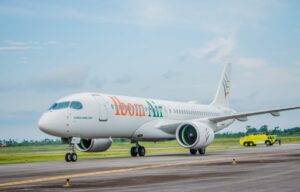
Capacity is supported by a mix of local and international airlines, including carriers such as Air Peace, Arik Air, and Ibom Air, alongside major foreign operators such as Emirates and other international airlines serving key routes.
Nigeria, Africa’s most populous country, sees demand driven by business travel, diaspora movement, and regional connectivity.
Ethiopia
Ethiopia ranks fourth in Africa for airline capacity in April 2026, with 1,339,768 seats, a 4.30% increase from 1,284,363 seats in April 2025.
The country’s capacity is strongly driven by international traffic, anchored by the extensive network of Ethiopian Airlines, which serves as one of Africa’s largest and most influential carriers. Its Addis Ababa hub connects multiple African destinations with Europe, Asia, and the Middle East.
Demand is supported by Ethiopia’s role as a regional diplomatic and business hub and strong transit traffic across intercontinental routes.
The aviation network is anchored by Addis Ababa Bole International Airport, which serves as a key gateway for both regional and long-haul traffic, reinforcing Ethiopia’s role as a central transit hub in African aviation.
Morocco
Morocco ranks third in Africa for airline capacity in April 2026, with a total of 2,045,198 seats across domestic and international operations. This represents a 10.10% year on year increase from 1,857,238 seats in April 2025.
Located in North Africa, capacity is largely driven by international traffic, supported by the expansion of Royal Air Maroc and strong connectivity with European markets. International airlines, especially from Europe, also contribute significantly to seat supply.
Tourism remains a key driver, with Marrakech, Casablanca, and Agadir attracting millions of visitors annually. Morocco’s proximity to Europe supports high-frequency international routes and strong leisure demand.
The network is anchored by Mohammed V International Airport, a key hub for intercontinental and regional connections, reinforcing Morocco’s role as a gateway between Africa and Europe.
South Africa
South Africa ranks second in Africa for airline capacity in April 2026, with a total of 2,482,766 seats. This represents an 8.70% increase from 2,283,180 seats in April 2025, reflecting strong growth in a mature aviation market.
Capacity is supported by both domestic and international traffic, with a well-developed internal network and strong global links. Key operators include South African Airways and FlySafair, alongside international airlines such as Emirates.
Demand is driven by business travel, tourism, and high-frequency domestic routes between major cities, including Johannesburg, Cape Town, and Durban, making South Africa one of the few markets with strong domestic seat capacity.
The system is anchored by O. R. Tambo International Airport and Cape Town International Airport, which handle major regional and intercontinental traffic.
Egypt
Egypt ranks first in Africa for airline capacity in April 2026, with 2,923,963 seats across domestic and international operations. This represents a 2.80% increase from 2,845,233 seats in April 2025.
Capacity is largely driven by international traffic, supported by EgyptAir and major global carriers such as Emirates, Qatar Airways, and Turkish Airlines.
Tourism remains a major driver, with the Pyramids of Giza, Karnak Temple, and the Valley of the Kings attracting millions of visitors annually. Strong transit flows between Africa, the Middle East, and Europe also sustain demand.
Egypt’s position is reinforced by its strategic location and aviation infrastructure, led by Cairo International Airport, a major regional and intercontinental hub.