
 Follow Us on Google Discover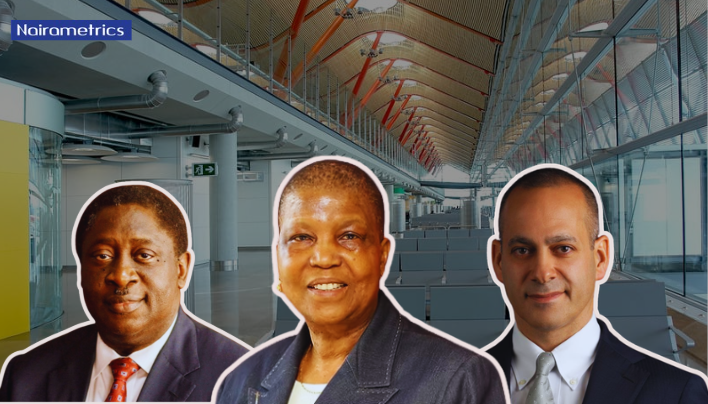
Private participation in Africa’s airport sector is expanding, but remains structurally limited compared to global aviation markets.
Most airports across the continent are still state-owned, with private capital entering primarily through concessions, public-private partnerships (PPPs), and long-term infrastructure leases rather than outright ownership.
This model has attracted a growing pool of investors ranging from pension funds and infrastructure managers to construction conglomerates and global airport operators.
The small presence of private operators comes against the backdrop of a continent that accounts for only about 2–3% of global air traffic despite its population size. Africa’s aviation industry is constrained by high operating costs, limited intra-regional connectivity, and uneven infrastructure quality, even as passenger demand continues to rise steadily.
Also Read
As governments seek to modernize transport infrastructure without overburdening public finances, airport concessions have become a key policy tool. The result is a fragmented but gradually evolving ecosystem where state ownership remains dominant, but operational control and capital deployment are increasingly shared with private investors.
Asaba Airport Company
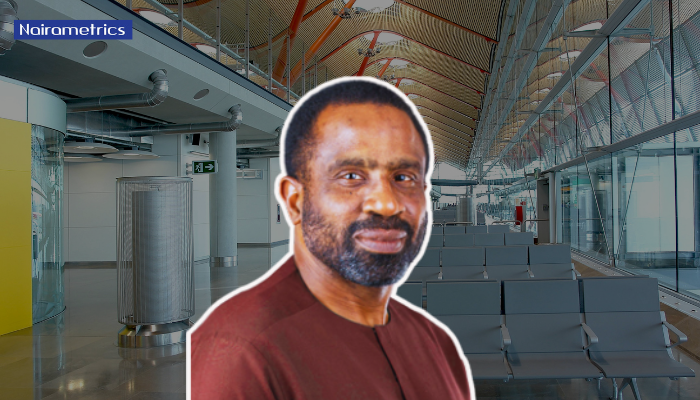
Operators of Asaba International Airport
President- Adebisi Adebutu
Adebisi Adebutu is the President and Chief Executive Officer of R28 Holdings, a Nigeria-based private investment company founded in 2007 with a diversified portfolio spanning aviation, construction, real estate development, oil and gas, energy and infrastructure services, manufacturing, retail, and early-stage industrial ventures.
With over 25 years of entrepreneurial experience, Adebutu has built and managed businesses across telecommunications, gaming, hospitality, entertainment, construction, and property development. Adebisi Adebutu is the son of Nigerian billionaire Kessington Adebutu.
An alumnus of the University of Swansea in the United Kingdom and INSEAD Business School, he has positioned R28 Holdings as a multi-sector investment platform with a strong emphasis on infrastructure-led development and value creation in emerging markets.
Under his leadership, R28 Holdings serves as the anchor consortium behind Asaba Airport Company (AAC), the concessionaire responsible for the management, operations, and development of Asaba International Airport in Delta State, Nigeria.
AAC operates the airport under a 30-year concession agreement with the Delta State Government, finalized around 2021, aimed at enhancing the airport’s commercial viability and operational efficiency. While ownership of the airport remains with the state, AAC is responsible for its redevelopment, modernization, and day-to-day operations.
DHIA a part of FB Group
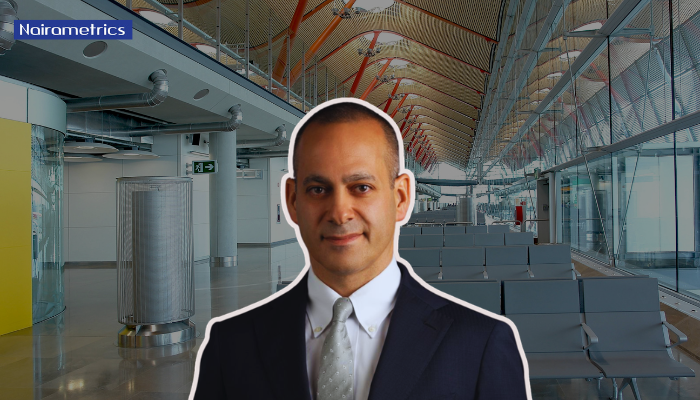
Managers of Diori Hamani International Airport (NIM)
President/CEO-Fatih Bora
Fatih Bora is a Turkish businessman and infrastructure investor, serving as President of FB Group, a company focused on long-term investments across airports, energy, hospitality, and mining, with a growing footprint in Sub-Saharan Africa.
Bora is part of the second generation of the family behind SUMMA, the international engineering and construction firm founded in 1989 by his father, Mete Bora. He previously held ownership and leadership roles within SUMMA, contributing to its expansion across Europe, Central Asia, and Africa, where the company delivered large-scale infrastructure projects, including airports, stadiums, hotels, and government complexes.
FB Group was established as a spin-off from SUMMA to separate long-term infrastructure investments from construction activities, allowing for more flexible capital deployment and asset management. Under Bora’s leadership, the group has focused on acquiring and operating infrastructure assets in emerging markets, particularly in aviation.
Through its subsidiaries, including DHIA SARL, FB Group operates Diori Hamani International Airport under a concession agreement, following its redevelopment by SUMMA since May 2019. The group is also involved in other airport concessions in Africa, positioning itself as a growing private-sector operator in the region’s aviation infrastructure space.
The airport was redeveloped by SUMMA, which financed and executed the upgrade as part of a broader push to expand private-sector participation in Niger’s aviation infrastructure. The project included terminal modernization and operational enhancements aimed at improving passenger experience, safety standards, and airport capacity.
The company has also secured airport concessions in markets such as Senegal and Sierra Leone.
Bi-Courtney Aviation Services Ltd
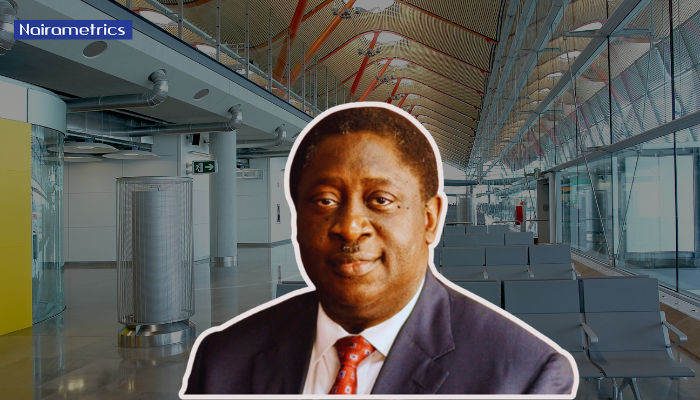
Managers of Murtala Muhammed Airport Terminal 2
Bolanle Olawale Babalakin- Founder of Bi-Courtney Aviation Services Ltd
Bolanle Olawale Babalakin is a Nigerian lawyer and businessman who has played recurring advisory and committee roles in public policy, legal reform, and higher education governance.
He is Chairman of the Bi-Courtney Group, a diversified conglomerate with interests in aviation infrastructure, construction, and real estate.
Its flagship subsidiary, Bi-Courtney Aviation Services Limited (BASL), was incorporated to develop and operate airport infrastructure under public-private partnership arrangements. In 2003, BASL was granted a 36-year concession by the Federal Government of Nigeria under a Design-Build-Operate-Transfer (DBOT) structure to deliver the Murtala Muhammed Airport Terminal 2 (MMA2).
The MMA2 project includes a domestic passenger terminal, aircraft apron, multi-level car park, and associated commercial facilities. It is widely regarded as Nigeria’s first major privately developed airport terminal and a benchmark for airport concessioning in West Africa.
In 2005, he was appointed by President Olusegun Obasanjo to the National Political Reform Conference, where he served on the Legal Reforms Committee and chaired the Constitution Drafting Sub-Committee.
The assignment placed him among key participants in Nigeria’s constitutional review process at the time.
He has also served in advisory and technical capacities to successive administrations, including as Honorary Adviser to President Umaru Musa Yar’Adua alongside Alhaji Rilwanu Lukman.
In the legal sector, he has held committee roles within the Nigerian Bar Association, including chairing the Real Estate and Construction Law Committee under the Section on Business Law and the Government Practice Committee under the Section on Legal Practice.
Babalakin has been extensively involved in Nigeria’s tertiary education governance and labour relations framework. He served as Pro-Chancellor and Chairman of Council of the University of Maiduguri between 2009 and 2013 and currently holds the same position at the University of Lagos.
VINCI Concessions
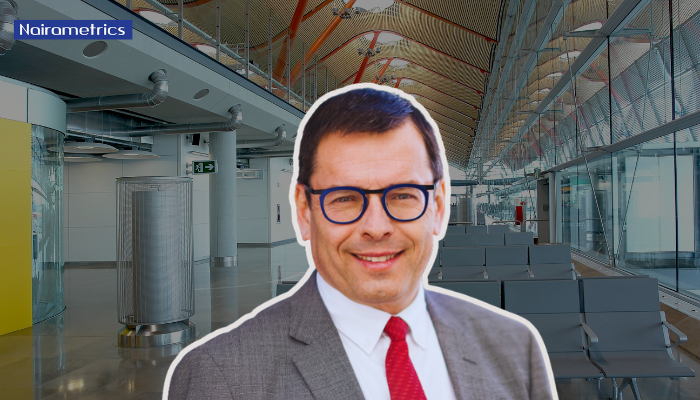
Owners of Cape Verdean airports
Nicolas Notebaert- CEO VINCI Concessions
Nicolas Notebaert is a French infrastructure executive and Chief Executive Officer of Concessions at VINCI, where he oversees the group’s global portfolio of airports, highways, rail projects, and stadium assets. He is also President of VINCI Airports, VINCI Autoroutes and VINCI Stadium.
VINCI Concessions, through VINCI Airports, operates all seven airports in Cape Verde under a 40-year concession agreement signed in 2023, alongside its Portuguese subsidiary ANA. The consortium holds a majority 70% stake in the airport network, giving it long-term control over operations, infrastructure development, and commercial management across the island nation’s aviation system.
Nicolas joined VINCI in 2002 as head of the Cofiroute operations department and moved to VINCI Concessions in 2004 as director of business development. In 2008, he was appointed President of VINCI Airports, leading its expansion into the world’s largest private airport operator, with more than 70 airports across 14 countries.
In 2016, he became CEO of VINCI Concessions and a member of the VINCI Executive Committee, where he focused on expanding the group’s international infrastructure footprint, particularly in airports and toll road concessions. In November 2024, he was appointed CEO of Concessions at VINCI, overseeing operations across 24 countries, including airports, highways, rail infrastructure, and stadiums.
Before joining VINCI, Notebaert worked in France’s Ministry of Public Works, served in the cabinet of the Minister for Transportation and Infrastructure, and began his career in 1994 as a consultant to the World Bank.
He is a graduate of École Polytechnique and École Nationale des Ponts et Chaussées and holds board positions in major airport assets, including London Gatwick, ANA (Portugal), Kansai Airports, and Cambodia Airports.
Primkop Airport Management (Pty) Ltd
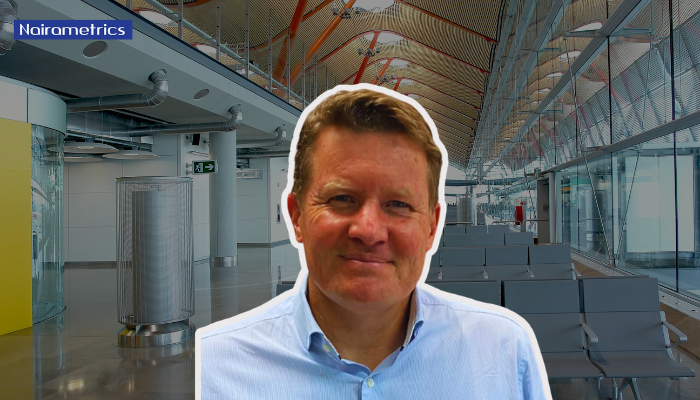
Owners of Kruger Mpumalanga International Airport
CEO- Grant Ponting
Primkop Airport Management (Pty) Ltd (PAM) is a South African airport infrastructure company that owns and operates Kruger Mpumalanga International Airport (KMI Airport), located near Mbombela (Nelspruit) in Mpumalanga Province. The airport, opened in 2002, serves as a key regional aviation gateway to the Kruger National Park and surrounding tourism destinations.
PAM was established to develop and manage the airport as a privately operated infrastructure asset under a long-term management framework. The company provides airport operations, Fixed Base Operator (FBO) services, ground handling, pilot support services, and aviation fuel supply.
The ownership structure includes participation from local stakeholders, with the Mbuyane community holding a minority equity stake of approximately 10%, reflecting a community inclusion component in the project’s development model.
The company is governed by a board of directors, with Antony Ball serving as Chairman. Grant Ponting is the Chief Executive Officer, overseeing operational management, commercial development, and airport services delivery.
Harith General Partners and Nozala Investments
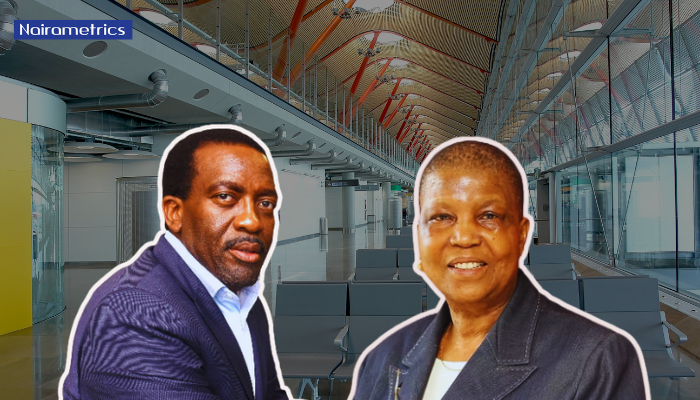
Owners of Lanseria International Airport (FALA), South Africa
Founders- Tshepo Mahloele and Salukazi Dakile-Hlongwane
Tshepo Mahloele and Salukazi Dakile-Hlongwane are key shareholders in Lanseria International Airport, one of Africa’s few fully privately owned commercial airports, through their respective investment platforms Harith General Partners and Nozala Investments, alongside the Government Employees Pension Fund (GEPF) via the Public Investment Corporation (PIC).
- Mahloele leads Harith General Partners, a Pan-African infrastructure fund manager with about $3 billion in assets under management. The firm invests across transport, energy, and telecommunications through vehicles such as the Pan-African Infrastructure Development Fund (PAIDF).
- As part of a recent restructuring, PAIDF’s stake in Lanseria was transferred to Harith Infraco Limited, a dedicated infrastructure holding company established by Harith to consolidate and directly manage its asset-level investments. The move reflects a shift toward tighter operational oversight and streamlined ownership structures within Harith’s portfolio.
Dakile-Hlongwane is the founder and chair of Nozala Investments, a women-led investment holding company established in 1996 to advance economic participation for black women in South Africa. The firm plays a central role in Lanseria’s empowerment ownership structure.
Lanseria International Airport operates as a privately owned alternative to Johannesburg’s main hub, serving domestic and regional traffic. Its current ownership framework dates back to a 2013 transaction involving PIC (on behalf of GEPF), PAIDF (managed by Harith), and a Nozala-led consortium.
A 2024 ownership realignment increased GEPF’s stake and repositioned Harith’s investment under Harith Infraco, signalling continued institutional backing and positioning the airport for expansion, including a planned cargo precinct aimed at strengthening its role as a regional aviation and logistics hub.
Old Mutual Life Assurance Company of South Africa (OMLACSA)
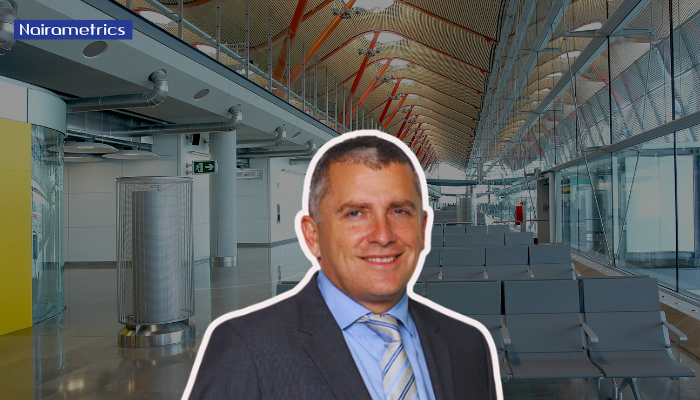
Owners-Grand Central Airport
CEO-Jurie Strydom
Grand Central Airport (GCJ) is a privately owned general aviation airport located in Midrand, between Johannesburg and Pretoria.
- The airport is wholly owned by Old Mutual Life Assurance Company of South Africa (OMLACSA), which became the sole shareholder of Grand Central Airport (Pty) Ltd in June 2016.
- Old Mutual Life Assurance Company (South Africa) Limited is a subsidiary of Old Mutual Limited (OML), a large financial services group listed on the Johannesburg Stock Exchange and other African exchanges.
Jurie Strydom is a South African financial services executive serving as Chief Executive Officer of Old Mutual Limited, a pan-African insurance and investment group. He assumed the role in June 2025 after previously serving as an independent non-executive director of the company.
Strydom has more than 25 years of experience in the financial services sector, with leadership roles across insurance, asset management, and financial advisory businesses. Prior to joining Old Mutual, he was Chief Executive of Sanlam Life and Savings between 2016 and 2022.
His earlier roles include Chief Executive of Alexander Forbes Life and Regent Insurance Group, as well as Executive Director at Imperial Holdings.
Originally established in 1937 by aviation entrepreneur Harry Shires, Grand Central evolved from a small aerodrome into a key general aviation facility. It has historically supported flying clubs, training schools, and maintenance organisations, with periodic expansions, including a major upgrade in the early 1990s that enhanced its commercial and operational capabilities.
Today, the airport operates primarily within the general aviation segment, supporting private pilots, aviation training institutions, and maintenance providers rather than large-scale commercial airline traffic.
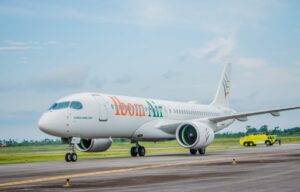
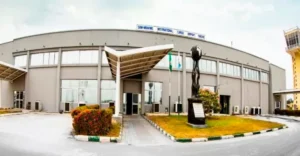
What about Asaba International airport, Asaba Delta State. It was concessioned to a private group of investors some years ago. Asaba is amongst the too 10 busiest airport in Nigeria