Follow Us on Google Discover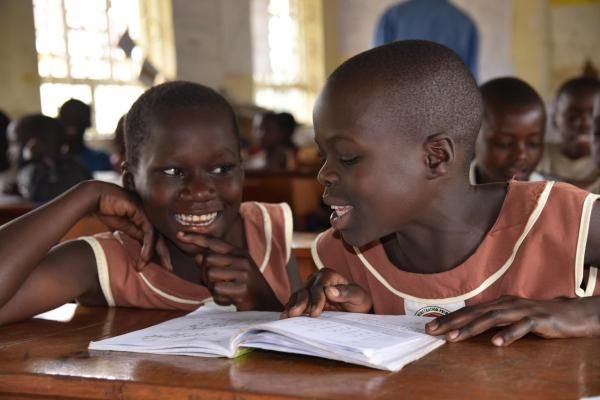
The Universal Basic Education Commission (UBEC) has allocated N5.18 billion to 518 communities across Nigeria for the implementation of its School-Based Management Committee–School Improvement Programme (SBMC-SIP).
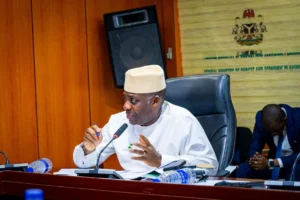
This was disclosed by UBEC Executive Secretary, Aisha Garba, who was represented by the Deputy Executive Secretary (Technical), Rasaq Akinyemi, on Thursday in Abuja during the national flag-off ceremony of the 2025 SBMC-SIP.
At the event, the commission also rolled out the 2025 SBMC-SIP cycle as part of broader efforts to improve basic education delivery, while unveiling a new Learners’ Retention Programme and releasing N434.5 million as final tranche funding for previously approved school projects.
What they are saying
Garba said the N5.18 billion allocation would support hundreds of underserved communities across the country under the 2025 programme cycle.
Also Read
- “I am pleased to announce that 518 communities will receive a total sum of N5,180,000,000.00 as the total support funds earmarked for the 2025 SBMC-SIP implementation.
- “This translates to 14 schools benefiting from each of the 36 states of the Federation and the Federal Capital Territory,” she explained.
She added that the programme has continued to deliver measurable outcomes since its inception, supporting schools and improving learning conditions nationwide.
- “Since the inception of the SBMC-SIP, the commission has recorded encouraging progress. A total of 1,112 schools have been supported across the 36 states of the Federation and the Federal Capital Territory, with over N1.5bn disbursed across implementation cycles,” Garba added.
More insights
UBEC also disbursed N434.5 million as the final tranche for the 2023 and 2024 SBMC-SIP cycles to enable the completion of ongoing projects across the country.
- “Today’s disbursement of the 2023 and 2024 SBMC-SIP final tranche support fund in the sum of N434,500,000 will enable beneficiary schools to complete 11,484 ongoing projects across the country,” Garba stated.
In addition, the commission introduced a Learners’ Retention Programme aimed at addressing barriers that keep children out of school, including poverty and social challenges.
Also speaking, Director of Basic Education at the Federal Ministry of Education, Folake Davies, who represented the Minister of Education, Tunji Alausa, said the initiative reflects a broader commitment to inclusive education and tackling out-of-school challenges.
- “Education transformation cannot be driven from the centre alone. It shows commitment to learners’ retention support programme as a targeted intervention designed to reduce the number of out-of-school children, particularly in high-volume states.”
What you should know
The intervention comes amid growing concern over the global and domestic out-of-school children crisis.
According to UNESCO, about 273 million children and young people are currently out of school worldwide, with one in six school-age children affected.
In Nigeria, the Federal Government estimates that about 15 million children are out of school, requiring roughly $345 million annually to reintegrate them into the education system.
The Minister of Education, Tunji Alausa, has also noted that out-of-school rates remain high nationwide, particularly in the North-East and North-West, where the figures are significantly higher.