Follow Us on Google Discover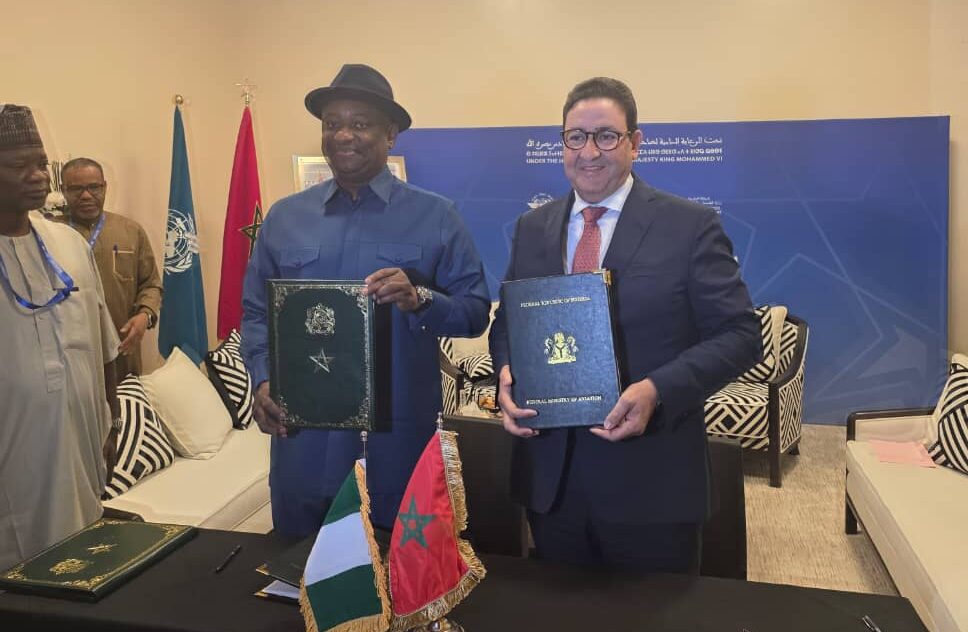
Nigeria has signed a revised Bilateral Air Services Agreement (BASA) with Morocco to boost flight operations and strengthen tourism ties between both countries.
The development was disclosed in a statement issued by the Special Adviser on Media and Communications to the Minister of Aviation and Aerospace Development, Tunde Moshood, on Wednesday.
The agreement is expected to expand connectivity, create opportunities for airlines, and deepen commercial and economic relations between Nigeria and Morocco.
What they are saying
The Minister of Aviation and Aerospace Development, Festus Keyamo, signed the revised BASA with the Kingdom of Morocco during the Global Implementation Support Symposium (GISS) in Marrakech, describing it as a major step toward strengthening bilateral air transport relations.
The statement noted that the agreement introduces a modern framework to enhance air travel between the two countries.
- “On the second day of the Conference, the Honourable Minister signed a Revised Bilateral Air Services Agreement (BASA) with the Kingdom of Morocco,” the statement read in part.
- “It establishes a modern and forward-looking framework that enhances connectivity, deepens commercial cooperation, and expands operational opportunities for airlines, airports, and regulatory institutions.”
The government added that the deal aligns with broader continental aviation goals while supporting safety, security, and environmental sustainability, as well as boosting trade, tourism, investment flows, and people-to-people exchanges.
More insights
On the sidelines of the symposium, the Minister held strategic engagements with global aviation stakeholders to strengthen Nigeria’s aviation ecosystem. Discussions focused on workforce development, capacity building, and technical cooperation.
- The leadership of the International Civil Aviation Organization (ICAO) commended Nigeria’s Civil Aviation Masterplan and pledged continued support for the country’s aviation development.
- The Minister reaffirmed Nigeria’s commitment to global aviation standards and long-term reforms during his meeting with ICAO officials.
Talks with representatives of the European Union explored opportunities for expanded technical cooperation, improved safety oversight, and institutional strengthening.
Get up to speed
Nigeria’s aviation sector has recently seen significant policy and infrastructure developments aimed at long-term transformation. The country received a 20-year Civil Aviation Master Plan (CAMP) from ICAO covering 2025 to 2045.
The master plan is designed to modernise airport infrastructure and accommodate rising passenger and cargo traffic.
- It includes the integration of advanced systems such as unmanned aerial systems and improved safety frameworks.
- Other priorities include aerotropolis development, sustainability initiatives, human capital development, and expansion of Maintenance, Repair and Overhaul (MRO) facilities.
- The government also approved the rollout of the VPASS biometric passenger verification system to improve airport security and identification processes.
In addition, electronic gates (e-gates) are being deployed across major international airports to speed up immigration clearance and enhance passenger experience.
What you should know
Nigeria’s aviation sector has witnessed a wave of reforms and investments aimed at improving safety, efficiency, and investor confidence.
In 2024, Nigeria exited the Aviation Working Group watchlist after achieving a 75.5% score on the Cape Town Convention Compliance Index.
- The Nigerian Civil Aviation Authority strengthened aircraft leasing enforcement through new regulatory guidelines focused on IDERA compliance.
- In 2025, the Federal Government approved N987 billion for aviation infrastructure projects, including N712.26 billion for the redevelopment of the Murtala Muhammed International Airport.
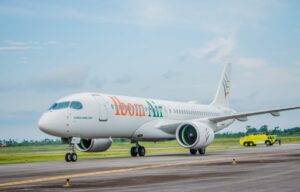
Ongoing projects also include MRO facility development by operators such as Air Peace and Ibom Air to boost local aircraft servicing capacity.