Follow Us on Google Discover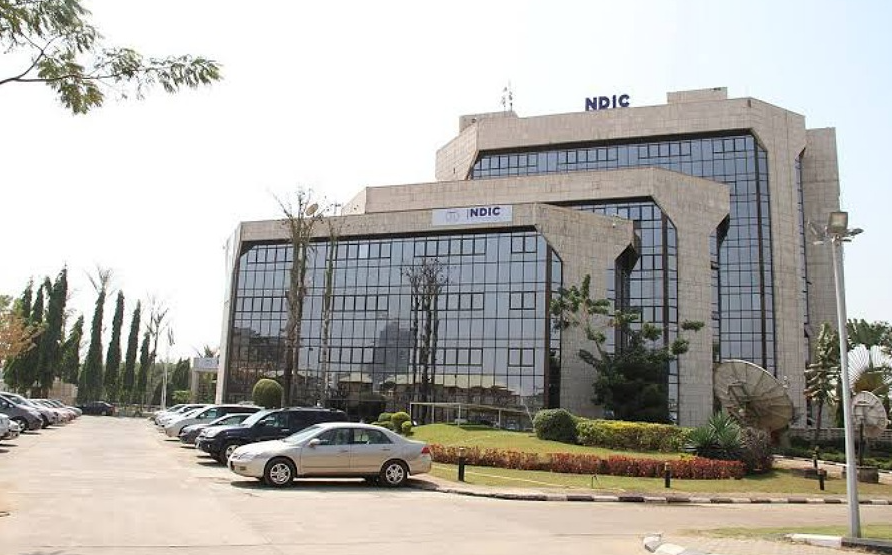
The Nigeria Deposit Insurance Corporation (NDIC) has commenced the final phase of winding down 89 defunct Microfinance Banks (MFBs) and one Primary Mortgage Bank (PMB), following their successful resolution under the Purchase and Assumption (P&A) model.
This is according to a release by the Corporation on Wednesday, April 15, 2026, indicating that the institutions have since been taken over by new investors, recapitalised, and are now operating under new identities.
The move comes nearly two years after the Central Bank of Nigeria revoked the licenses of 179 microfinance banks and four mortgage banks in May 2023 as part of efforts to sanitise the financial system.
NDIC said it is now seeking legal closure of the defunct entities by approaching the Federal High Court to obtain dissolution orders and formally discharge itself as liquidator.
This marks the final step in a resolution process aimed at protecting depositors while ensuring continuity of banking services.
What the release is saying:
NDIC said the process is designed to legally conclude the liquidation of resolved banks while ensuring financial system stability and depositor protection:
- 89 failed banks resolved through the Purchase & Assumption (P&A) model
- New owners acquired assets and liabilities, ensuring business continuity
- CBN issued fresh licenses to the acquiring institutions now operating under new names
- NDIC to approach the Federal High Court for dissolution orders of defunct banks
- The Corporation will formally exit its role as liquidator after court approvals
- The majority of affected institutions are Microfinance Banks, with one Primary Mortgage Bank
- Process ensures depositors retain access to funds through successor institutions
In its capacity as the Liquidator of the defunct banks, NDIC said it will be presenting applications to various Judicial divisions of the Federal High Court to obtain orders of dissolution for the closed banks and to release the Corporation as Liquidator.
More insights:
The resolution highlights a broader regulatory effort to strengthen Nigeria’s financial system, particularly within the microfinance segment, which plays a critical role in financial inclusion.
- Many of the failed institutions were small, regionally focused lenders serving low-income earners, small businesses, and informal sector participants.
- The adoption of the Purchase and Assumption model ensured that, rather than outright collapse, viable portions of these banks were transferred to stronger investors.
- This approach minimised disruption, preserved jobs, and maintained confidence in the banking system.
- A significant number of the affected banks were concentrated in Lagos, reflecting its status as Nigeria’s financial and business hub.
- Others were spread across the South-East, South-South, South-West, and Northern regions.
According to NDIC, many of the new entities have adopted modern, fintech-driven branding, signalling a shift toward digital banking models and improved service delivery.
What you should know:
According to the Corporation, the 89 closed banks were part of the 179 MFBs and 4 PMBs whose banking licenses were revoked by the Central Bank of Nigeria (CBN) on May 22nd and 23rd, 2023.
- The NDIC plays a central role in safeguarding Nigeria’s banking system by managing failed institutions, protecting depositors, and ensuring orderly resolution processes.
- The ongoing liquidation marks the final step in its intervention, following the successful transfer of assets and liabilities to new operators.
- By concluding the legal dissolution of these banks, NDIC reinforces confidence in the financial system, demonstrating that failures can be managed without systemic disruption.
The process also highlights the effectiveness of the P&A model in balancing depositor protection with market stability.