Follow Us on Google Discover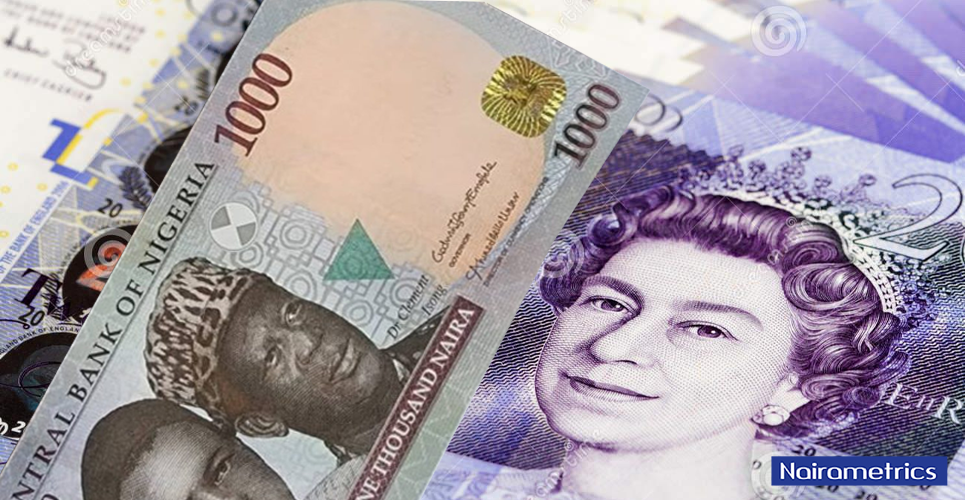
The Naira has shown more strength than the Pound.
The Central Bank of Nigeria’s (CBN) increased foreign exchange liquidity, increased crude oil earnings, policy changes, or a decrease in dollar demand pressure are all likely contributing factors to the Naira’s “renewed strength” in relation to the British currency.
Sterling is also facing energy-induced inflation with the Bank of England (BoE) adopting a hawkish pause.
CBN’s latest data showed the exchange rate is currently at N1,825/£1. per British pound sterling as of April 14.
Also Read
The Naira has slightly recovered from its early April lows, when it reached about N1,870/£1.
The Naira has strengthened by roughly 1% against the Pound over the past 14 days, indicating a consolidation phase.
The GBP/NGN will probably test the 1,800/£1 psychological floor, which is correlated with the historical low of N1,799/£1, if this level is surpassed.
The N1,854/£1 mark is the first significant obstacle to a bearish trend. A breakout above this could lead to a return to the N1,900/£1-point range.
The Naira has gained about 7.3 per cent against the pound this year. The GBP/NGN pair is presently in a neutral-to-bearish consolidation phase on the daily charts, having peaked on April 7 at N1,853.9/£1.
The Nigerian currency is still in an early phase of price discovery amid the CBN’s liberalization efforts.
The Nigerian Apex Bank has still struggled with the Foreign Portfolio Investment (FPI) as unprecedented levels of inflation (domestically), and foreign exchange backlog continue to burden the currency.
The narrowing of the negative gap between the legal and illegal exchange rates has also been coupled with a reduction of OPEC’s oil output and a stronger US dollar.
The BoE has kept rates at 3.75%. The Bank of England has been in a ‘wait-and-see’ mode after the surge in global energy prices due to the Middle East crisis, which has prevented the Bank of England from making any cuts as initially expected.
British Pounds Sterling ends its weekly bullish run against the American Dollar
The British pound suspended its seven-day winning streak against the American dollar at the midweek trading session, trading at about $1.356 during London time.
The British currency lost ground as the greenback gained, despite a decline in demand for safe havens due to rising market optimism and expectations of a diplomatic resolution to the Middle East conflict.
The White House and Iran are reportedly preparing for a second round of peace negotiations ahead of the current two-week ceasefire deadline, even as rising tensions in the Strait of Hormuz continue to heighten global energy risks.
US President Donald Trump hinted that talks might resume this week while opposing a 20-year halt to Iran’s nuclear enrichment program.
Vice President JD Vance, meanwhile, noted progress in the first round of Iran negotiations that took place in Pakistan, with follow-up talks possibly scheduled for the coming week.
The US Producer Price Index (PPI) data, which was softer than anticipated, confirmed that inflation pressures were easing and that the Federal Reserve (Fed) did not need to raise interest rates. While core PPI printed at 0.1 per cent MoM compared to expectations of 0.6 per cent, PPI increased by 0.5 per cent MoM, significantly less than the 1.2 per cent consensus.
While Core PPI remained stable at 3.8 per cent YoY, unchanged from the previous month, PPI increased 4 per cent YoY in March, exceeding the 4.6 per cent forecast and rising from February’s 3.4 per cent. The yield on the UK’s 10-year gilt fell toward 4.7 per cent as oil prices dropped amid renewed US-Iran negotiations, easing inflation concerns.
However, markets now expect almost two Bank of England rate increases by late 2026 due to the recent spike in energy prices.