Follow Us on Google Discover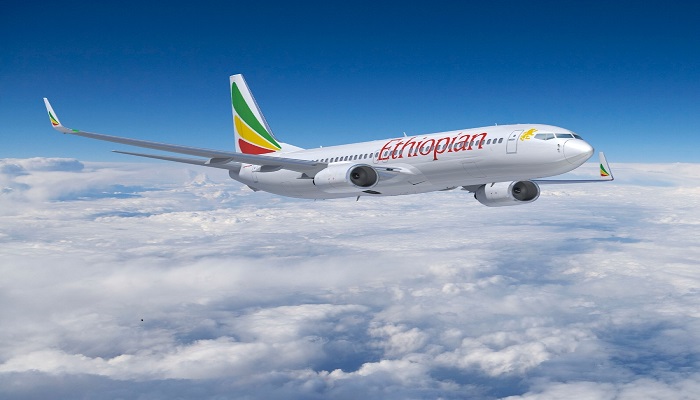
Air travel across Africa is experiencing strong growth, driven by rising demand for both regional and long-haul international travel.
Airlines across the continent are expanding capacity, strengthening hubs, and increasing frequencies on high-demand routes as passenger traffic continues to recover and grow.
Against this backdrop, competition among carriers has intensified, with capacity increasingly concentrated among African flag carriers, fast-growing low-cost airlines, and select international operators with strong exposure to the African market.
These airlines play a key role in linking African economies and supporting trade, tourism, and business mobility across regions.
Other News
This article presents the ranking of the top ten airlines in Africa by departing seats, one way, in April 2026, based on data from OAG, a global aviation intelligence platform.
The ranking is based on departing seats, which measure the total number of seats available on outbound flights within the period, providing a clear indicator of airline capacity and operational scale.
The data highlights the airlines with the largest capacity footprints on the continent, reflecting strong domestic dominance in key markets and expanding international connectivity.
Notably, no Nigerian airline featured in the top ten list, reflecting their absence from Africa’s leading capacity-driven airline rankings.
easyJet
easyJet ranks tenth in Africa for one-way departing seat capacity in April 2026, offering 349,943 seats, representing a 22.7% increase from 285,255 seats in April 2025.
easyJet is one of Europe’s largest airlines, operating an extensive network that connects major European airports with high-frequency routes. The carrier flies on more of Europe’s most popular routes than any other airline and carried over 100 million passengers in 2024.
The airline operates a fleet of over 340 aircraft and continues to expand its presence in North Africa, particularly Morocco, where it is building stronger connectivity between key European cities and regional airports.
Turkish Airlines
Turkish Airlines, Turkey’s flag carrier, ranks ninth in Africa for one way departing seat capacity in April 2026, offering 354,684 seats, representing a 12.9% increase from 314,218 seats in April 2025.
The airline operates flights to 51 destinations across 39 African countries, making it one of the most extensive non-African carriers on the continent. Its Africa operations are centred on its Istanbul hub, which connects the region to Europe, Asia, and the Americas.
Founded in 1933, Turkish Airlines has expanded its African presence since its first flight to Cairo in 1956, strengthening its role in linking African markets to global destinations through its growing international network.
South African Airways
South African Airways ranks eighth in Africa for one-way departing seat capacity in April 2026, offering 393,070 seats, representing a 24% increase from 315,047 seats in April 2025, the highest growth among the top carriers.
Founded in 1934, South African Airways is one of the world’s oldest airlines. The state-owned carrier operates passenger, freight, and mail services across domestic, regional, and international routes, supporting South Africa’s aviation, tourism, and trade connectivity.
The airline operates 17 aircraft and runs over 18,000 flights annually, with more than 2,300 employees across its subsidiaries. It is also a member of the Star Alliance network, which it joined in 2006.
According to its 2025 Integrated Annual Report, the airline posted an operational profit of R336 million (about $20.3 million), revenue of R9.27 billion (about $560.5 million), and passenger revenue of R7.68 billion (about $464.4 million), while cargo performance rose 47% year on year.
Ryanair
Ryanair ranks seventh in Africa for one way departing seat capacity in April 2026, offering 500,720 seats, representing a 10% increase from 455,177 seats in April 2025.
Ryanair is part of Ryanair Holdings plc, an Irish ultra low cost airline group headquartered in Swords, County Dublin. The group also owns subsidiaries including Ryanair UK, Malta Air, Buzz, and Lauda Europe, operating a combined fleet of more than 600 Boeing 737 aircraft across over 40 countries.
Although primarily based in Europe, Ryanair has steadily expanded its footprint in North Africa, particularly in Morocco, where it connects cities such as Marrakesh, Fez, Agadir, and Tangier to major European hubs.
Airlink
Airlink ranks sixth in Africa for one way departing seat capacity in April 2026, offering 554,660 seats, representing a 12.5% decline from 493,059 seats recorded in April 2025.
Airlink is a privately owned, premium full service regional airline operating across Southern Africa under its 4Z flight code, providing connectivity across a broad network of destinations.
The airline maintains a fleet of over 70 aircraft and serves more than 47 destinations across 15 African countries, including St Helena Island and Madagascar, while connecting major South African cities to key regional markets such as Angola, Botswana, Eswatini, Mozambique, Namibia, Zambia, Zimbabwe, Kenya, and Tanzania.
Airlink also maintains interline and codeshare partnerships with major global carriers including Emirates, Qatar Airways, and United Airlines
Air Algérie
Air Algérie ranks fifth in Africa for one way departing seat capacity in April 2026, offering 694,904 seats, representing a 13.7% increase from 610,968 seats in April 2025.
As the flag carrier of Algeria, Air Algérie operates a network spanning four continents, with 44 international and 33 domestic routes. Headquartered in Algiers, the airline connects key destinations across Africa, Europe, the Middle East, and North America.
The carrier operates a fleet of around 56 aircraft that meet international safety standards and continues to expand its footprint across regional and intercontinental markets.
The airline is led by chief executive officer Hamza Benhamouda.
Royal Air Maroc
Royal Air Maroc ranks fourth in Africa for one way departing seat capacity in April 2026, offering 730,269 seats, representing a 16.2% increase from 628,396 seats recorded in April 2025.
As the flag carrier of Morocco, Royal Air Maroc operates from its main hub at Mohammed V International Airport in Casablanca. The airline maintains an extensive network across Africa, Europe, North America, South America, and the Middle East, serving key destinations including Lagos, Abuja, Dakar, Accra, Paris, New York, Montreal, and São Paulo.
Founded in 1957, the airline operates a mixed fleet of Boeing and Embraer aircraft and serves as a major gateway for Morocco’s international travel and trade. Its membership in the Oneworld Alliance strengthens its global connectivity through partnerships with leading international carriers.
The airline is led by Chairman and Chief Executive Officer Abdelhamid Addou.
Egyptair
Egyptair ranks third in Africa for one-way departing seats in April 2026, offering 813,141 seats, a 3.3% decline from 841,282 seats in April 2025.
The flag carrier of Egypt, Egyptair, operates scheduled passenger and cargo flights to destinations across Africa, the Middle East, Europe, Asia, and the Americas.
Headquartered at Cairo International Airport, the airline has a fleet of over 65 Airbus and Boeing aircraft and is managed under the Egyptair Holding Company, which oversees several aviation subsidiaries covering ground handling, cargo, and maintenance.
The airline is led by Eng. Yehia Zakaria Ismail Al-Naqady, Chairman and CEO of Egyptair Holding Company.
Safair
Safair ranks second in Africa for one way departing seat capacity in April 2026, offering 1,079,595 seats, representing a 6.6% increase from 1,012,926 seats in the corresponding period.
Operating as one of South Africa’s leading low-cost carriers, Safair provides scheduled domestic passenger services across key routes, including Johannesburg, Cape Town, Durban, Port Elizabeth, George, Bloemfontein, Mbombela, and Hoedspruit. The airline operates a fleet of 36 aircraft and maintains high frequency operations on its busiest corridors.
Safair is part of a broader aviation group with roots dating back to 1965, originally established as a specialist airlift, cargo, and aircraft leasing company. Over time, it expanded into passenger operations while continuing its cargo and wet lease services.
Ethiopian Airlines
Ethiopian Airlines ranks first in Africa for one way departing seat capacity in April 2026, offering 1,972,120 seats, representing a 6.9% increase from the previous period.
The airline operates a fleet of over 100 aircraft, with additional orders in the pipeline, and maintains its hub in Addis Ababa, which connects 145 international destinations, including 65 cities across Africa, giving it the largest intra-African network among African carriers.
Founded in 1946, Ethiopian Airlines is the flag carrier of Ethiopia and is wholly owned by the Ethiopian government. It was the first African airline to introduce several modern aircraft types, including the Boeing 767, Boeing 777 200LR, Boeing 787 Dreamliner, and Airbus A350, and is a member of the Star Alliance.
During the 2024 2025 fiscal year, Group Chief Executive Officer Mesfin Tasew announced that Ethiopian Airlines generated $7.6 billion in revenue, transporting 19 million passengers, comprising 15.2 million international and 3.9 million domestic travellers, underscoring its continued expansion as Africa’s largest carrier by capacity.