Follow Us on Google Discover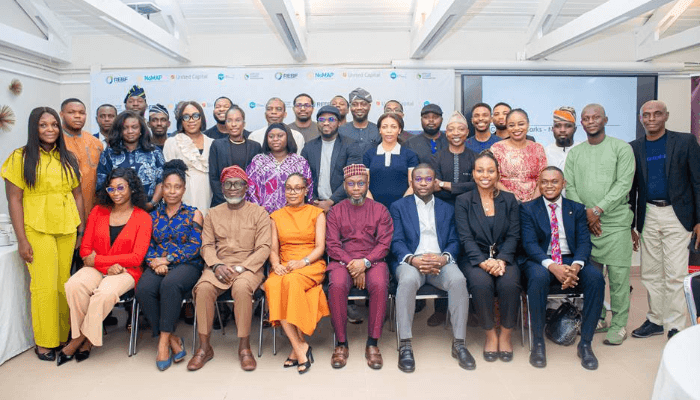
A coalition of development finance actors convened in Lagos last week to formally unveil a new debt fund designed to funnel long-term capital into Nigeria’s off-grid renewable energy sector, an industry that has long struggled to attract patient financing from conventional lenders.
The Renewable Energy Blended Facility, or REBF, is a $20 million impact fund being developed by the Nigeria Off-Grid Market Acceleration Program, known as NoMAP, alongside SNV Netherlands Development Organisation and United Capital Plc.
The three-day dialogue, held March 27 at the Nordic Hotel on Victoria Island, brought together project developers, mini-grid operators, and potential financiers to discuss how the facility would work and what kinds of projects it would prioritise.
The fund is structured as a development impact debt vehicle, meaning it pools concessional and commercial capital to offer financing at terms that standard banks typically will not. Loan sizes will range from $500,000 to $1.5 million per project, with repayment periods of up to ten years, well beyond what most Nigerian commercial lenders offer to businesses in rural and peri-urban markets.
“Closing Nigeria’s energy access gap requires deliberate mobilisation of both concessional and commercial capital,” the REBF team said in a statement at the event.
The facility, they added, is designed to build a pipeline of projects that are structured well enough to eventually attract private investment on their own.
Capital will flow through two main channels: direct loans to project sponsors and value chain actors, and on-lending arrangements through mini-grid developers and productive use equipment providers, who would in turn finance their customers.
The facility’s target sectors include agriculture, light industry, climate-smart infrastructure, e-mobility, and productive use appliances, essentially any enterprise that is powered by distributed renewable energy and serves a rural or semi-urban market.
The launch builds on two smaller pilots that NoMAP ran between 2022 and 2024. The Productive Use of Energy pilot and the Agro Integrated Facility pilot together disbursed $150,000 across four solar mini-grid developers, deployed 202 energy appliances to beneficiaries in 22 communities across three Nigerian states, and directed 40 percent of those assets to women-led businesses.
The exercise was modest in scale but gave the program’s sponsors enough data to argue the model works.
At full deployment, the REBF targets a markedly larger footprint. According to the fund’s projections, it expects to reach more than 202,000 energy access beneficiaries, support over 1,650 smallholder farmers, and serve upward of 53,000 micro-enterprise owners.
The facility also aims to leverage an additional $30 million in local currency funding through partner arrangements, deliver 40 percent reductions in energy costs for participating businesses, cut post-harvest losses by 30 to 50 percent in target communities, and avoid roughly 30,000 metric tonnes of carbon dioxide emissions each year.
Those numbers will attract scrutiny. Impact projections of this kind have a history of outpacing reality in development finance, particularly in markets where foreign exchange volatility and weak infrastructure have historically made lenders cautious.
The fund’s screening criteria are deliberately stringent. Prospective borrowers will need to demonstrate a credible track record, secured offtake arrangements or signed power purchase agreements, completed feasibility studies and financial models, and regulatory approvals already in hand. The facility is not designed for early-stage ventures looking for a first check.
SNV’s Nigeria Solar Marketplace, funded by the Embassy of the Netherlands and the Netherlands Enterprise Agency, will support the fund by aggregating deal flow and providing market intelligence to investors considering the space.
The REBF is expected to formally launch and issue its first call for proposals in the third quarter of 2026. Screening and deal appraisal will run through the fourth quarter, with first disbursements targeted for the opening months of 2027.