Follow Us on Google Discover
Nigerian petroleum prices are projected to rise significantly following the recent US Navy’s blockade of the Strait of Hormuz.
The US is taking this action to cut off Iranian oil earnings and maritime dominance in reaction to the breakdown of peace negotiations with Iran.
Nigerian crude prices went north with other major benchmarks. Brent oil rallied above $103 per barrel as soon as President Trump announced the blockade on April 12.
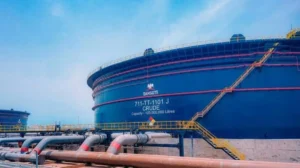
Dangote refinery is operating below its nameplate capacity of 650,000 barrels per day (bpd) because of local supply constraints, though the Nigerian National Petroleum Company Limited (NNPCL) increased its allocation for refinery feedstock.
The “Crude-for-Naira” Gap: Under the current terms, the refinery is anticipated to have a minimum of 13-15 cargoes monthly during the feedstock exchange for local currency; however, in March, NNPCL provided 10 cargoes, which is an increase in comparison to the 2024-2025 period of delivering an average of 5 cargoes per month.
David Bird, the CEO, along with other refinery executives, has insisted that NNPCL is providing significantly less than the agreed-upon forecasts.
More insights
Africa’s biggest refinery by production capacity still sources crude oil from the United States and some African countries to bridge the gap of what local suppliers are providing. The reliance on crude oil from other countries is largely responsible for the recent increase in fuel prices.
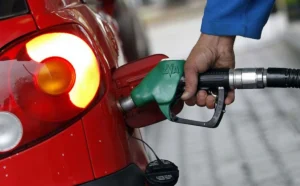
There had been earlier reports that Dangote Petroleum Refinery had increased its gantry prices of petroleum to N1,275 per liter and diesel to N1,950 per liter on April 8, citing Middle East tensions and global crude benchmarks before some price moderation last week.
However, Dangote Refinery, in a statement, insisted that its price of petrol remains unchanged, with the gantry price at N1,200 per litre and the coastal price at N1,153 per litre .
Petrol prices could reach N2,000 per liter without government intervention, according to trade unions (TUC). Nigerian filling stations were already selling between N1,290 and N1,350 per liter as of mid-April.
The Strait of Hormuz is a vital choke point for 20% of the world’s oil supply. Global refined product prices have skyrocketed due to market volatility and risk premiums, despite the blockade’s specific targeting of Iranian vessels.
President Trump announces an immediate naval blockade of the Strait of Hormuz
President Donald Trump ordered a blockade of the Strait of Hormuz following the collapse of peace talks over the weekend, escalating tensions with Iran and driving up oil prices while stocks and bonds fell.
Concerns that a blockade would disrupt energy flows through the vital waterway pushed Brent crude up 7.4 per cent to slightly over $102 per barrel.
The American dollar has been the preferred haven since the start of the Middle East conflict and has strengthened against all its Group of 10 counterparts.
Concerns that rising energy prices would push inflation higher sent Treasury bonds lower and pushed Japan’s 10-year yield to 2.49 per cent, the highest since 1997.
President Trump’s threats of escalation damaged sentiment after global stocks posted their largest weekly gain in over two years, after crude oil prices posted their worst week since 2020.
The US Central Command announced it would begin enforcing a blockade of all maritime traffic entering and departing Iranian ports on Monday at 10 am New York time, in response to Trump’s declaration.
Vessels crossing the Strait of Hormuz to and from non-Iranian ports won’t have their freedom of navigation restricted by US forces. Iran declared that it “won’t allow” the blockade to continue.
According to Trump, the US will clear mines in the strait and impose an interdiction on any ship that has paid a toll to Iran for safe passage through Hormuz.
A blockade would stop Iranian oil from flowing through the waterway at almost two million barrels per day, further restricting global supply and severing a crucial lifeline for the Islamic Republic of Iran.