
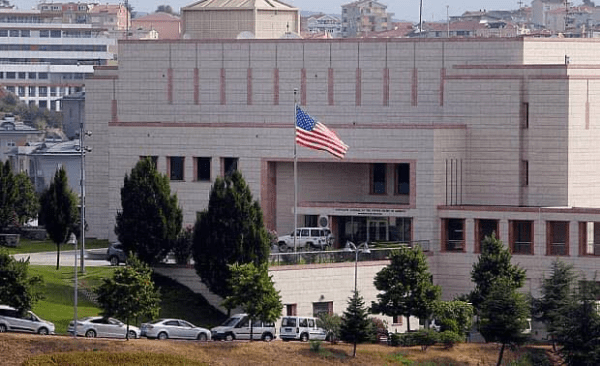
The United States has ordered non-emergency embassy personnel and their families to leave its mission in Abuja over rising security concerns.
The disclosure was made by the U.S. Department of State in a travel advisory published on its official website on Wednesday.
The Department confirmed it has authorized the departure of non-emergency personnel and their families from its Abuja mission, citing a deteriorating security environment.


It also maintained Nigeria’s Level 3 travel advisory status, urging Americans to exercise caution.
Several states were additionally classified under the stricter Level 4 advisory, indicating areas where travel should be avoided entirely.
What they are saying
The U.S. Department of State stated that it took the decision on April 8, 2026, following an assessment of the security situation in Nigeria. The advisory emphasized the risks posed by crime, terrorism, and civil unrest across multiple regions of the country.
- “Reconsider travel to Nigeria due to crime, terrorism, unrest, kidnapping, and inconsistent availability of health care services. Some areas have increased risk. Read the entire Travel Advisory,” the statement read in part.
- “On April 8, 2026, the Department of State authorized non-emergency U.S. government employees and U.S. government employee family members to leave U.S. Embassy Abuja due to the deteriorating security situation.”
The Department listed several high-risk states across northern, central, and southern Nigeria, citing threats such as terrorism, banditry, kidnapping, and violent crime, reinforcing its warning to avoid travel to designated areas.
More insights
The advisory highlighted that violent crime remains widespread in Nigeria, including armed robbery, assault, carjacking, kidnapping, and hostage-taking. It noted that kidnapping for ransom is frequent and often targets foreigners and dual nationals.
- Terrorist groups such as Boko Haram continue to plan and execute attacks, sometimes collaborating with criminal gangs.
- Potential targets include public spaces like markets, shopping centres, schools, places of worship, government buildings, and transport hubs.
- Civil unrest persists in parts of southern Nigeria, particularly in the Niger Delta and Southeast, driven by armed groups and protests.
Healthcare challenges were also flagged, including limited access to medicines, unreliable emergency services, and upfront payment requirements.
The Department further warned that the U.S. government may have limited capacity to assist citizens in certain high-risk areas, urging Americans to avoid such locations entirely.
Get up to speed
The latest advisory follows a series of recent warnings issued by the U.S. Mission in Nigeria regarding security concerns. Earlier alerts had pointed to possible protests and terrorist threats targeting U.S.-linked locations.
- On March 4, Americans in Abuja were advised to stay indoors amid fears of protests that could escalate into clashes with security forces.
- The U.S. Embassy temporarily suspended visa appointments on the same day due to security concerns, later resuming services.
- On March 10, the embassy warned of a possible terrorist threat targeting diplomatic facilities and U.S.-affiliated schools.
Citizens were urged to remain vigilant, avoid predictable routines, and review personal security measures.
These developments underscore a pattern of heightened caution by U.S. authorities regarding the safety of their citizens in Nigeria.
What you should know
In December 2025, the United States placed Nigeria on a list of countries facing partial travel restrictions under a presidential proclamation aimed at tightening border controls. The decision was based on security assessments and immigration compliance data.
- Nigeria was included among countries subject to partial suspension affecting certain immigrant and non-immigrant visa categories.
- The U.S. cited the presence of extremist groups such as Boko Haram and the Islamic State as a major concern.
- Visa overstay data showed Nigerian nationals recorded a 5.56% overstay rate for B-1/B-2 visas and 11.90% for student and exchange visas.
- Restrictions apply to categories including B-1, B-2, F, M, and J visas, while some groups like diplomats and existing visa holders are exempt.
While Nigeria is not under a full travel ban, the restrictions signal increased scrutiny for visa applicants, potentially leading to longer processing times and higher rejection rates for Nigerians seeking entry into the United States.