

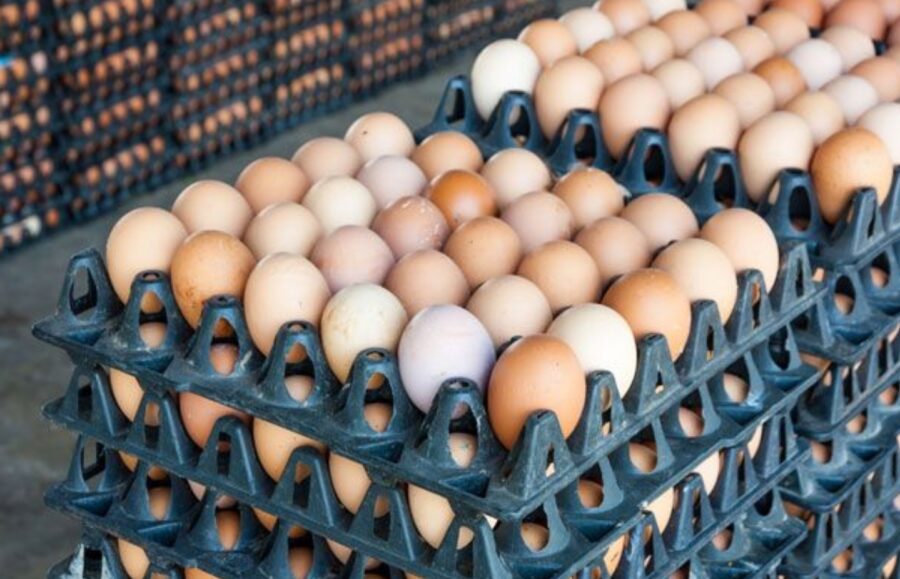
Nigeria is facing a fresh spike in egg prices, with a crate now selling as high as N8,500 in some retail outlets, driven largely by a shortage of day-old chicks (DOCs) that has constrained poultry production and tightened supply across the country.
Findings show that farm gate prices have risen to about N5,500 per crate, up from N5,000 in January 2026.
Retailers now sell between N6,000 and N6,500 depending on egg size, while supermarkets and large grocery stores price crates between N7,000 and N8,500, reflecting rising distribution and operating costs, News Agency of Nigeria reported.


Industry stakeholders say the shortage of DOCs, a critical input for egg production, is the primary driver of the looming scarcity. According to the Poultry Association of Nigeria (PAN), hatcheries are fully booked months in advance, leaving farmers unable to restock their flocks after selling off ageing layers.
What they are saying
Chairman of PAN, Lagos chapter, Mojeed Iyiola, noted that farmers are currently unable to secure DOC bookings until late 2026, with waiting periods stretching up to six months. This has created a production lag, as newly acquired chicks require several months before they begin laying eggs at optimal levels.
- The cost of DOCs has also surged significantly, nearly doubling from about N1,800 last year to approximately N3,300, further squeezing farmers’ margins and discouraging expansion.
- Stakeholders attribute the supply bottleneck to regulatory constraints, particularly limited government-issued licences for the importation of parent stock — breeding birds necessary for hatchery operations. Industry players are now urging the Federal Government to expand import licences or allow direct importation of DOCs to stabilise supply.
- The ripple effects are already being felt across the value chain. Egg distributors say transportation costs, exacerbated by recent increases in fuel prices, have compounded price pressures, pushing retail prices higher.
Consumers, meanwhile, are bearing the brunt of the surge. Many households report reduced access to eggs, traditionally considered one of the most affordable sources of protein. Some buyers say prices have risen steadily since the start of the year, with no clear indication of when the trend may reverse.
What you should know
Nairametrics had previously reported that poultry farmers in Nigeria raised concerns over a proposed $900 million investment deal between the Federal Government and China, warning that the initiative could undermine local producers if not carefully implemented.
- The Poultry Association of Nigeria (PAN) disclosed these concerns in discussions with the News Agency of Nigeria (NAN), noting that stakeholders remain cautious about the structure and long-term impact of the partnership.
- The Federal Government is projecting the deal as a large-scale intervention to boost domestic production, with plans for a poultry project capable of producing up to six million eggs daily.
The initiative is positioned as part of broader efforts to address Nigeria’s protein deficit and strengthen food security, although industry players insist that existing structural challenges such as limited access to inputs must first be resolved to ensure sustainable growth.










Activities of the Agents who have no Poultry Farms are obstacles to availability of the Day Old Chicken ( DOC) at competitive prices. They book the DOC in advance and sell it to Poultry Operators at monopolistic prices. Their parasitic activities are not limited to poultry operations but extended to all the sectors of the Nigeria economy and thereby causing general inflation.