Follow Us on Google Discover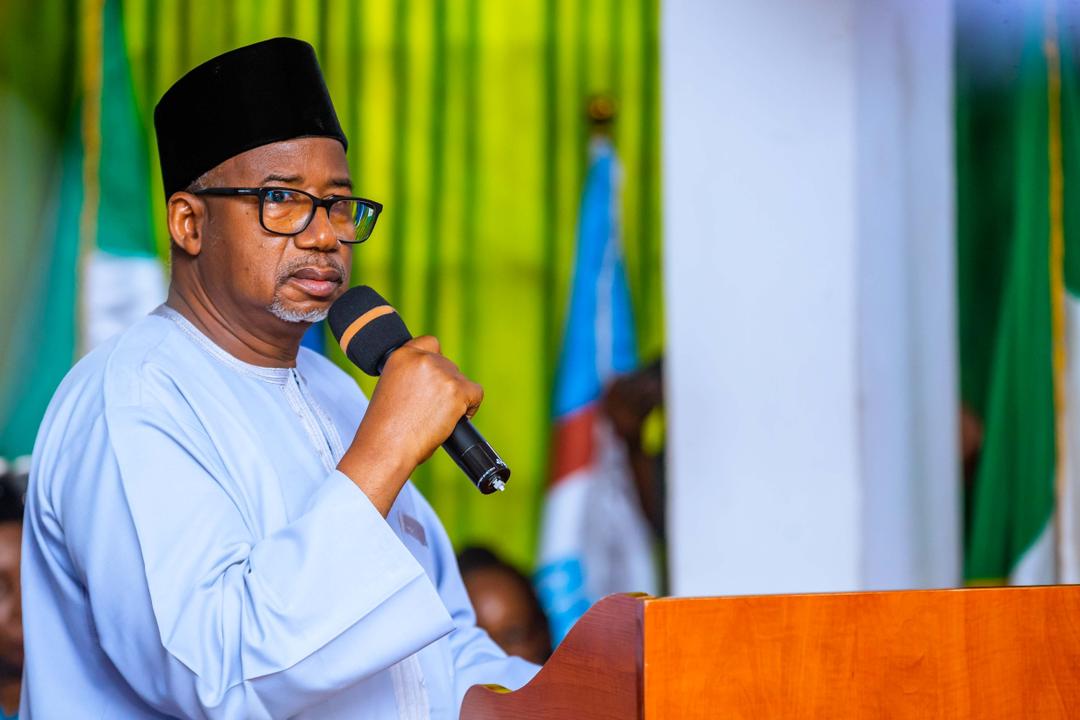
The Bauchi State government has announced plans to spend N112.7 billion on education in 2026, covering all levels from primary schools to universities.
The disclosure was made by Gov. Bala Mohammed during the combined eighth, ninth, and 10th convocation ceremony of Sa’adu Zungur University, Gadau, as reported by the News Agency of Nigeria (NAN).
The funding is part of the state’s continued effort to improve learning infrastructure, support staff, and enhance student welfare.
What they are saying
Gov. Bala Mohammed said the government has consistently allocated over 15% of its annual budget to education, aiming to strengthen access, learning outcomes, and infrastructure across all levels.
- “Gov. Bala Mohammed of Bauchi State says his administration has allocated N112.7 billion for the education sector in 2026, underscoring commitment to boosting human capital development,” the NAN report read.
- “He said that over 15% of the state’s annual budgets had consistently been allocated to education.”
- “N58.02 billion has been earmarked for higher education in the 2026 budget, including N40.6 billion for capital projects such as classrooms, hostels, laboratories, ICT centres and staff quarters.”
The remaining portion of the budget will fund primary and secondary education, teacher welfare, learning materials, and school infrastructure across the state.
More insights
The funding will support a range of projects at Sa’adu Zungur University, including 20 new classrooms, student hostels at the Gadau and Yuli campuses, staff quarters, and security improvements.
- Measures will cover regular staff salary payments, student scholarships, and adjustments to registration fees.
- Gov. Mohammed warned against activities that compromise academic standards, including drug abuse and sexual harassment, stating that violations would be addressed according to the law.
- The university continues to graduate students who contribute to the state’s workforce.
These initiatives are aimed at improving the overall learning environment and ensuring graduates are well-prepared for employment.
Why this matters
Bauchi State has faced significant education challenges. A 2022 SBM Intelligence report showed it had the third-highest number of out-of-school children in Nigeria, after Kebbi and Zamfara, with 60.8% of children affected.
- The 2026 budget allocation of N112.7 billion will support school infrastructure, pay teacher salaries, provide student welfare, and supply learning resources, which are critical steps toward expanding access and improving the quality of education.
- The funding is also expected to help more students stay in school and complete their education, reduce the number of out-of-school children, and create a safer and more supportive learning environment in both urban and rural areas.
By addressing these gaps, the state aims to strengthen human capital development and prepare students to contribute effectively to the local and national economy.
What you should know
Bauchi State’s allocation of over 15% of its annual budget to education aligns with UNESCO’s recommendation that governments dedicate 4–6% of GDP or 15–20% of public spending to the sector.
- Sub-Saharan Africa faces a $70 billion annual education financing gap, accounting for the largest share of a $97 billion gap needed to achieve Sustainable Development Goal 4 (SDG4) in 79 low- and lower-middle-income countries between 2023 and 2030.
- Increased funding, such as Bauchi’s 2026 allocation, can support infrastructure, teaching materials, and student welfare. UNESCO warns that underinvestment carries huge economic costs, including $1.1 trillion lost from early school leaving and $3.3 trillion from children lacking basic skills.
Governments in Sub-Saharan Africa spend about $55 per learner annually, compared with $8,543 in high-income countries. Closing these gaps is critical to expanding learning opportunities, strengthening human capital, and supporting long-term development.
Bauchi Govt. invests N112.7bn in education sector – Gov. Mohammed – News Agency of Nigeria