

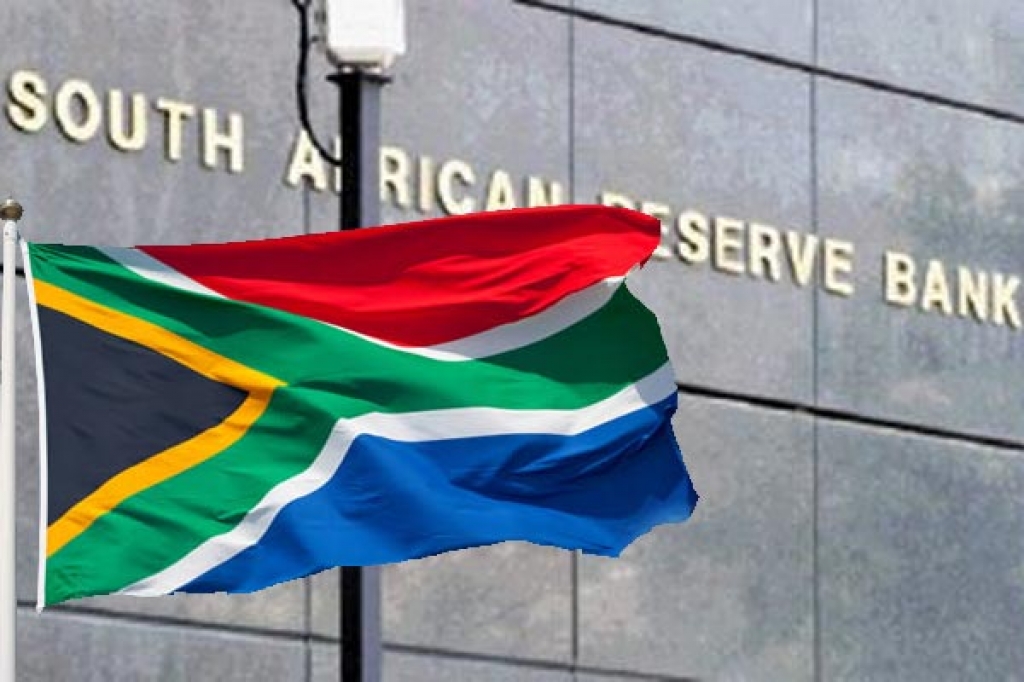
South Africa’s central bank has kept its policy rate unchanged at 6.75%, citing caution as rising energy prices linked to the U.S.-Israel conflict with Iran are expected to push inflation higher.
The decision, announced on Thursday by the South African Reserve Bank (SARB), reflects concern over global shocks affecting the local economy.
The country’s inflation had been well-contained in the months leading up to the conflict, slowing to the SARB’s 3% target in February.
However, with anticipated fuel price hikes and a weaker rand filtering through, inflation is expected to accelerate in the coming months.
What the apex bank is saying
Governor Lesetja Kganyago explained the rationale behind the decision, emphasizing a cautious approach.
- “We warned of elevated risks, and we have been proceeding cautiously in our rate setting,” Kganyago said. “Now a crisis has hit, this prudent approach is proving appropriate.”
- The central bank expects headline inflation to rise to around 4% soon, with fuel inflation exceeding 18% in the second quarter.
- Kganyago added that the SARB’s projection model now indicates rates will remain unchanged for a longer period, delaying the cuts that had been considered earlier this year.
The decision to hold rates was unanimous among policymakers, signaling broad agreement on the need to monitor risks before making further adjustments.
Backstory
Before the outbreak of the conflict, Reuters reports that economists had anticipated further policy easing by the SARB this year, as inflation pressures appeared under control.
- Inflation had previously trended toward the 3% target, suggesting conditions for rate cuts.
- South Africa, as a net fuel importer, is particularly vulnerable to global energy price spikes, which directly impact domestic inflation.
- The rand has weakened more than 6% against the U.S. dollar since the conflict began, reflecting investor concerns over the country’s exposure to global shocks.
- SARB considered two adverse scenarios for the Iran conflict: one lasting a few months and another extending over a year. Both scenarios indicate inflation remaining above the 3% target, with the most severe projecting rates above 5% and target alignment not expected until 2028.
The conflict has therefore altered the central bank’s policy outlook, shifting from a path of easing to a more cautious stance.
Despite global risks, the SARB kept its economic growth forecasts steady at 1.4% for 2024 and 1.9% for 2025.
- The bank stressed that the negative shock from the conflict could delay the return of inflation to target levels.
- Fuel and energy price pressures remain the primary drivers of inflation in the short term.
What you should know
South Africa’s annual consumer inflation eased to 3% in February 2026, aligning with the central bank’s target and marking a decline from the 3.5% recorded in January.
- Inflation trends across Africa’s largest economies continue to diverge, reflecting different macroeconomic conditions and policy challenges.
- While South Africa has returned to target-level inflation, other countries are still battling elevated price levels.
Nigeria’s headline inflation stood at 15.06% in February 2026, slightly down from 15.10% in January.









