Follow Us on Google Discover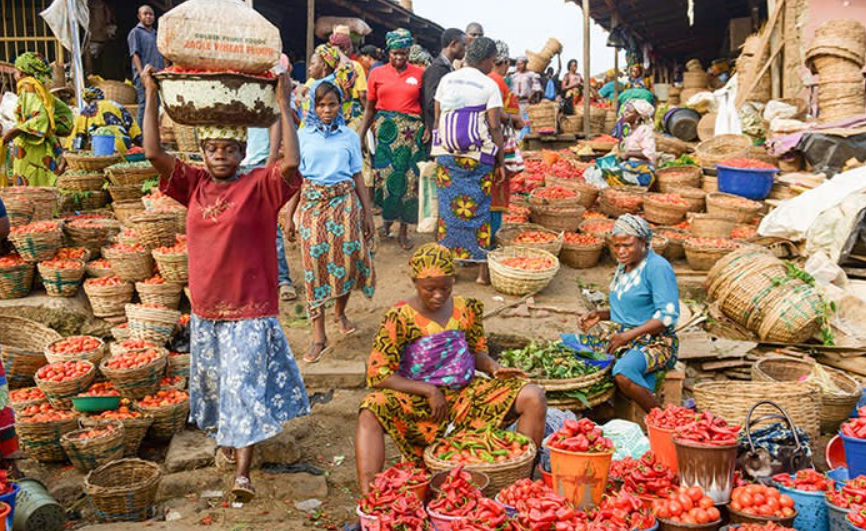
Nigeria’s headline inflation rate moderated marginally to 15.06% in February 2026, down from 15.10% recorded in January 2026.
This is according to the latest data released by the National Bureau of Statistics (NBS).
The report shows that while annual inflation eased slightly, monthly price pressures strengthened during the period.
The Consumer Price Index (CPI), which measures changes in the average price level of goods and services, rose to 130.0 in February 2026, up from 127.4 in January 2026.
Also Read
What the data is saying
The NBS data indicate mixed inflation trends across annual and monthly measurements.
- Headline inflation declined marginally on a year-on-year basis but accelerated on a month-on-month basis.
- Headline inflation stood at 2.01% month-on-month in February 2026.
- This represents a sharp increase compared to -2.88% recorded in January 2026.
- Urban inflation was 15.53% year-on-year, down from 28.49% in February 2025.
- Rural inflation stood at 13.93% year-on-year, compared to 22.73% in February 2025.
- On a monthly basis, inflation pressures rose in both urban and rural areas.
- Urban inflation increased to 2.55% month-on-month, compared to -2.72% in January 2026.
- Rural inflation rose to 0.71% month-on-month, from -3.29% in January 2026.
More insights
Food inflation showed significant moderation on a yearly basis but increased sharply month-on-month.
- Food inflation stood at 12.12% year-on-year, down from 26.98% in February 2025.
- However, month-on-month food inflation rose to 4.69%, reversing the -6.02% recorded in January 2026.
- The increase was driven by rising prices of items such as beans, carrots, okazi leaf, cassava tuber, crayfish, millet flour, yam flour, snails, ogbono (dried and unground), and cow peas.
The average annual food inflation rate for the twelve months ending February 2026 was 19.08%, compared to 37.40% in February 2025.
- Core inflation, which excludes volatile agricultural produce and energy prices, also showed a similar trend.
- Core inflation stood at 15.88% year-on-year, down from 25.66% in February 2025.
On a month-on-month basis, core inflation rose to 0.89%, compared to -1.69% in January 2026.
The twelve-month average core inflation rate was 22.00%, lower than 27.25% recorded in February 2025.
What you should know
The latest inflation data highlight both progress in annual price stability and persistent short-term pressures.
- Nairametrics earlier reported that Nigeria’s headline inflation rate moderated slightly to 15.10% in January 2026, down from 15.15% recorded in December 2025.
- The January 2026 rate of 15.10% is 12.51 percentage points lower than the 27.61% recorded in January 2025.
In December 2025, the Central Bank of Nigeria (CBN) projected that headline inflation will moderate to an average of 12.94% in 2026, driven by easing food prices and a decline in the cost of premium motor spirit (PMS).
The projection is contained in the apex bank’s 2026 Macroeconomic Outlook for Nigeria.