Follow Us on Google Discover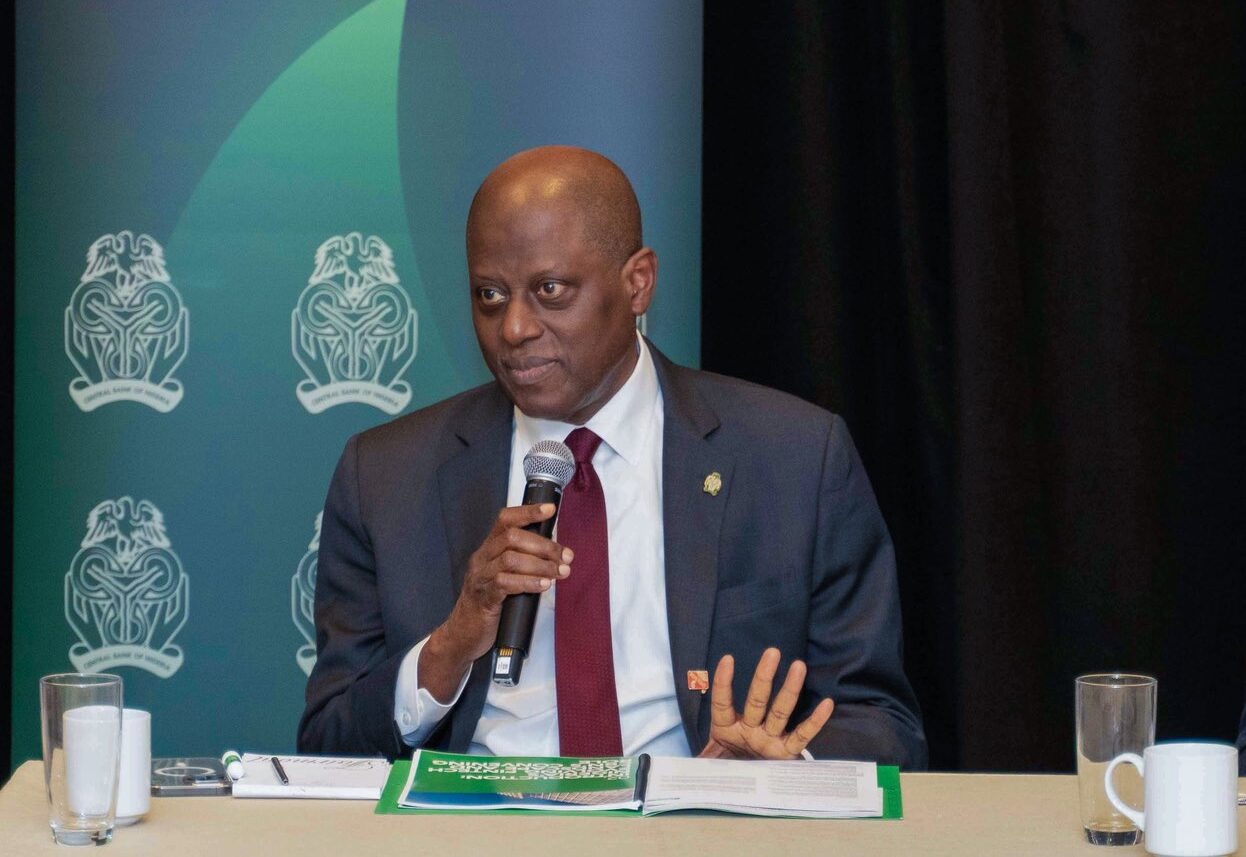
The Governor of the Central Bank of Nigeria (CBN), Olayemi Cardoso, has expressed concerns over the ongoing conflict in the Middle East, describing it as a significant risk to Nigeria’s economic stability.
Cardoso made the statement at the Monetary Policy Forum in Abuja on Thursday.
The conflict between Iran and Israel has caused global crude oil prices to rise dramatically, pushing prices past $100 per barrel, with the ongoing disruptions in the Strait of Hormuz.
This surge in oil prices has contributed to a sharp increase in Nigerian petrol prices, now reaching N1,350 per litre.
Also Read
What he is saying
Despite the progress Nigeria has made in building stronger reserves, a more resilient banking system, and a safer payment infrastructure, Governor Cardoso acknowledged that challenges remain.
While Nigeria’s economic growth has been strong, the central bank’s focus is now on consolidating gains, particularly by steering inflation toward a single-digit level, sustaining exchange-rate stability, and strengthening reserve buffers.
Looking ahead, Cardoso noted that global economic growth is projected at 3.3% for 2026. However, this forecast may be tempered by factors such as tight financial conditions, the ongoing effects of monetary tightening, and geopolitical tensions.
- “The Middle East crisis, with its impact on oil price volatility, constitutes a major source of risk to the Nigerian economy,” Cardoso warned.
Get up to speed
The impact of the Iran-US-Israel conflict has been felt globally, with Nigerian crude prices surging above $110 per barrel.
- Last week, the price of Brent crude hit $112 per barrel, its highest level since mid-2022, well above Nigeria’s $64.85 budget benchmark.
- This sharp increase in global oil prices has also seen Middle Eastern oil, such as Abu Dhabi’s Murban grade, double in value.
Brent has risen over 50% this month alone, with rising transportation costs and higher operating expenses for small and medium-sized enterprises (SMEs). This has exacerbated the ongoing cost-of-living crisis in the country.
More insights
At the forum, Cardoso shared that Nigeria’s domestic growth is projected at 4.49%, supported by improved policy consistency, a market-driven FX regime, recovering oil production, and the continued implementation of structural reforms.
However, Cardoso also acknowledged that challenges like food supply constraints, infrastructure deficits, and election-cycle spending could present additional hurdles.
He emphasized that Nigeria’s strengthened macroeconomic fundamentals, improved fiscal and monetary coordination, and sound early warning systems have positioned the country to manage these risks better than in the past.
What you should know
The rise in fuel prices has severely affected business owners, eroding their profit margins and weakening consumer purchasing power.
This reflects a broader trend where persistent fuel price hikes continue to drive up transport costs, food prices, and service fees, further stressing the economy.
Experts are concerned that this could fuel a deeper inflationary spiral, particularly for SMEs that operate on thin profit margins and lack adequate financial buffers.