
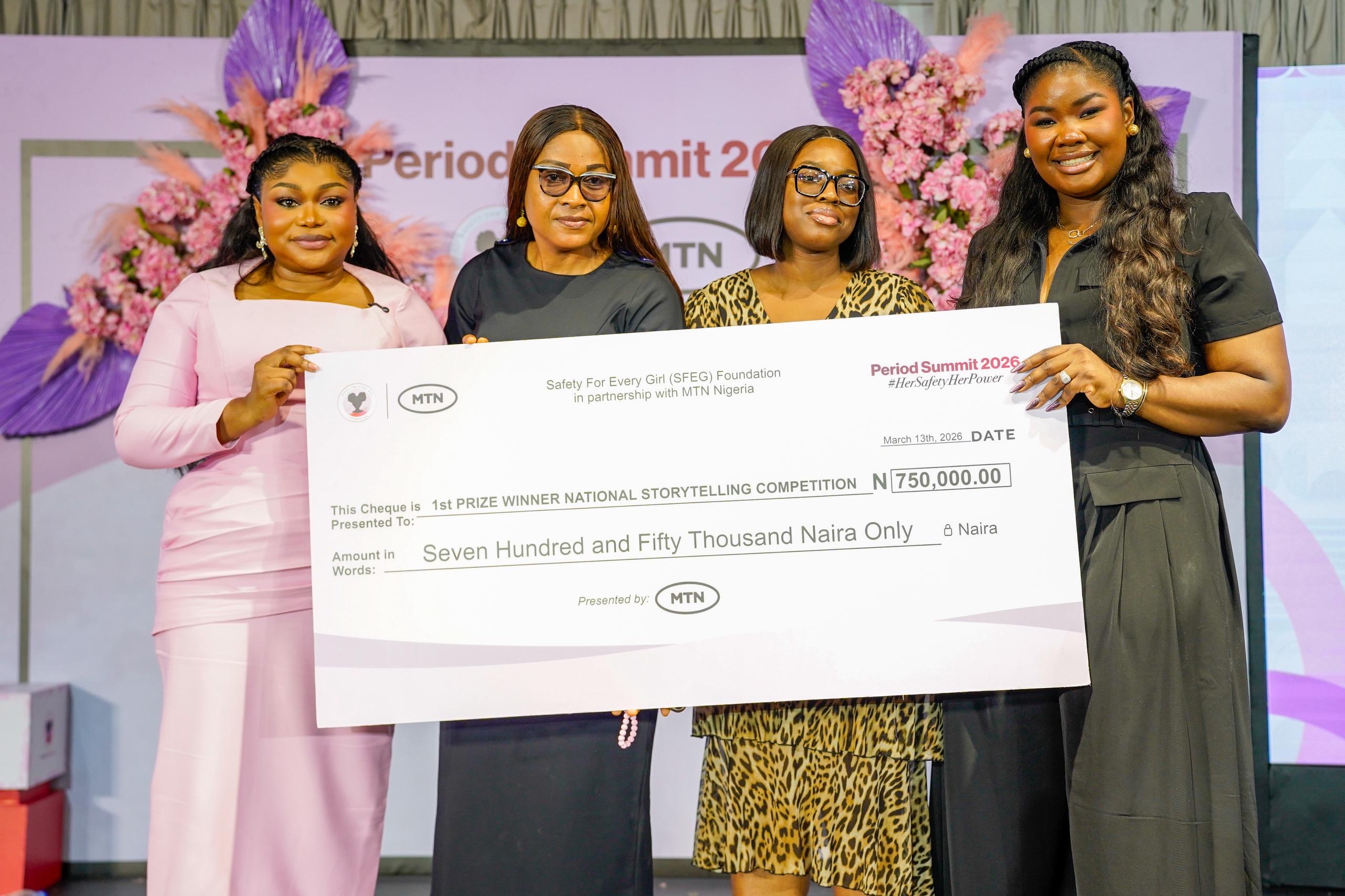
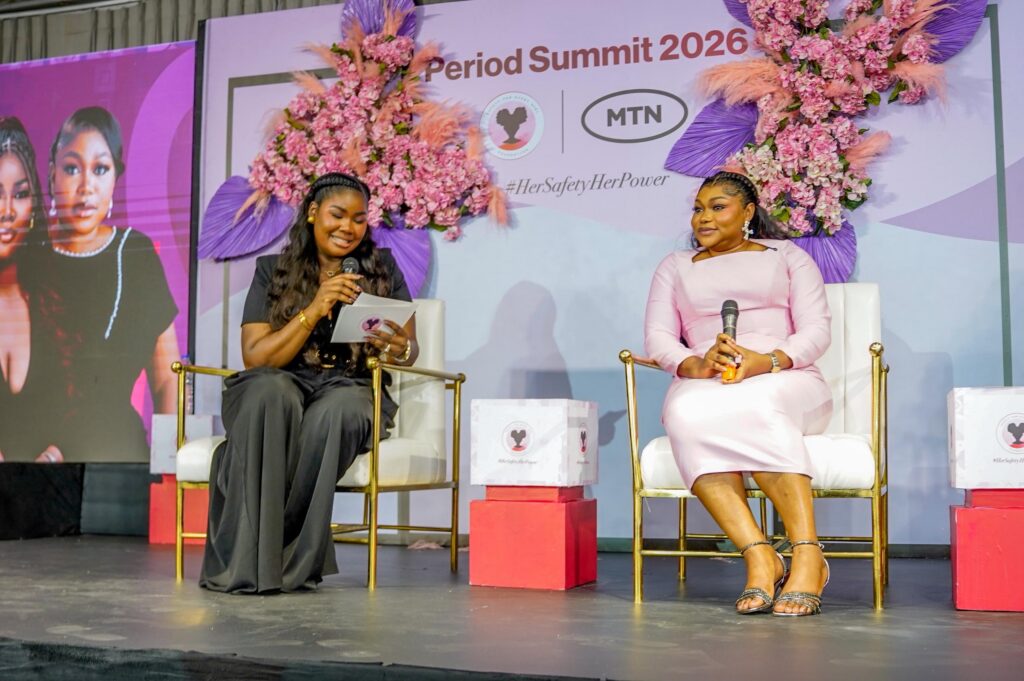
MTN Nigeria has strengthened its commitment to women’s empowerment through a strategic partnership with the Safety For Every Girl (SFEG) Foundation, co-hosting the 2026 Period Summit in Lagos to address the economic implications of women’s safety and access.
While often treated as a social concern, discussions at the summit positioned women’s safety and menstrual health as critical factors influencing workforce participation, productivity, and long-term economic growth in Nigeria.
Speaking at the event, SFEG Founder and Privacy Lawyer, Chioma Nwigwe, highlighted the economic burden of menstrual health on Nigerian women.


“This is an economic issue. Menstruation affects over half the population, yet access to basic hygiene products remains a barrier. In a country where the minimum wage is N30,000, products priced at N3,000 directly impact education, mobility, and earning potential. Addressing this requires structural solutions, from subsidies to treating menstrual health as a public priority,” she said.
MTN Nigeria’s participation underscores the growing role of private-sector players in addressing the social determinants of economic inclusion. Representing the organization, Njide Ken-Odogwu, Sponsorship Manager at MTN Nigeria, reaffirmed the company’s commitment to initiatives that expand opportunities for women and girls.
The summit also brought together leaders across business, media, and advocacy to examine how safety challenges translate into economic constraints.
Transformation Strategist and board member at the Life Coaches Association of Nigeria, Laila St.Matthew-Daniel, emphasized the need for systemic accountability. “We must move from telling women how to stay safe to ensuring that systems are designed to be safe. Without structural change, participation and productivity will continue to be limited.”
Corporate perspectives further reinforced the link between safety and performance. Ejiroghene Udu, CEO of Premium Power Solutions, noted that the “invisible adjustments” women make daily to protect themselves can have long-term implications on career growth, workplace engagement, and economic participation.
“The biggest silence is the quiet adjustments women make every day just to feel safe. Over time, it limits how freely we live, work, and grow,” she said.
The summit also featured a national interschool debate, judged by media titan Chude Jideonwo and STEM advocate Mojoyinoluwa Adeshina, where students from Supreme Child Schools and Bright Achievers School examined responsibility for safety education, highlighting how early awareness and agency contribute to future workforce readiness.

In parallel, the #HerSafetyHerPower National Storytelling Challenge attracted over 1,000 entries from women and girls across Nigeria, providing a large-scale dataset of lived experiences. Insights from these submissions were presented by SFEG’s Director of Research and Advocacy, Dr. Onyinye Oti, reinforcing the need for data-driven approaches to policy and intervention design.
“Storytelling is how you start conversations people usually avoid,” said Ruth Kadiri, actor and filmmaker. “It gives women a voice without putting them on the spot and validates experiences many struggle to articulate. The truth is, when enough people are talking, leaders have to listen. Stories create awareness, awareness creates pressure, and pressure creates change. That is how what was once ignored starts to feel unacceptable in our society,” she added.
With growing private sector involvement and increasing public engagement, the 2026 Period Summit signals a shift in how women’s safety is positioned, moving from a standalone social issue to a broader economic and development priority.
Follow @SafetyForEveryGirl on Instagram and LinkedIn for updates.