Follow Us on Google Discover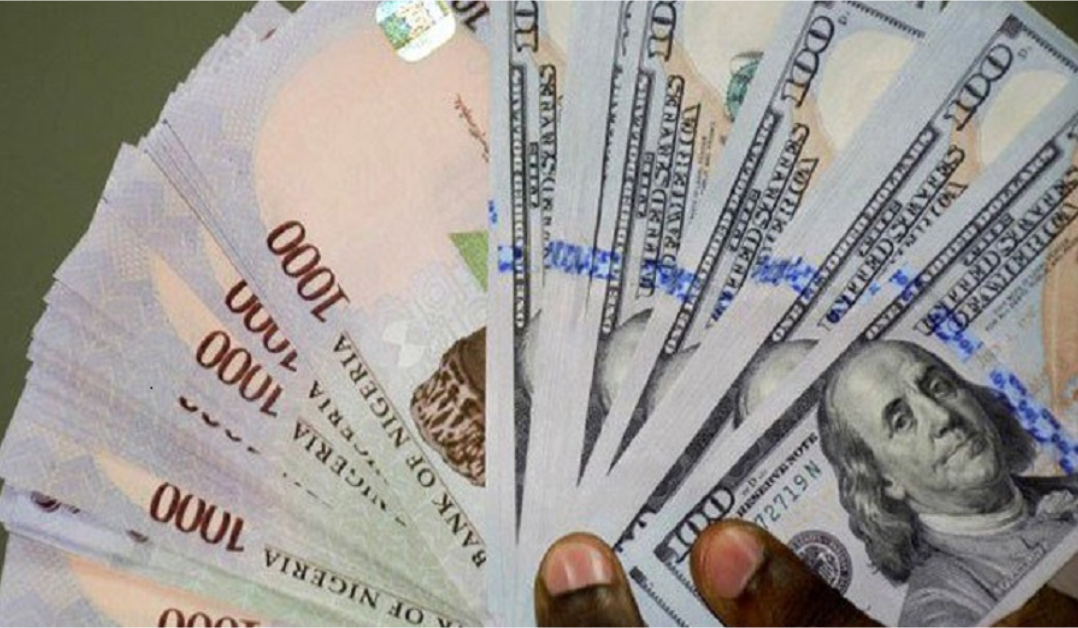
India’s rupee has fallen to a record low against the US dollar, prompting the Reserve Bank of India (RBI) to ramp up intervention to nearly $100 billion in forward dollar positions.
This development was reported by Money Control on Thursday.
The move comes amid renewed pressure on emerging markets from a resurgent dollar, even as India’s foreign exchange reserves remain near record highs.
Meanwhile, Nigeria’s naira depreciated to N1,362/$ on Wednesday, according to data from the Central Bank of Nigeria’s (CBN) website.
Also Read
What the report is saying
The report stated that the RBI has increased its net-short dollar position, a measure of its forward sales of US currency to nearly $100 billion across offshore and onshore markets, according to people familiar with the matter.
This figure marks a significant rise from $67.8 billion in January and approaches the record $88.8 billion last seen in February 2025.
- The RBI has focused much of its intervention in offshore markets using non-deliverable forwards (NDFs), which allow the central bank to influence exchange rates without immediately depleting its reserves.
- Onshore interventions include buy-sell swaps, some with tenors exceeding a year, to offset liquidity pressures from currency market activity.
- India’s foreign exchange reserves stood at $717 billion in the week of March 6, near a historic high.
Using NDFs enables the RBI to manage the rupee efficiently while keeping intervention costs relatively low.
Get up to speed
The rupee has faced persistent pressure over the past two years due to global dollar strength, high US tariffs, and capital outflows from emerging markets.
India has frequently intervened in currency markets to stabilise the rupee, with offshore NDFs becoming a key tool in recent years.
Similarly, Nigeria has struggled to maintain naira stability amid declining oil revenues and global market volatility, making external reserves crucial for intervention.
Global currency markets recently showed mixed movements as investors reacted to geopolitical developments in the Middle East.
More insights
Nigeria’s naira weakened to N1,362/$ on Wednesday, following a brief appreciation to N1,345/$ on Tuesday at the official foreign exchange market.
Tuesday’s rate had been the strongest for the naira since February 18, 2026, when it closed at N1,340/$.
- Gross external reserves in Nigeria fell slightly to $49.86 billion in March from $50.45 billion in February.
- The decline indicates ongoing adjustments in the country’s foreign exchange buffers.
- External reserves remain a key measure of Nigeria’s capacity to support the naira.
- The trend suggests persistent pressures on the currency amid broader market dynamics.
What you should know
Earlier this week, Nairametrics reported that the naira appreciated to N1,355/$ at the official foreign exchange market, its strongest level since February 23.
The Central Bank of Nigeria says the country’s improving external reserve position could help cushion the naira against prolonged pressure.
- According to the apex bank, Nigeria’s net foreign exchange reserves rose to $34.80 billion at the end of 2025, reflecting improved external liquidity.
- The rupee’s decline and the RBI’s heightened intervention reflect growing pressures on emerging market currencies from a strong US dollar.