Follow Us on Google Discover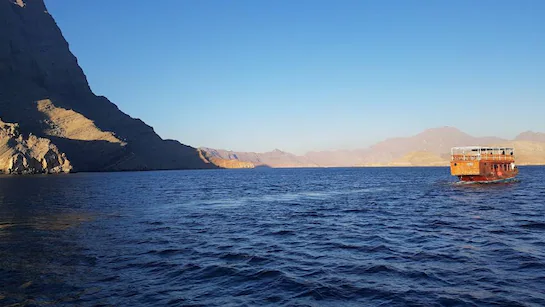
The Ministers of Foreign Affairs of 12 countries have demanded the opening of the Strait of Hormuz, a critical oil shipping route, and called for an end to attacks on oil facilities.
This was disclosed in a joint statement issued on Thursday, following a consultative ministerial meeting of the foreign ministers of a group of Arab and Islamic countries regarding ongoing war in the Middle East.
The countries include the State of Qatar, the Republic of Azerbaijan, the Kingdom of Bahrain, the Arab Republic of Egypt, the Hashemite Kingdom of Jordan, the State of Kuwait, and the Republic of Lebanon.
Others are the Islamic Republic of Pakistan, the Kingdom of Saudi Arabia, the Syrian Arab Republic, the Republic of Türkiye, and the United Arab Emirates.
Also Read
What they are saying
After their meeting on Wednesday in Riyadh, the ministers condemned attacks on the Gulf Cooperation Council countries, the Hashemite Kingdom of Jordan, the Republic of Azerbaijan, and the Republic of Türkiye.
- They urged Iran “to refrain from any measures or threats aimed at closing or obstructing international navigation in the Strait of Hormuz or threatening maritime security in Bab al-Mandab.”
- “They affirmed their condemnation and denunciation of these deliberate Iranian attacks with ballistic missiles and drones, which targeted residential areas and civilian infrastructure, including oil facilities, desalination plants, airports, residential buildings, and diplomatic premises.
- “The ministers further affirmed that such attacks could not be justified under any pretext or in any manner whatsoever,” the statement read.
More insights
The ministers also stressed the right of states to defend themselves in accordance with Article 51 of the United Nations Charter.
They called on Iran to immediately halt attacks, as they affirmed the necessity of respecting international law, international humanitarian law, and the principles of good neighborliness.
They described these as steps toward ending the escalation, achieving security and stability in the region, and promoting diplomacy as a means to resolve the crisis.
- “The ministers stressed the need for Iran to abide by Security Council Resolution 2817 (2026), which calls for an immediate halt to all attacks, the unconditional cessation of any provocative acts or threats against neighboring states, and the cessation of support, financing, and arming of its affiliated militias in Arab countries, which Iran is doing to serve its goals and against the interests of these countries,” the statement added.
Backstory
Iranian authorities had on Wednesday issued warnings to regional players, signaling a potential widening of the Middle East conflict beyond its current scope.
- The development came after Israel hit Iran’s South Pars gas field, the world’s largest natural gas deposit, marking a major escalation in the ongoing conflict in the Gulf.
- According to Reuters, the attack occurred on Wednesday, with Iranian authorities confirming that parts of the facility, including gas tanks and sections of a refinery, were struck, forcing the evacuation of workers as emergency crews battled a fire.
Iran signaled swift retaliation, warning neighboring Gulf countries that their energy infrastructure could be targeted in response to the attack.
What you should know
The crisis in the Middle East continues to escalate as the US and Israel press on with their battle against Iran.
- Beyond causing a global oil shortage due to the Strait of Hormuz blockade, the war has also led to infrastructural damage in neighboring countries harboring US assets, which Iran has hit in retaliation.
- US President Donald Trump said on Thursday that the US had no prior knowledge of Israel’s Wednesday strike on Iran’s South Pars gas field, while distancing Qatar from the incident.
- He made this known in a post on Truth Social.
In his statement, Trump said the US was unaware of the attack and insisted that Qatar had no involvement or prior knowledge of the strike, even though Iran appeared to believe otherwise and retaliated against a Qatari gas facility.
Trump also stated that Israel would refrain from further attacks on the facility, but issued a strong warning over any future retaliation targeting Qatar’s LNG infrastructure.