
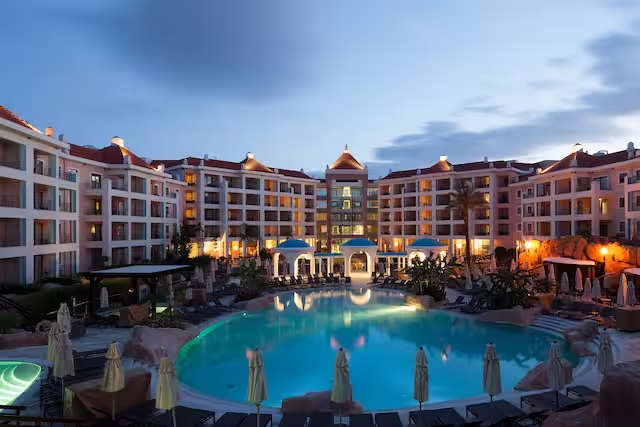
Africa’s hospitality sector is entering a new growth phase, with hotel construction accelerating across the continent as tourism, business travel, and urban development continue to expand.
According to the Hotel Chain Development Pipelines in Africa 2026 report by W Hospitality Group, the continent’s top hotel development markets account for 504 hotel projects with a combined pipeline of 97,878 rooms. Of this total, 54,742 rooms, representing about 56% of the pipeline, are already under construction.
The renewed construction momentum is underpinned by improving travel demand in Africa’s tourism economy.


Africa recorded an 8% increase in international tourist arrivals in 2025 compared with 2024, the strongest growth rate globally, according to UN Tourism.
The agency’s World Tourism Barometer shows the continent welcomed about 81 million international tourists in 2025.
Investors and global hotel brands are increasingly betting on Africa, from luxury resorts to business hotels.
Nairametrics reported on some of West Africa’s largest hotels, which include major hospitality landmarks like Transcorp Hilton Abuja, Rock City Hotel in Ghana, and Eko Hotels & Suites, which rank among the region’s biggest properties in terms of total room inventory.
Together, these top ten countries account for about 79% of all hotel rooms currently planned or being built in Africa, showing that most hotel investment on the continent is happening in a few fast-growing destinations.
Here are the top 10 African countries leading hotel construction projects by number of pipeline rooms.
Kenya ranks fourth among Africa’s leading hotel development markets, with 35 hotel projects representing a combined pipeline of 6,190 rooms.
The country stands out for its strong execution momentum, with 4,922 rooms already under construction, giving it one of the highest construction ratios on the continent.
Much of this growth is supported by the expansion of international hotel brands, including Marriott International and IHG Hotels & Resorts, and others, which are strengthening their presence across East Africa.
Hotel development is largely concentrated in Nairobi and the coastal city of Mombasa, alongside safari tourism gateways near the Maasai Mara and other wildlife reserves.
In 2024, according to June Chepkemei, the CEO of the Kenya Tourism Board, Kenya’s tourism numbers hit a high of 2.5 million arrivals in 2024, with expectations of 3 million international visitors in 2025.
The country’s tourism appeal is anchored on its globally recognised wildlife safaris, national parks such as the Maasai Mara, and beach destinations along the Indian Ocean, which continue to attract visitors from Europe, North America, and emerging markets.