Follow Us on Google Discover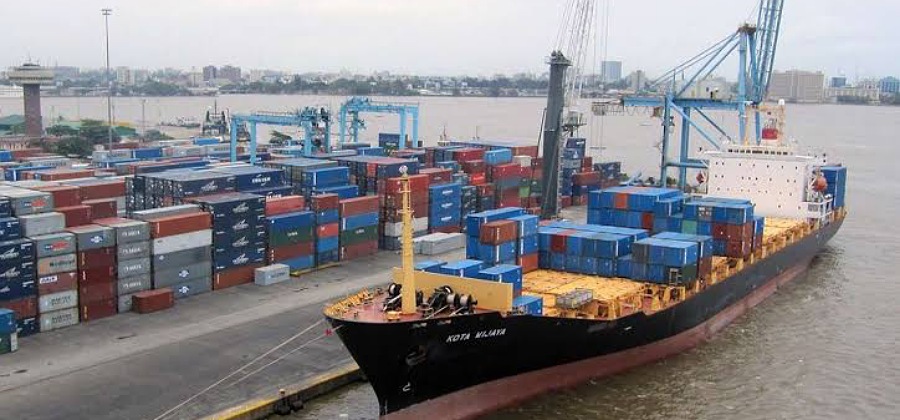
Nigeria’s top trade gateways handled most of the country’s imports and exports in Q4 2025, highlighting the dominance of major seaports and airport cargo terminals.
Total trade carried out through the top ten seaports and airports was N35.01 trillion, which is 96.68%, while the rest, mostly land borders and an industrial hub, accounted for goods worth 64.31 billion, which is 0.18%.
Total trade in Q4 2025 totaled N35.08 trillion, given that exports were N18.94 trillion while imports were N16.14 trillion. “Other minor ports and trade posts that are not individually listed in the report account for the remaining share.
Apapa alone accounted for over 62% of exports among the top trade gateways, highlighting Nigeria’s heavy reliance on a single maritime hub.
Also Read
Below is a breakdown of each of the top 10 terminals, highlighting their export performance, import volumes, and total trade value.
Calabar Port-Seaport
Calabar Port recorded N345.60 billion in imports.
- Exports: N0
- Imports: N345.60 billion
The port has historically struggled with draft and sedimentation issues, which limit the size of vessels that can berth there. As a result, its cargo volumes remain relatively small compared with Nigeria’s major ports.
Warri Port-Seaport
Warri Port recorded N393.53 billion in imports.
- Exports: N0
- Imports: N393.53 billion
The absence of export activity highlights the port’s limited role in outward cargo shipments, with trade activity largely tied to imports serving the oil-producing region of the Niger Delta.
Murtala Muhammed Airport Cargo Terminal- Airport
The cargo terminal at Murtala Muhammed Airport recorded N494.82 billion in imports, making it one of the largest air freight trade points in Nigeria.
- Exports: N0
- Imports: N494.82 billion
Air cargo typically involves high-value, time-sensitive goods, including pharmaceuticals, electronics, and express shipments.
KirikiriLighter Terminal CMD – Seaport
Kirikiri Lighter Terminal recorded N494.99 billion in total trade.
- Exports: N0
- Imports: N494.99 billion
The terminal’s activity is entirely import-driven, reflecting its role as a support and overflow terminal for cargo operations around Apapa and Tin Can Island ports.
Port and Terminal Multiservices Limited (PTML) Customs Office – Seaport
PTML recorded N609.66 billion in total trade, entirely driven by imports.
- Exports: N0
- Imports: N609.66 billion
The terminal is known for Roll-on/Roll-off (RoRo) operations, particularly vehicle imports, which explains the absence of export activity.
Its specialized operations make it one of Nigeria’s most important automotive import terminals.
Port HarcourtPort(1) Area 1 – Seaport
Port Harcourt Port recorded N633.18 billion in total trade.
- Exports: N91.85 billion
- Imports: N541.33 billion
Exports accounted for roughly 14.5% of total trade, compared to 85.5% for imports.
This suggests the port plays a stronger role in export cargo movements, likely including energy-related shipments and regional trade goods.
PortHarcourt(3) Onne – Seaport
Onne Port recorded N2.14 trillion in total trade, placing it fourth in the ranking.
- Exports: N936.62 billion
- Imports: N1.21 trillion
Imports accounted for about 56.3%, while exports made up 43.7% of total trade.
Onne’s trade structure reflects its role as a logistics hub for Nigeria’s oil and gas industry, where imports of equipment and offshore support materials form a significant share of port activity.
Tin Can Island Port-Seaport
Tin Can Island Port recorded N2.38 trillion in total trade, placing it third among the listed terminals.
- Exports: N1.15 trillion
- Imports: N1.23 trillion
Imports accounted for roughly 51.8% of total trade, while exports represented 48.2%.
The port remains a major entry point for containerized imports and vehicle shipments, explaining its relatively stronger import profile compared to exports.
Lekki Deep Sea Port
Lekki Deep Sea Port ranked second, with N5.38 trillion in total trade.
- Exports: N2.82 trillion
- Imports: N2.56 trillion
Exports accounted for about 52.4% of total trade, making Lekki one of the most export-oriented ports in the country.
The relatively smaller import figure suggests the port is still scaling up its container import operations, but its strong export performance reflects the impact of large-scale industrial projects and export logistics within the Lagos Free Trade Zone corridor.
ApapaPort – Seaport
Apapa Port ranked as the largest trade gateway in Nigeria, recording N22.03 trillion in total trade carried out through it.
- Exports: N13.77 trillion
- Imports: N8.26 trillion
Exports accounted for roughly 62.5% of the port’s trade, while imports made up 37.5%. This export-heavy profile reflects the port’s role in handling large volumes of crude oil products, agricultural commodities, and other export cargo, alongside significant import activity.
Apapa’s dominance shows its position as the primary maritime hub for Nigeria’s international trade, supported by multiple container and bulk terminals.
What the data is saying
Three major trends emerge from the trade data:
- Lagos dominates Nigeria’s trade system. Ports and terminals located in Lagos accounted for 85.6% of trade activity among the top ports. Notably, nine ports and terminals out of the fifteen reported by NBS are situated in Lagos, while the rest are spread across Rivers, Cross River, Delta, Sokoto and Kebbi.
- Exports are concentrated in a few major seaports. Apapa, Lekki, and Tincan Island account 93.53% export flows, reflecting Nigeria’s commodity export structure.
- Several terminals operate as import-only gateways. Facilities such as PTML, Kirikiri Lighter Terminal, Warri, and Calabar ports recorded no exports, highlighting their specialized roles in import logistics.
- Other terminals were mainly land borders and an industrial hub with an airport, all of which only had imports. They are Seme border, Nigeria Customs Service Sokoto and Kebbi Area Command, Lagos Free Trade Zone, and Muhammed Murtala International Airport.
- Overall, the data reinforces the central role of a few major maritime hubs in Nigeria’s trade structure, with Lagos serving as the primary gateway for both imports and exports.