Follow Us on Google Discover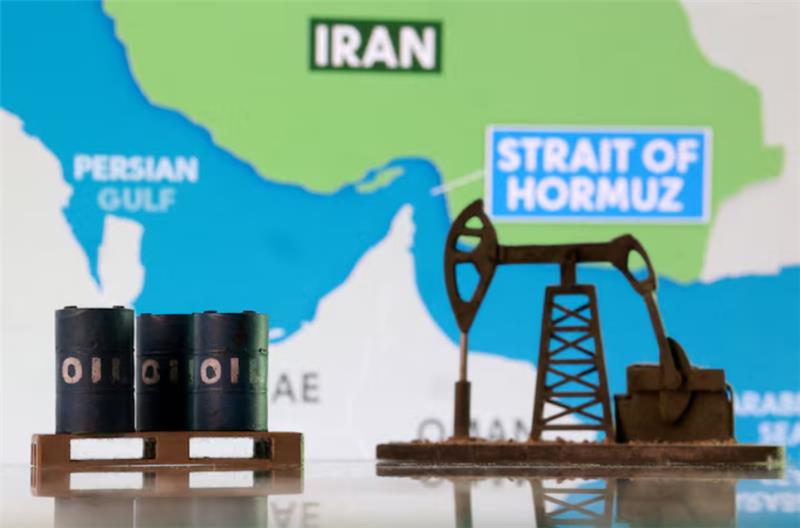
The Group of Seven (G7) finance ministers are set to discuss a joint release of oil from emergency reserves coordinated by the International Energy Agency.
According to Reuters, which quoted the Financial Times, the discussion is set to take place on Monday.
The development comes amid ongoing conflict in the Middle East, sparked by the United States-Israeli war against Iran, which has affected global oil prices.
The G7 is a group of major advanced economies that meet to discuss global economic issues, security, and international policy.
They comprise Canada, France, Germany, Italy, Japan, the United Kingdom, and the United States.
What the report is saying
The report, which cited sources, suggests that key influential countries have backed the need for the discussion expected to salvage the oil crisis.
- Three G7 countries, including the US, have so far expressed support for the idea, the report said and added that the ministers and the IEA Executive Director Fatih Birol will hold a call to discuss the impact of the Iran war.
The report comes as oil prices surged more than 25% on Monday to their highest levels since mid-2022 as some major producers cut supplies, and fears of prolonged shipping disruptions gripped the market due to the expanding Middle East conflict.
Backstory
Oil production from Iraq’s main southern oilfields dropped by about 70% after the country was unable to export crude through the Strait of Hormuz amid the ongoing Iran war.
The development was reported by Reuters on Sunday, citing three industry sources and officials familiar with operations at Iraq’s southern oil facilities.
- Production from the fields has fallen to around 1.3 million barrels per day, down sharply from roughly 4.3 million barrels per day before the conflict disrupted maritime movements through the critical oil transit route.
- Officials said the sharp decline in output is largely due to storage constraints and export bottlenecks caused by the disruption in shipping through the Strait of Hormuz.
The Strait of Hormuz is one of the world’s most important oil shipping routes, carrying roughly 20% of global oil and liquefied natural gas supplies.
What you should know
Energy markets are particularly nervous because the crisis is unfolding around the Strait of Hormuz, through which roughly one-fifth of the world’s oil supply normally passes.
- Disruptions in tanker movements and rising security risks have already slowed shipping activity, leaving Asian buyers especially vulnerable given their heavy reliance on Middle Eastern crude.
- Brent crude futures were up $24.96 or 27% at $117.65 per barrel at 0451 GMT – on track for the biggest-ever jump in a single day, while U.S. West Texas Intermediate (WTI) crude futures were up $25.72, or 28.3%, to $116.62.
According to Reuters, WTI surged 31.4% to a session high of $119.48 a barrel earlier on Monday, while Brent rose as much as 29% to $119.50 a barrel. Before the surge on Monday, Brent had already climbed 27% and WTI by 35.6% last week.
- “Unless oil flows through the Strait of Hormuz resumes soon and regional tensions ease, upward pressure on prices is likely to persist,” the Managing Director for investment strategy at OCBC in Singapore, Vasu Menon, said.
As Iraq and Kuwait have begun cutting oil output, adding to earlier liquefied natural gas reductions from Qatar, analysts expect that the United Arab Emirates and Saudi Arabia will also have to cut output soon as they run out of oil storage.
Also boosting prices is the appointment of Mojtaba Khamenei to succeed his father, Ali Khamenei, as Iran’s supreme leader, signalling that hardliners remain firmly in charge in Tehran, a week into its conflict with the United States and Israel.
- “With the appointment of the late leader’s son as Iran’s new leader, US President Donald Trump’s goal of regime change in Iran has become more difficult,” a commodity analyst with Rakuten Securities, Satoru Yoshida, said.