Follow Us on Google Discover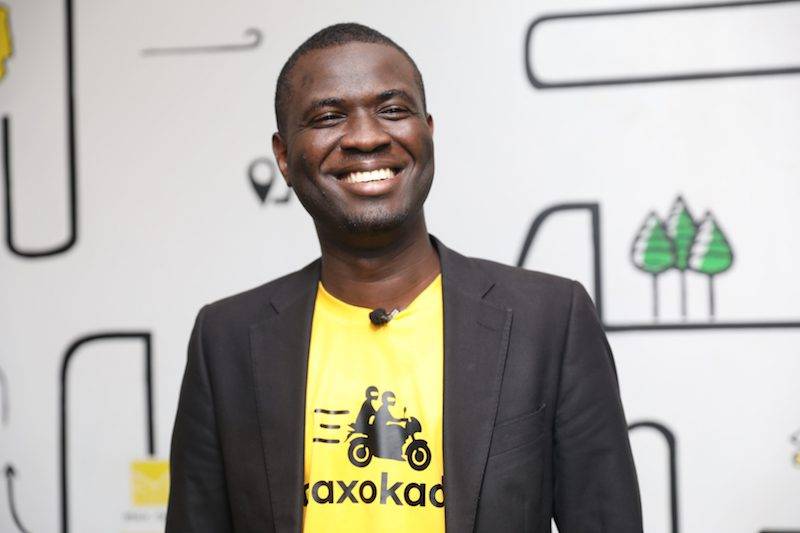
On any given day, over 8 million people commute across Lagos in search of their daily bread. As one of the world’s mega-cities, this isn’t surprising at all.
What is shocking, however, is how expensive these commutes have become to the average commuter.
Amid inflationary pressures and biting hardship fueled by President Tinubu’s reforms, a growing number of Nigerians can barely afford to transport themselves to work anymore.
Transportation has gone from being a routine expense to a major economic burden on Nigerian households.
Also Read
The situation has worsened since the U.S. war on Iran began and the subsequent Iranian blockade of the Strait of Hormuz, which triggered a global energy crisis.
Earlier in April, around the same time petrol prices suddenly skyrocketed across the country, this writer experienced the transport challenge that ensued firsthand on a busy Monday morning while on his way to Lekki.
He was going to interview the CEO of MAX Drive, Adetayo Bamiduro, about the development on behalf of Nairametrics. Along major roads, he saw many people trekking under the sun. These were mostly young Nigerians, a lot of them clearly dressed for work but unable to afford transportation. So, they trekked.
- “The average Nigerian is poor,” Bamiduro later told Nairametrics. “This is why any uptick in energy cost always translates to more expensive transportation, which in turn affects everything else…”
According to the latest Transport Fare Watch report by the National Bureau of Statistics (NBS), transportation consumes between 30% to 55% of the average Nigerian’s monthly income, depending on which part of the country they reside in and individual earning power.
People who earn less are disproportionately affected. The fact that there are hardly any affordable public transit options available exacerbates the problem. Everyone pays the same amount to commercial bus drivers, whether you’re a security guard at a bank or a Senior Banking Officer at the same bank.
Unfortunately, there is a strong possibility that transportation costs in Nigeria will keep rising in the coming months, as hostility between the U.S and Iran and tension around the Strait of Hormuz persist.
For Nigerian commuters, logistics operators, and small business owners, this could have a ripple effect affecting financial stability, how efficiently goods can be circulated, and ultimately the overall productivity of the economy.
- “Transportation is vital to economic activities. People need to be able to move around. There’s a very strong correlation between the efficiency of a country’s transportation system and the productivity of its people,” Bamiduro warned.
The MAX drive solution
Currently, Nigeria’s energy infrastructure relies heavily on fossil fuels. While other advanced countries like China are increasingly transitioning to cleaner and more renewable energy sources, Nigeria, like most African countries, is in fact doubling down on its investments in oil facilities.
This huge reliance is exactly why global energy shocks have such a negative impact on the country’s transportation sector. But the MAX CEO believes strongly that this problem can be solved by deepening the adoption of electric vehicles in the country.
On its own, MAX is already doing a lot in this regard. Interestingly, the company was not originally conceived as an electric vehicle company. Like many African startups founded during Africa’s tech boom of the 2010s, MAX was established by Bamiduo and his business partner Chinedu Azodoh (currently serving as Company President and CGO) to solve a very specific logistical problem. They focused on last-mile deliveries, helping businesses move goods more efficiently through Nigeria’s congested urban centres.
However, as the business expanded, the founders soon discovered that logistics was merely a symptom of a much deeper structural challenge in the Nigerian transport/logistics sector. As a matter of fact, the transportation ecosystem itself was broken.
For one, there were not enough quality vehicles, and the drivers were struggling to access financing. Insurance penetration was low. Vehicle maintenance was inconsistent. And most crucially, transport operators were very vulnerable to constant fuel price shocks.
Bamiduro and his partner soon realised that coordinating transportation was one thing, even as fixing transportation was something entirely different.
- “In countries where infrastructure has already been built, people can innovate very quickly because the things they need already exist,” he explained. “But in an environment where infrastructure has not been built, if you build on top of a foundation that does not exist, the house crumbles.”
That realisation fundamentally changed the company’s direction. So, they decided that rather than remain a logistics platform, MAX should build what Bamiduro describes as “the financial and technological infrastructure underpinning Nigeria’s mobility sector.”
Today, the company finances vehicles, manages fleets, develops battery-swapping systems, deploys charging infrastructure and increasingly focuses on electric mobility solutions.
The CEO admitted that it is a significantly more difficult business model than simply running a technology platform.
- According to him, “It is like building a toll road. You don’t make your money back in five years. You make it back in 30 or 40 years.”
That analogy is particularly relevant in Nigeria, where infrastructure deficits remain one of the biggest constraints on economic growth. According to the African Development Bank, Africa faces an annual infrastructure financing gap estimated at between $130 billion and $170 billion.
Transportation infrastructure alone accounts for a significant portion of this deficit. And the consequences are visible everywhere, from deteriorating roads to congested highways to unreliable public transit systems and inefficient logistics networks.
In many ways, MAX’s electric vehicle strategy represents an attempt to build around those constraints rather than wait for them to disappear.
The economics of electric mobility
Global discussions on electric vehicles are often done through the lens of climate transition. In Nigeria, however, the argument takes on a more immediate economic dimension.
The question is not whether EVs are greener. Instead, it is whether they are cheaper, more stable, and ultimately more predictable in a market where fuel prices rarely sit still for long.
That is exactly the lens through which MAX is positioning its electric mobility push.
For Bamiduro, the real disruption in Nigeria’s transport economy is not technological but structural. The country’s dependence on imported refined fuel has left transportation costs exposed to global crude cycles, currency pressures and domestic policy shifts.
- “In the last ten years, petrol prices have gone up almost 10x,” he said. “In that same period, the price of solar panels and lithium batteries has reduced significantly.”
He further explained that this contrast is central to MAX’s EV strategy. While fossil fuel costs have moved in sharp, often in unpredictable jumps, the inputs that power electric mobility have followed a longer downward cost curve.
Checks by Nairametrics showed lithium-ion battery pack prices have fallen from over $1,000 per kilowatt-hour in 2010 to just a little above $100 in 2025, reflecting one of the fastest cost declines in modern energy systems. Similarly, solar photovoltaic costs have fallen by more than 80 per cent over the past decade, according to the International Renewable Energy Agency.
These are not merely abstract energy statistics, as far as MAX is concerned. Instead, these are the basis of a financial model. The company’s approach to electric motorcycles and tricycles relies heavily on rethinking what “fuel” actually means in a Nigerian context.
Instead of a system where riders absorb daily petrol price volatility, EV users on the MAX platform are plugged into a charging ecosystem that the company is increasingly integrating with solar-backed infrastructure and battery systems.
This shift introduces cost predictability, which, as Bamiduro rightly pointed out, is something the Nigerian transport system has never consistently had.
- “What is the point if transportation becomes affordable for three months and then doubles again? That is simply not good enough,” he said. “For us, affordability means being able to lock in cost over the medium to long term.”
When you think about it, you begin to realise just how subtle yet profoundly important this is. In a market where inflationary pressures frequently reset consumer expectations, price stability can mean a lot.
For millions of Nigerians, to whom transportation is no longer a discretionary expense but a major expense, EVs can help guarantee price stability, thus reducing unpredictable cost pressure on household finances.
The EV opportunity isn’t without challenges
MAX estimates that Nigeria sees between 70,000 and 100,000 motorcycles sold every month. Out of this, electric motorcycles still account for a fraction of that market. The implication for the company is that even marginal shifts in adoption could translate into significant structural change over time.
Still, the transition is not frictionless. Unlike conventional motorcycles, electric fleets require an entirely different operational ecosystem. Charging infrastructure must be deployed at scale, and battery swapping networks must be reliable enough to support high-frequency commercial use.
Above all, financing structures must be robust enough to absorb upfront vehicle costs while recovering value over time.
- “You are not just worried about the vehicles, you are also worried about the energy infrastructure,” Bamiduro said.
That dual burden is what makes electric mobility in Nigeria fundamentally different from the typical software-driven disruption stories of typical startups in fintech and other sectors.
MAX is actually building physical infrastructure while simultaneously operating a financial intermediation model for drivers who would otherwise be excluded from vehicle ownership.
It is, in Bamiduro’s words, a system that demands “the maturity of established companies while still being a startup.”
Funding remains one of the most persistent constraints.
Over the years, MAX has deployed millions of dollars in vehicle financing, according to Bamiduro. The good news is that repayment rates are above 90 per cent, a performance that has helped the company secure backing from mostly global development finance institutions and private investors. Domestic financial institutions, on their part, have been cautious.
- “They don’t want to take too much risk,” Bamiduro noted.
Interestingly, MAX is signalling long-term ambitions that extend beyond private funding rounds. When asked, Bamiduro did not rule out a future listing on the Nigerian Exchange, for instance, suggesting that public markets could eventually play a role in scaling the business further.
In the meantime, however, the company remains focused on expansion, particularly in two- and three-wheeler segments where electrification is increasingly becoming economically viable.
The road ahead for MAX and Nigeria’s EV sector
Nigeria’s transport sector is huge but structurally fragmented. And in a country of more than 200 million people, demand is certainly not an issue. What remains uncertain is whether the sector can meet growing demand in a way that is affordable to Nigerians.
Electric mobility advocates like MAX CEO believe strongly that EVs are the way to achieve this, especially given the current realities of rising fossil fuel prices.
But transition at scale will require more than cost convergence. It will require infrastructure density, policy consistency and sustained access to capital. For MAX, the strategy is to build ahead of that curve rather than wait for it to fully materialise.
The company’s long-term ambition is to dramatically expand the share of electric vehicles within Nigeria’s motorcycle economy over the next three to five years, moving from early-stage adoption into mass deployment. This ambition is grounded in a simple observation that runs through Bamiduro’s entire argument: transportation costs in Nigeria are high and unstable. And instability, in economic systems, is often where disruption begins.