Follow Us on Google Discover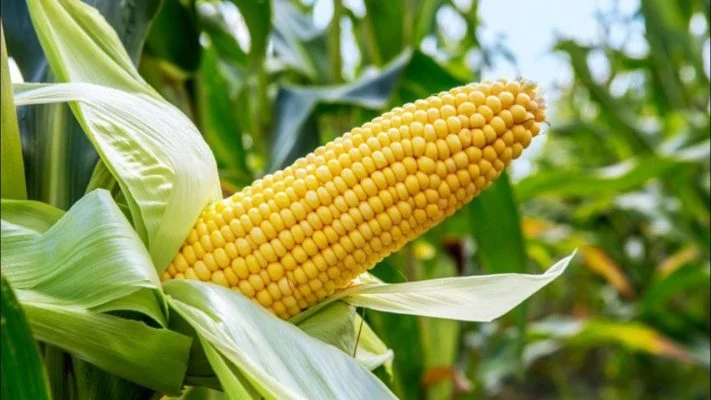
The Federal Government has stated that Nigeria requires at least 25 million tonnes of maize annually to meet national demand and strengthen food security.
The Minister of State for Agriculture and Food Security, Sen. Aliyu Abdullahi, disclosed this on Friday in Abuja during the Quarterly Citizens and Stakeholders’ Engagement meeting.
The government also reaffirmed its commitment to supporting smallholder farmers across the country through improved access to finance and other agricultural interventions.
What they are saying
Abdullahi said the government had intensified efforts to increase maize production and reduce reliance on food imports.
He noted that expanding domestic production remained critical to making nutritious food affordable and accessible to Nigerians.
- “Our focus is on expanding local production so affordable and nutritious food becomes accessible to every Nigerian.”
- “Our efforts are paying off. Prices of major food commodities have dropped by about 50 per cent across the country.”
- “These efforts reflect our commitment to improving food security and citizens’ well-being. We are addressing high input costs to sustain an affordable food supply.”
According to him, the federal government has prioritised rice, maize and wheat value chains, creating opportunities for millions of smallholder farmers and other stakeholders.
He added that strategic investment across key agricultural value chains was positioning Nigeria to play a stronger role in the global agricultural market.
Get up to speed
Recent data shows that maize production in Nigeria has faced challenges in recent years due to insecurity and rising production costs.
- In 2024, the total land area dedicated to corn farming declined to its lowest level in 14 years.
- Data from the United States Department of Agriculture shows that harvested corn fields in the 2024/2025 season stand at about 5.1 million hectares, the lowest since the 2010/2011 season.
- In Katsina State, the country’s second-largest corn-producing region, yields improved in the second week of August to their highest levels since 2019, according to Mantle Labs’ Crop Conditions Index.
The index relies on satellite imagery and artificial intelligence to evaluate crop performance.
Improved maize yields could help address malnutrition concerns and reduce pressure on food-driven inflation, which reached 34 per cent in June 2024.
More Insights
Abdullahi said the Ministry of Agriculture and Food Security was aligning its policies with President Bola Tinubu’s Renewed Hope Agenda to achieve food sovereignty.
- He stressed that the government’s long-term objective is to expand domestic agricultural production across key crops.
- The ministry is implementing reforms aimed at transforming Nigeria’s agricultural landscape.
- Key priority value chains include rice, maize and wheat.
- The government is working with state ministries of agriculture to increase productivity nationwide.
Stakeholder collaboration remains essential to achieving sustainable agricultural growth.
He added that the engagement meeting was designed to strengthen transparency and encourage collaboration among government institutions, development partners and agricultural stakeholders.
What you should know
The Federal Government recently approved a N250 billion facility for the Bank of Agriculture to support smallholder farmers across Nigeria.
- The fund will provide farmers with access to credit at a single-digit interest rate.
- The initiative forms part of broader efforts to strengthen agricultural financing and risk management.
- Institutions such as the Nigerian Agricultural Insurance Corporation, the National Agricultural Quarantine Service and the Bank of Agriculture will support implementation.
The government says the programme is aimed at improving access to finance, strengthening agricultural productivity and boosting food security nationwide.