Follow Us on Google Discover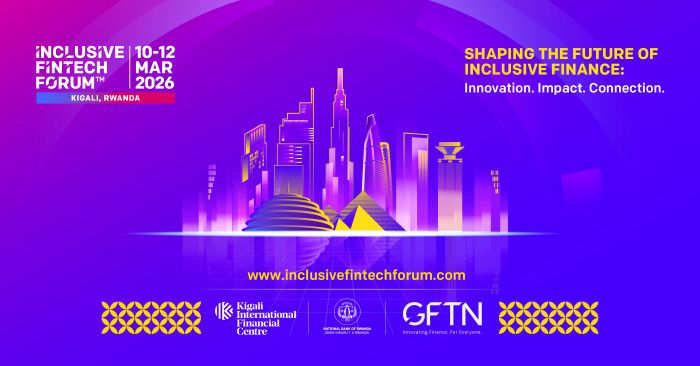
- The third edition of the Inclusive FinTech Forum (IFF) will be held from March 10–12, 2026, at the Kigali Convention Centre, hosting an expected 3,000 delegates across Africa, Asia, Europe and global markets, with institutional backing from KIFC, the National Bank of Rwanda, and the Global Finance & Technology Network
- Centred on the theme “Shaping the Future of Inclusive Finance: Innovation. Impact. Connection.”, IFF 2026 will focus on regulatory–innovation alignment, exploring crossborder digital currency corridors, AIpowered financial inclusion, open finance ecosystems, and climatefintech—advancing scalable solutions for interoperability, digital public infrastructure, and AfCFTAdriven financial integration.
- For Nigeria—Africa’s largest fintech market—the forum offers strategic value through regulator engagement, crossborder partnership pathways, and access to capital. With participation from policymakers, central banks, startups, investors, DFIs and industry leaders, IFF 2026 positions Kigali as a key continental hub where policy clarity, innovation and investment intersect to shape the future of digital finance.
The third edition of the Inclusive FinTech Forum (IFF) will be held from March 10–12, 2026, at the Kigali Convention Centre in Rwanda, bringing together an expected 3,000 delegates from across Africa, Asia, Europe, and other global markets.
Positioned as a high-level policy and industry platform, IFF 2026 is expected to convene regulators, central bankers, fintech founders, investors, financial institutions, development partners, and technology leaders to examine the future of inclusive finance.
With institutional backing from the Kigali International Financial Centre (KIFC), the National Bank of Rwanda, and the Global Finance & Technology Network (GFTN), the forum continues to strengthen its positioning as a meeting point between innovation and regulatory execution.
The 2026 edition will focus on the theme:
“Shaping the Future of Inclusive Finance: Innovation. Impact. Connection.”
Also Read
From innovation to implementation
Unlike conventional fintech conferences that focus largely on product showcases, IFF places emphasis on regulatory dialogue and real-world implementation. The discussions in Kigali will explore how emerging technologies can transition from pilot projects to scalable systems embedded within national and cross-border financial infrastructure.
Key areas expected to dominate conversations include:
- Building Africa’s Digital Currency Corridor – examining cross-border interoperability, CBDCs, and digital settlement systems
- AI-powered financial inclusion – leveraging artificial intelligence to expand access in underserved markets
- Open finance ecosystems – enabling secure data-sharing frameworks across institutions
- Climate fintech – aligning digital financial tools with sustainable finance objectives
These themes are closely aligned with broader continental priorities, including AfCFTA implementation, cross-border payment reforms, and digital public infrastructure expansion.
Why it matters for Nigeria
For Nigeria – Africa’s largest fintech market by transaction volume – platforms such as IFF present strategic opportunities. Nigeria’s fintech ecosystem continues to evolve amid regulatory adjustments from the Central Bank of Nigeria (CBN), increasing cross-border payment activity, and the rapid adoption of AI-driven financial services.
Participation in continental-level forums provides stakeholders with:
Direct engagement with regulators across jurisdictions
Insights into emerging policy frameworks
Exposure to cross-border partnership opportunities
Access to capital and development finance institutions
As African markets pursue interoperability and digital currency coordination, alignment between policy and private-sector innovation remains critical.
Institutional backing and global participation
The involvement of the National Bank of Rwanda as a lead partner reinforces the forum’s regulatory relevance. KIFC’s mandate to position Rwanda as a financial services hub further adds to the forum’s institutional credibility, while GFTN established by the Monetary Authority of Singapore brings global fintech expertise into the dialogue.
The combination of public-sector leadership and private-sector participation is expected to facilitate discussions that extend beyond theoretical innovation and into execution frameworks.
With thousands of delegates anticipated, IFF 2026 is likely to serve as a convergence point for decision-makers capable of influencing capital allocation, regulatory direction, and product expansion strategies across markets.
Where partnerships and capital intersect
Beyond plenary sessions and keynote discussions, the forum’s exhibition and networking segments are designed to foster direct engagement between:
- Fintech startups seeking scale
- Financial institutions exploring digital transformation
- Development finance organisations
- Venture capital and impact investors
- Policy and regulatory stakeholders
Such intersections often accelerate cross-border partnerships and provide market-entry pathways for startups targeting multi-country expansion.
A strategic room for fintech stakeholders
As digital finance continues to reshape financial systems across Africa, participation in structured, policy-aligned platforms is increasingly strategic rather than optional.
IFF 2026 positions itself not merely as an industry gathering but as a forum where regulatory clarity, innovation, and capital converge.
With conversations around interoperability, AI adoption, open finance, and climate-linked financial innovation intensifying globally, Kigali in March 2026 is set to host one of the continent’s key fintech policy and business dialogues.
As preparations gather momentum for the March 2026 edition, regulators, founders, investors, and financial institutions interested in participating in IFF 2026 can find further details and secure their registration via the official portal: