

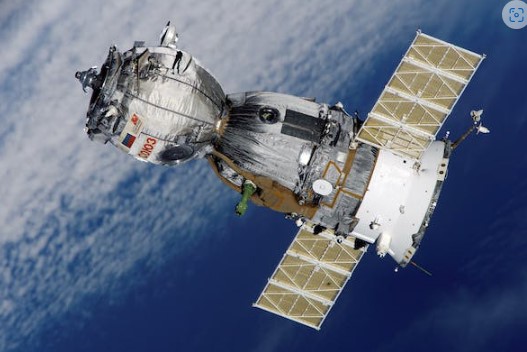
Satellite positioning has quietly evolved into one of the most important technologies supporting the digital economy.
By 2026, GPS systems are advancing beyond traditional navigation, enabling new capabilities in automation, logistics, and spatial intelligence.
These improvements are not always visible to everyday users, yet they are reshaping how modern technology interacts with the physical world.


The transformation is driven by a combination of satellite upgrades, improved signal correction systems, and sophisticated geospatial software. Together, these elements are creating a more accurate and resilient global positioning infrastructure capable of supporting complex real-time applications.
The satellite networks behind modern navigation
The GPS ecosystem in 2026 is no longer limited to a single constellation. Multiple satellite networks now operate simultaneously, providing devices with several positioning signals at once. This redundancy significantly improves accuracy and reliability.
Modern receivers can combine signals from various navigation systems to calculate location with greater precision. The approach also reduces the impact of interference and signal blockage in dense urban areas.
Key improvements in satellite positioning include:
- Multi-constellation signal compatibility
- Faster positioning initialization
- Enhanced anti-interference capabilities
- Greater reliability in challenging environments
These developments make geolocation technology far more dependable for critical applications.
Precision positioning reaches new standards
One of the most important changes expected by 2026 is the increasing accuracy of positioning systems. Advanced correction technologies allow devices to determine location within centimeters rather than meters.
High-precision positioning is particularly valuable for industries where small errors can have major consequences. Construction projects, surveying operations, and infrastructure monitoring all depend on accurate spatial data.
The growing availability of precise positioning services is enabling new categories of applications that were previously impractical.
Typical accuracy improvements in modern Systems

These improvements dramatically expand the range of use cases for location technology.
Automation relies on reliable geolocation
Automation systems depend heavily on accurate positioning. Autonomous vehicles, delivery robots, and agricultural machinery require precise spatial awareness to operate safely.
GPS works alongside sensors and digital maps to create a complete understanding of the surrounding environment. The integration of these technologies allows automated systems to navigate complex spaces without human guidance.
As automation spreads across transportation and logistics industries, positioning systems become increasingly critical infrastructure.
Drone navigation is accelerating innovation
Unmanned aerial systems represent another important area where GPS technology is evolving quickly. Drones rely on accurate positioning signals to maintain stable flight paths and deliver goods efficiently.
Researchers and engineers studying real-world implementations of drone delivery in Canada are exploring how advanced positioning frameworks improve safety and reliability in controlled airspace.
The insights gained from these projects demonstrate how geolocation technology can support complex aerial logistics networks. As drone delivery services expand, precise positioning becomes even more essential.
Smart infrastructure depends on location intelligence
Cities and infrastructure systems increasingly rely on geospatial data to operate efficiently. Traffic management systems analyze location signals from vehicles to reduce congestion and optimize traffic flow.
Public transportation networks also use positioning information to track buses and trains in real time. This data allows transit agencies to provide more accurate arrival predictions and improve service reliability.
Urban planners benefit from location intelligence as well. By analyzing spatial patterns, they can design infrastructure that better supports population growth and mobility.
Logistics and supply chains become fully visible
Global supply chains are becoming more transparent due to location tracking technologies. Companies can monitor shipments across long distances and identify potential delays before they become major disruptions.
Real-time positioning offers several operational advantages:
- Improved shipment visibility
- Faster response to route disruptions
- More accurate delivery estimates
- Better inventory planning
These capabilities help businesses maintain efficient logistics networks while improving customer satisfaction.
Why the GPS breakthroughs of 2026 matter
The hidden breakthroughs shaping GPS technology are creating a foundation for the next generation of navigation systems.
Improved accuracy, stronger satellite networks, and advanced geospatial tools are transforming positioning from a simple navigation feature into a core technological platform, noted the editorial team of https://www.directionsmag.com/.
By 2026, location intelligence will influence transportation, urban planning, logistics, and automation at an unprecedented scale. The evolution of GPS may not always attract public attention, but it will remain one of the most important forces driving the future of connected technology.










