
The United States and Israel launched a wave of strikes against targets in Iranian cities on Saturday, triggering explosions and columns of smoke in the capital, Tehran.
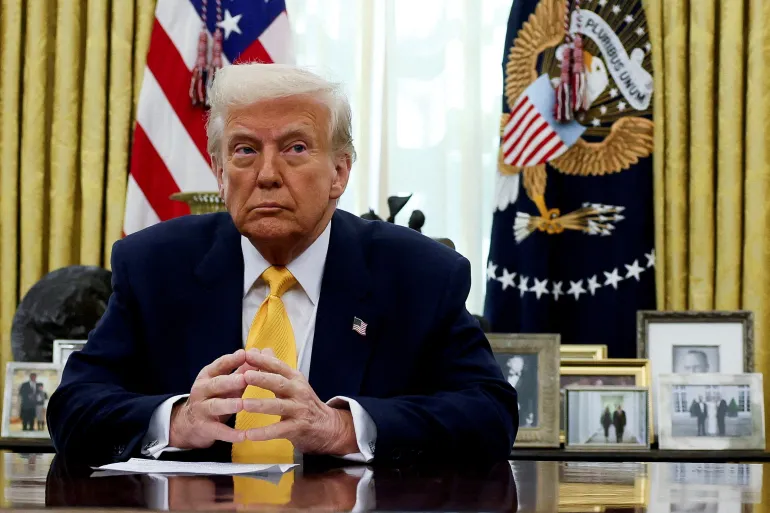
The Israeli government had announced the pre-emptive attack, with President Donald Trump saying that the US had begun major combat operations.
According to a CNN report, explosions have been reported in multiple Iranian cities, including Tehran, with the US military planning for several days of attacks, according to two sources.


The attacks came after President Trump had expressed frustration at Iran’s stance in negotiations over its nuclear and missile programmes.
Trump said Washington’s goal was “eliminating imminent threats” from Iran, and Israeli Defence Minister Israel Katz described the action as a “preventive strike”.
What he is saying
In a video post, Trump had encouraged Iranians to seize control of their government when US military operations conclude. He also warned that American lives may be lost as a result of his military operation inside Iran.
- The US President said, “The United States’ military began major combat operations in Iran, “We are going to destroy their missiles and raze their missile industry to the ground. It will be totally, again, obliterated. We’re going to annihilate their navy.’’
He offered the Iranian military “immunity” or “certain death” and told Iranians the “hour of your freedom is at hand”.
He also accused Tehran of attempting to rebuild its nuclear programme after what he described as massive US strikes last summer that had “obliterated” key facilities. He further alleged that Iran is developing missiles capable of eventually striking the United States.
More insight
In a video message, Donald Trump appeared optimistic that the large-scale air operation could ultimately lead to regime change in Iran, despite uncertainties over what might follow and the limited historical precedent of air power alone removing a government.
“They rejected every opportunity to renounce their nuclear ambitions, and we can’t take it anymore,” Trump said, according to a US official who noted he was monitoring developments from Mar-a-Lago.
The decision reportedly followed weeks of internal deliberations and diplomatic efforts aimed at securing a rapid agreement that would have required Iran to abandon key nuclear red lines.
Several observers, including some of Trump’s allies, suggested that military action had appeared increasingly likely. Earlier in the year, he had publicly voiced support for Iranian protesters and warned that the US was “locked and loaded,” language many interpreted as signaling a willingness to act.
As the strikes unfolded, Iran, Iraq, and Israel closed their airspaces to civilian traffic. US embassies in Qatar and Bahrain advised American citizens to shelter in place.
What you should know
In June 2025, US forces conducted targeted airstrikes on three major Iranian nuclear facilities—Fordow Fuel Enrichment Plant, Natanz Nuclear Facility, and Isfahan Nuclear Technology Center—sites widely regarded as central to Iran’s uranium enrichment programme.
The June 21 operation marked a sharp escalation in Middle East tensions and raised global concerns about the risk of a broader regional conflict.
Trump described the mission as a “spectacular military success,” stating that it followed the collapse of diplomatic efforts to return Tehran to negotiations. He also expressed gratitude to both US and Israeli forces, praising what he characterized as a mission executed with “precision, speed, and skill.”