Follow Us on Google Discover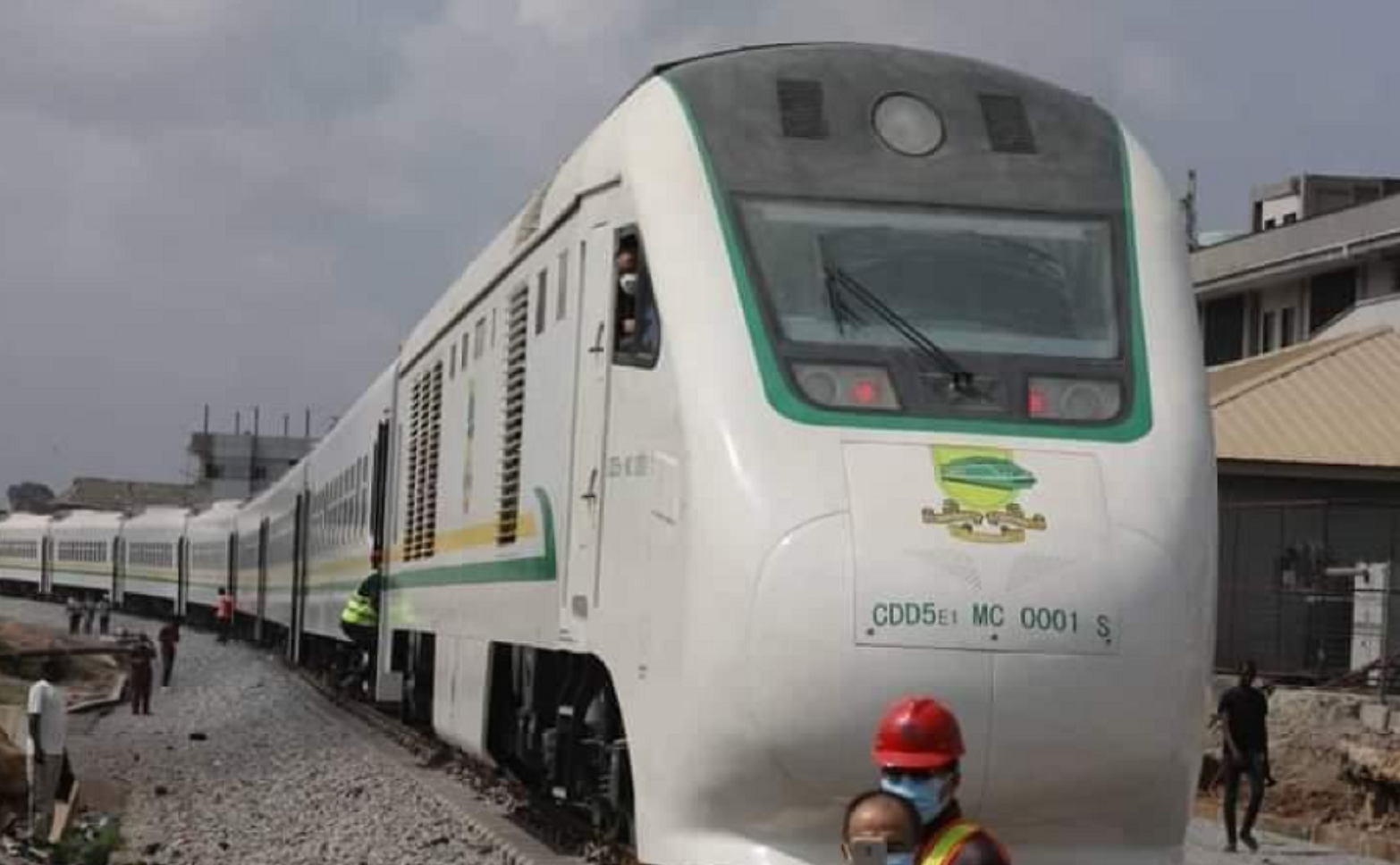
Passengers on the Abuja–Kaduna rail service have reported loss of air conditioning and lighting during trips, leaving coaches dark and overheated for extended periods.
The development was reported by the News Agency of Nigeria (NAN) following interviews with affected passengers.
Commuters said the disruptions were caused by an onboard power unit overheating, forcing attendants to intervene, which temporarily shut down cooling systems and lighting.
What they are saying
Passengers told NAN that the loss of air conditioning and lighting occurred repeatedly during the journey, plunging coaches into darkness and heat.
Also Read
They said the problem stemmed from an overheating power unit supplying electricity for onboard services.
- “Passengers also reported alarming mechanical issues during the journey.”
- “They claimed that the train engine malfunctioned repeatedly and overheated to the extent that attendants were seen pouring buckets of water on it.”
- “The passengers added that, each time this happened, the cooling system and lighting in the coaches would shut down, causing the train to slow significantly,” the NAN report read.
Responding to the reports, Mr Abubakar Bunma, Personal Assistant on Media to NRC Managing Director Kayode Opeifa, clarified that it was the power car, not the locomotive engine, that required cooling.
According to him, the power car contains a generator that runs air conditioning, lights, and toilets. He explained that when the unit overheats, attendants temporarily turn it off, pour water on it, and restore power.
Other challenges raised by commuters
Beyond technical issues, passengers also reported difficulties with ticket bookings.
Many claimed the online platform was frequently unavailable, while some alleged that tickets were resold unofficially at higher prices or issued without seat numbers, leading to confusion and overcrowding.
- Reduced daily train trips following the 2025 accident have increased demand, particularly on weekends.
- Overcrowding, extended travel times, and service interruptions have eroded public confidence in a rail line once considered a safer alternative to the Abuja–Kaduna highway.
- NRC maintains that tickets include automatically generated seat numbers linked to passengers’ names and National Identification Numbers (NIN), but failed bookings may result in rescheduled trips or options to stand if no seats are available.
Bunma acknowledged that occasional failed bookings can debit passengers without issuing tickets. Those affected may have trips rescheduled or, in some cases, be allowed to travel standing.
Flashback
Ticket racketeering and booking issues on the Abuja–Kaduna route are not new.
- In September 2024, the Minister of Transportation, Said Alkaki, ordered an investigation into allegations of ticket racketeering after passenger complaints. Fidet Okhiria, then-Managing Director of NRC, was tasked with establishing a committee to investigate and resolve the issues.
- Despite the NRC e-ticketing system, which requires passengers to register with personal details, including NIN, select seats, and make payments online, passengers have consistently reported rapid sell-outs and difficulties in booking.
Allegations of ticket hoarding and inflated resale prices at stations have compounded the challenges.
What you should know
The Abuja–Kaduna rail corridor, one of Nigeria’s busiest passenger routes, has experienced repeated operational issues beyond ticketing and overheating units.
In August 2025, a Kaduna-bound train suffered a “hot axle” fault near Rigasa Station, disrupting service for business class passengers.
Also in August 2025, a Kaduna-bound train derailed at Asham shortly after departing Abuja.
In May 2024, another derailment was reported at Jeremy Station along the same corridor.