
The Securities and Exchange Commission (SEC) has inaugurated a Capital Market Working Group on Market Liquidity with a mandate to attract up to 20 million new investors into Nigeria’s capital market using technology-driven solutions.
SEC DG, Emomotimi Agama inaugurated the Working Group on Friday in Abuja, noting that expanding investor participation is essential to improving market liquidity and resilience.
The DG added that despite strong growth in market capitalization, active participation remains limited to a relatively small segment of the population.

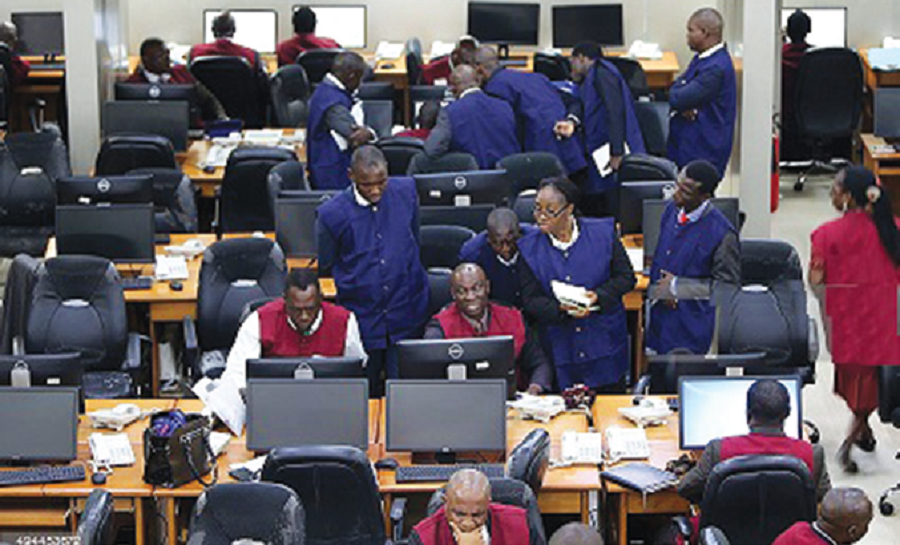
According to him, a shallow investor base undermines the market’s ability to efficiently allocate capital, as trading activity becomes concentrated among a few institutional players and a narrow group of retail investors.
What the SEC DG is saying
Agama said the Commission will leverage digital platforms and fintech partnerships to convert millions of passive savers into active investors.
- While reeling out the mandates of the newly inaugurated group, Agama said: “I want you to explore how technology can onboard the next 20 million investors, turning passive savers into active market participants.”
He cited ongoing initiatives such as the dematerialisation of share certificates and collaboration with financial technology firms as key steps toward simplifying access to capital market products.
The SEC chief added that the recently enacted Investments and Securities Act 2025, which brings digital assets under regulatory oversight, creates opportunities to channel speculative capital into regulated investment instruments.
- “We must accept the reality that the lines between traditional finance and digital finance are blurring.
- “With the enactment of the Investments and Securities Act (ISA) 2025, digital assets are now under our regulatory purview.
- “We must determine how to channel the speculative energy currently going into unproductive gambling into liquid, productive investments within regulated exchanges,” Agama said.
More insights
Agama noted that while Nigeria’s market capitalization has risen from about N55 trillion in April 2024 to over N123.93 trillion, the headline figures mask structural weaknesses, particularly uneven liquidity across listed securities.
He added that the market’s contribution to the GDP has moved from 13% to 33%, a development he described as impressive but not enough.
- He noted that trading remains concentrated in a few highly active stocks, leaving much of the market thinly traded and making it difficult for investors to enter or exit positions without affecting prices.
- Broader participation, he said, will enhance price discovery, reduce volatility, and strengthen investor confidence in the market.
- Agama described the capital market as a critical engine for national development, capable of financing infrastructure, industry, and job creation when functioning efficiently.
- He urged members of the liquidity task force drawn from exchanges, custodians, fund managers, dealing members, and other market operators to deliver practical recommendations that will deepen the market and make investment opportunities accessible to ordinary Nigerians.
According to him, building a large and inclusive investor base is essential to transforming Nigeria’s capital market into a robust platform for mobilizing long term capital for economic growth.
What you should know
Nairametrics reported that the Nigerian equities market closed January 2026, the first trading month of the year, on a strong note, rising 6.27% as over 15 billion shares exchanged hands.
Tracked by the All-Share Index, the market rose from 155,612.9 points to 165,370.4, gaining 9,757.5 points and decisively breaking above the 160,000-mark for the first time.
So far in February, the market has sustained its rally, pushing the market’s All-Share Index to cross the 190,000-mark for the first time on February 17, 2026.