Follow Us on Google Discover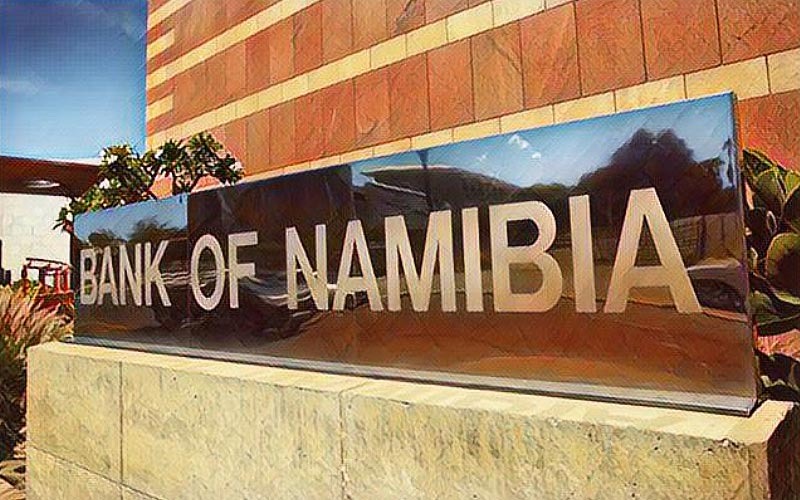
The Bank of Namibia has retained its benchmark policy rate at 6.50% at its first monetary policy meeting of 2026, signalling a cautious stance despite moderating inflation and evolving regional monetary trends.
The decision was announced following the Monetary Policy Committee meeting chaired by the central bank’s new governor, Ebson Uanguta.
It marks a continuation of the hold position adopted in December, as policymakers weigh easing domestic price pressures against regional risks and external policy signals, particularly from South Africa.
What the data is saying
Namibia’s latest inflation figures show a gradual easing in headline price growth, but underlying pressures remain evident. The central bank said this balance informed its decision to keep rates unchanged for now.
- According to the Namibia Statistics Agency, annual headline inflation slowed to 2.9% in January, compared to 3.2% in the same period last year.
- Core inflation, which excludes volatile components such as food and energy, stood at 3.2%, slightly above the headline figure.
- The divergence between headline and core inflation suggests that while overall price pressures are easing, underlying inflationary trends have not fully subsided.
The central bank’s decision reflects a preference to wait for clearer signs that inflationary pressures are sustainably anchored before considering any policy easing.
Get up to speed
Namibia’s monetary policy framework is closely aligned with that of South Africa due to the one-to-one peg between the Namibian dollar and the South African rand. This long-standing currency arrangement has significant implications for domestic interest rate decisions.
- The peg requires Namibia to maintain policy settings broadly aligned with those of the South African Reserve Bank to preserve currency stability.
- Deep trade and financial linkages between the two economies amplify the impact of South African monetary policy shifts on Namibia.
- Namibian authorities have previously noted that South Africa’s lower inflation target framework necessitates careful domestic alignment to avoid exchange rate and price instability.
As a result, even when domestic inflation moderates, Namibia must consider external monetary conditions before adjusting its benchmark rate.
More Insights
Regional monetary developments are reinforcing the cautious tone adopted by policymakers in Windhoek. Inflation trends in neighbouring countries are shaping expectations across Southern Africa.
- Data from Statistics South Africa showed South Africa’s inflation eased to 3.5% in January.
- The moderation has strengthened market expectations that the South African Reserve Bank could consider a rate cut at an upcoming meeting.
- Meanwhile, the Bank of Uganda recently left its Central Bank Rate unchanged at 9.75%, where it has remained since October 2024.
These regional dynamics highlight a broader pattern of central banks opting for policy stability as they assess the durability of disinflation trends.
What you should know
Attention is also turning to West Africa, where monetary policy decisions continue to influence investor sentiment across the continent.
Nigeria is maintaining a tight stance as it confronts inflationary pressures and exchange rate challenges.
- The Central Bank of Nigeria has scheduled its 304th Monetary Policy Committee meeting for February 23 and 24, 2026.
- At its last meeting in November 2025, the committee retained its benchmark rate at 27%.
- The decision sustained an aggressive monetary stance aimed at curbing inflation and stabilising the foreign exchange market.
While Namibia’s inflation has moderated, policymakers appear unwilling to move ahead of regional peers, reinforcing a measured approach that prioritises currency stability and policy coordination over early easing.