Follow Us on Google Discover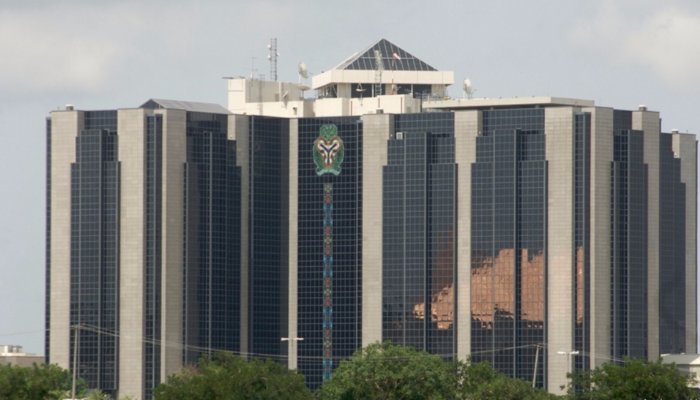
The Central Bank of Nigeria (CBN) has announced plans to hold its 304th Monetary Policy Committee (MPC) meeting on Monday and Tuesday, February 23 and 24, 2026.
The schedule was disclosed in a circular published on the apex bank’s official website on Monday.
The meeting comes amid sustained efforts by the CBN to rein in inflation, stabilise the foreign exchange market, and strengthen macroeconomic conditions.
The MPC is the CBN’s highest policy-making body, responsible for formulating monetary and credit policies aimed at ensuring price stability.
Also Read
Through key instruments such as the Monetary Policy Rate (MPR), Cash Reserve Ratio (CRR), and Liquidity Ratio (LR), the committee guides interest rate conditions and overall monetary direction in the economy.
Comprising the CBN Governor, Deputy Governors, Board members, and appointed external members, the committee meets periodically to review critical economic indicators, including inflation, gross domestic product, and exchange rate developments, before taking policy decisions.
What they are saying
The CBN confirmed that the two-day meeting will be held at its headquarters in Abuja, with sessions scheduled for both days.
The apex bank outlined the timetable and venue in its official notice.
- “The 304th meeting of the Monetary Policy Committee (MPC) is scheduled to hold as follows,” the CBN said.
- “Day 1: Monday, February 23, 2026 – Time: 10.00 a.m.”
- “Day 2: Tuesday, February 24, 2026 – Time: 8.00 a.m.”
According to the circular, the meeting will take place at the MPC Meeting Room on the 11th floor of the CBN Head Office in Abuja.
Backstory
The upcoming meeting follows a series of policy decisions that have kept Nigeria’s monetary stance relatively tight.
At its last MPC meeting in November 2025, the CBN retained the Monetary Policy Rate at 27 percent, maintaining its restrictive posture in a bid to curb inflationary pressures and stabilise the foreign exchange market.
- The MPR, which serves as the benchmark interest rate for the economy, has remained elevated as part of the CBN’s broader strategy to rein in rising prices and restore investor confidence.
- While the policy stance has contributed to higher borrowing costs for businesses, the apex bank has consistently argued that monetary discipline is necessary to restore macroeconomic stability.
- Earlier, at its 302nd MPC meeting in September 2025, the committee reduced the MPR by 50 basis points, lowering it from 27.5 percent to 27 percent.
The MPC also adjusted the asymmetric corridor around the MPR to +250/-250 basis points, narrowing it from the previous +500/-100 range.
These measures were seen as early signs of a cautious shift, following mild improvements in inflation indicators.
More insights
Key policy outcomes from the 303rd MPC meeting provide context for expectations ahead of the 304th gathering.
The committee opted largely for policy continuity, reflecting concerns about persistent inflation and financial system stability.
- The Monetary Policy Rate was retained at 27.00 percent.
- The Cash Reserve Ratio was kept at 45.00 percent for Deposit Money Banks and 16.00 percent for Merchant Banks.
- The 75 percent CRR on non-TSA public sector deposits was retained.
- The Liquidity Ratio remained unchanged at 30.0 percent.
In addition, the asymmetric corridor around the MPR was adjusted to +50/-450 basis points, signalling a fine-tuning of liquidity management without a change to the headline policy rate.
What you should know
Recent inflation data may play a key role in shaping discussions at the February MPC meeting.
- Latest figures from the National Bureau of Statistics show that Nigeria’s headline inflation eased sharply to 15.15 percent in December 2025, following a methodological review.
- The Consumer Price Index rose to 131.2 points in December from 130.5 points in November, indicating a slower pace of increase in average prices.
- On a year-on-year basis, headline inflation fell to 15.15 percent in December 2025 from 17.33 percent in November.
- The December 2025 figure was significantly lower than the 34.80 percent recorded in December 2024, reflecting a sharp deceleration over the 12-month period.
The moderation in inflation could influence policy deliberations, although the CBN has repeatedly stressed that sustained price stability, rather than short-term improvements, will guide its monetary policy decisions.