Follow Us on Google Discover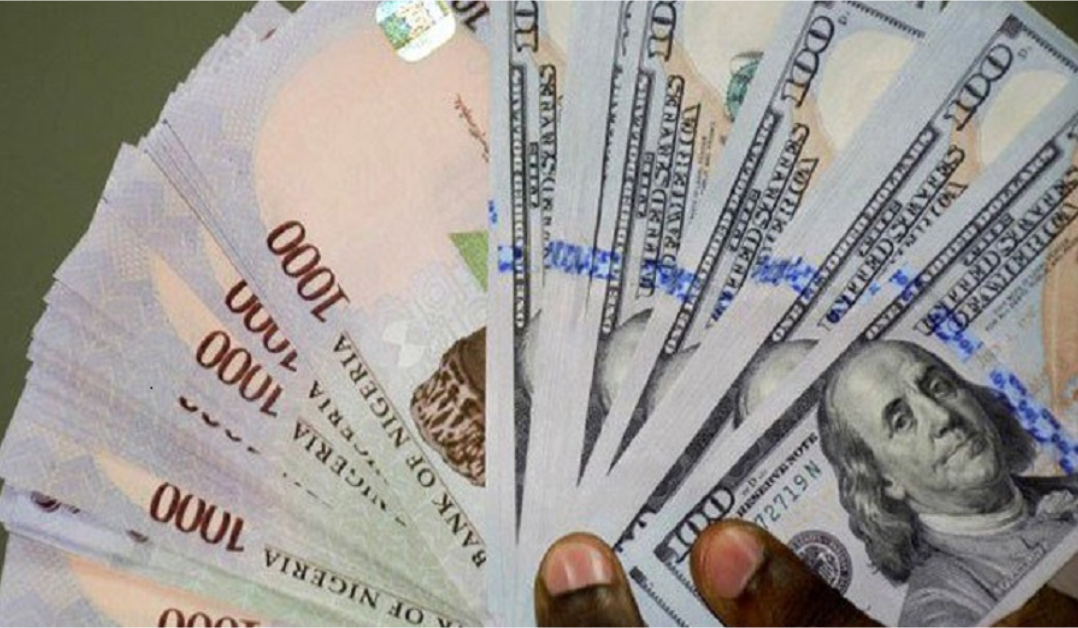
The Nigerian Foreign Exchange Market (NFEM) has an opening rate of about N1,353.54/$ and is expected to trade near N1,350/$ with daily averages and closing rates ranging from N1,353/$ to N1,355/$.
The official window remains stable and bullish for the Nigerian currency, even showing slight strength compared to early February.
The naira traded around N1,348/$ to N1,358/$ in the past week.
This week appears to lack significant wholesale or retail FX auctions (mass dollar sales to banks or end users), unlike previous updates.
Also Read
Recent actions by the CBN regarding FX include increasing retail FX liquidity by narrowing the gap between official and parallel markets, through allowing licensed Bureau de Change (BDC) operators to purchase up to $150,000 weekly, aiming to improve retail supply.
The official rate is likely to settle at N1,340/$ if the CBN conducts major FX auctions this week. Meanwhile, the parallel market rate for the Nigerian Naira against the US dollar has been between N1,420/$ and N1,435/$.
The CBN projects external reserves will grow to $51 billion, according to the 2026 Macroeconomic Outlook. This forecast enhances optimism on the Naira, which has been under pressure due to high dollar demand. The Monetary Policy Rate (MPR) currently stands at 27%. This high MPR is considered hawkish, aiming to attract foreign investment into Naira assets and to extend the period of the Naira’s depreciation.
Nigerian headline Inflation shows signs of moderation, a boost for the Nigerian naira. If it approaches 15%, the CBN’s motive to devalue the Naira will diminish.
This positive outlook is driven by increased oil revenue and the full operation of the Dangote Refinery, which should reduce dollar expenditure on oil.
Dangote Refinery boosts Naira’s outlook
Dangote Petroleum Refinery (the largest in Africa, and the largest single-train facility in the world) attained its fully designed capacity of 650,000 barrels per day of crude oil.
- This achievement happened after some optimization and maintenance work was performed on several key units, such as the Crude Distillation Unit (CDU) and the Motor Spirit (MS) block.
- The refinery has the capacity to supply the domestic market with 75 million liters of Premium Motor Spirit (PMS/petrol) per day, which means that it covers or exceeds Nigeria’s maximum consumption (approximately 50-54 million litres/day).
The refinery has also marketed 62% of the fuel locally, and as such, it has significantly curtailed the country’s dependence on fuel imports.
US Dollar Index posts weak trading
The US Dollar Index (DXY) posted weak trading amid holidays in the US and China.
The index traded at 97 with US borders closed for the holiday, and China closed for the Lunar New Year, The DXY shows a slight recovery from the previous session’s losses.
- The American dollar faces headwinds due to softer CPI figures, suggesting the Fed may adopt a more dovish stance and consider rate cuts sooner. The FedWatch Tool indicates a 90% probability of rates remaining steady at the next meeting, up 9% from last week.
- It’s expected the Fed will cut rates two more times before year-end, with the first cut around June, which has a 52% likelihood.
January’s US CPI stood at 2.4% YoY, down from 2.7% in December and below the 2.5% forecast. Market expectations for inflation were a 0.3% increase, but the actual rise was 0.2% from December.
- Moreover, expectations that the Fed will hold rates in March before implementing two 25-basis point cuts by the end of the year are supported by the stabilized US labor market.
Despite a lower-than-expected unemployment rate, US nonfarm payrolls surged at their highest rate in over a year, indicating ongoing stabilization.
Chicago Fed President Austan Goolsbee noted that the latest CPI report had both positive and concerning elements, especially the persistently high services inflation rate.
He stated that the strong employment data in January “probably indicates stability,” highlighting that the labor market remains relatively stable with only slight cooling. Goolsbee added that there is still potential for interest rates to decrease further.