Follow Us on Google Discover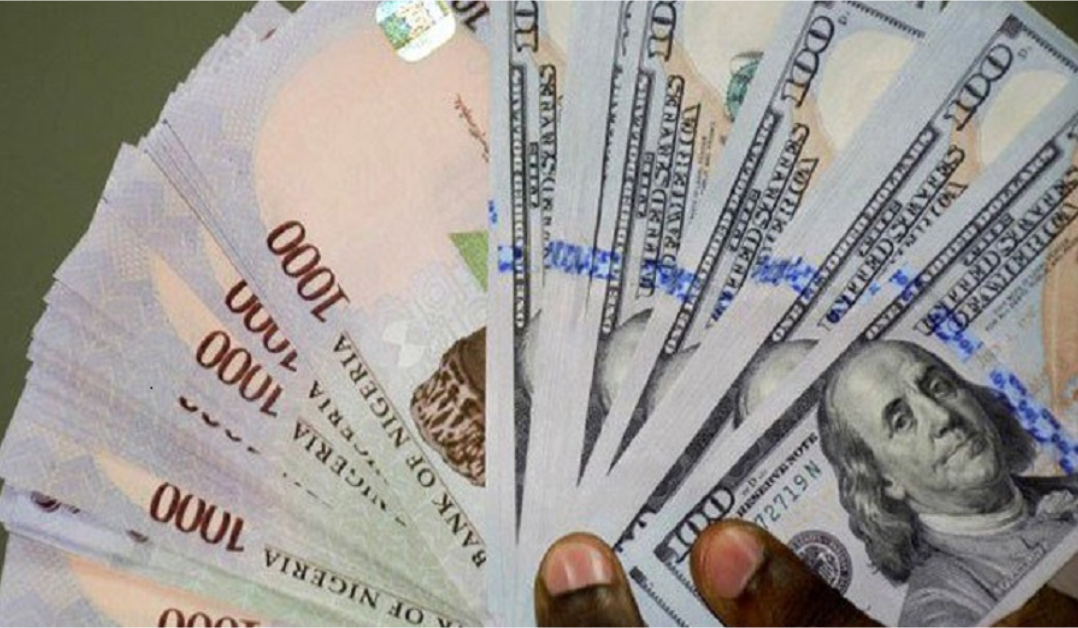
Recent gains recorded by the Nigerian naira may be short-lived, with the currency projected to weaken modestly before the end of 2026, according to a new report by BMI, a Fitch Solutions company.
In its latest report titled “Sub-Saharan Africa FX Roundup: 2026 Will Be A Story Of Stability For Some And Strength For Others,” BMI noted that although the naira has strengthened in early 2026, underlying pressures suggest a gradual depreciation over the course of the year.
The naira closed the week at N1,358/$1, extending its recovery.
The currency has appreciated by 5.8% on the official market so far in 2026, building on a 7.0% gain recorded in 2025.
Also Read
What they are saying
BMI said it expects the naira to weaken moderately from current levels, arguing that the recent rally is unlikely to be sustained.
- “The Nigerian naira will weaken modestly through 2026, sliding from NGN1,354/USD on February 11 to NGN1,550/USD by year-end. Although the currency has gained 5.8% on the official market in early 2026, building on last year’s 7.0% appreciation, we view this strength as temporary.”
The report added that as inflation eases from an average of 23.3% in 2025 to a projected 14.5% in 2026, domestic demand is likely to strengthen, increasing foreign exchange (FX) requirements.
- “The recent divergence between official and parallel rates – with the naira now trading 6–7% weaker on the black market – points to building FX pressures and suggests that the official rate is slightly overvalued.”
However, BMI noted that any depreciation in 2026 would be modest compared to recent years. It cited Nigeria’s wide interest rate differential relative to other frontier markets and improved investor sentiment toward emerging markets as factors that could sustain portfolio inflows and support FX supply.
Backstory
- The naira ended 2025 on a positive note, closing at N1,429/$1 on December 31 — a 7.4% appreciation from N1,535/$1 at the end of 2024.
- This marked the currency’s first annual gain since 2012, when it strengthened slightly to N157.29 from N158.99 in 2011. Between 2013 and 2024, the naira had recorded consistent annual depreciation, making the 2025 performance a notable turnaround.
- The currency experienced its weakest level in April 2025, closing at N1,602/$1, before beginning a gradual recovery from May.
By year-end, it had strengthened to N1,429/$1, improving from N1,450.01/$1 at the start of December and outperforming its January 2025 opening rate of N1,538.50/$1.
More insight
BMI expects major Sub-Saharan African (SSA) currencies to show greater stability in 2026 compared to previous years, supported by favourable global conditions.
- “SSA currencies have performed well in the year-to-date, with the Zambian kwacha up 16.0% against the USD, the Nigerian naira up 5.9%, and the South African rand gaining 4.1%. While the recent rally in SSA FX is unlikely to retain momentum over the whole year, we equally do not expect major sell-offs.”
The firm said global conditions remain broadly supportive, with its team projecting the US dollar index (DXY) to trade within the 95–100 range, indicating muted demand for safe-haven US assets.
It added that appetite for higher-yielding emerging and frontier market assets remains strong, as reflected in early 2026 gains in the JP Morgan EM FX Risk Appetite Index. Reform momentum, improving fiscal dynamics, and continued engagement with the IMF were also cited as supportive factors for investor confidence in the region.
What you should know
Nigeria’s external reserves have climbed above $47 billion for the first time in about eight years, reinforcing confidence in the country’s external position.
- Data tracked by Nairametrics show that gross reserves rose to $47.025 billion, the highest level since August 3, 2018, when reserves stood at $47.01 billion. The upward trajectory began in late 2025 and has extended into early 2026.
- BMI noted that Nigeria’s dollar reserves reached $45.5 billion in December 2025, equivalent to roughly nine months of import cover.
The improvement was partly attributed to structurally lower fuel imports, supported by increased domestic refining capacity, including output from the Dangote refinery.