
 Follow Us on Google Discover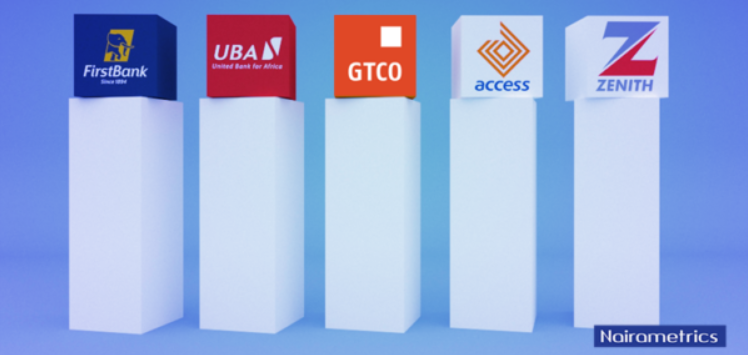
United Bank for Africa (UBA), Zenith Bank and Access Corp are projected to deliver the strongest risk-adjusted returns among Tier-1 lenders in 2026, driven by capital appreciation and dividend strength.
This is according to analysts at CardinalStone Research in their latest “CardinalStone Banking Strategy Report,” published on Tuesday, February 10, 2026.
The report outlines projected total returns across major Nigerian banks, highlighting earnings recovery, valuation gaps and improving balance sheets as key drivers of performance, while also identifying underperformers within both Tier-1 and Tier-2 segments.
What the data is saying:
CardinalStone analysts project total returns of 48.0% for UBA and 40.6% for Zenith Bank over the next year. These returns are expected to be driven largely by capital appreciation averaging 36.6%, alongside dividend yields of about 7.7%.
Also Read
- Access Holdings is projected to deliver a one-year total return of 92.3%, representing the largest upside potential among major lenders.
- Zenith Bank’s earnings per share are forecast to rise from N26.82 in FY2025 to N38.70 in FY2026, supported by the regularisation of loan forbearance and improved profitability.
- Access Corp currently trades at a price-to-book ratio of 0.4x, significantly below the EMEA peer average of 1.3x, despite posting a return on equity of 17.4%.
- Analysts project negative capital returns of 3.5% for Ecobank Transnational Incorporated (ETI) and 1.6% for Stanbic IBTC.
The analysts expect cleaner balance sheets, limited loan impairments and renewed credit growth to drive higher interest income across the sector in 2026.
Backstory
Nigerian banking stocks recorded strong performance in 2025 despite initial concerns surrounding the Central Bank of Nigeria’s exit from regulatory forbearance. Strong net-interest margins, supported by improving macroeconomic conditions, helped cushion the sector and sustain earnings momentum.
- The resolution of legacy problem assets and regularisation of restructured loans have strengthened balance sheets across leading banks.
- Several lenders undertook capital raising initiatives in 2025 to meet regulatory requirements and improve lending capacity.
- Dividend policies remained a key attraction for investors, particularly in an environment of potential tax changes that favour yield-generating stocks.
This broader clean-up cycle has laid the foundation for improved earnings visibility and stronger credit expansion heading into 2026.
More Insights
Access Corp’s valuation discount remains a central theme in the report, with analysts attributing its low price-to-book ratio to dividend concerns and profitability gaps relative to domestic Tier-1 peers. However, the group’s shift from acquisition-led expansion to consolidation is expected to improve asset yields and operational efficiency.
- Analysts project a dividend yield of 10.5% for Access Corp as earnings efficiency improves.
- GTCO is expected to benefit from renewed loan growth following the resolution of legacy problem assets.
- GTCO’s projected payout ratios stand at 32.5% in FY2025 and 30.0% in FY2026, reflecting its consistent dividend culture.
- FirstHoldCo recorded impairments of N748.1 billion in FY2025, which weighed on earnings but cleared the path for recovery.
While FirstHoldCo is expected to see softer impairments and stronger revenue growth in FY2026, earnings per share may be diluted by new shares issued during recent capital raising, with dividend payout projected at a conservative 10%.
What you should know
Analysts expect continued balance sheet repair across the banking industry to sustain real credit growth and earnings expansion through 2026. Improving macroeconomic conditions and stronger institutional participation are also projected to support valuation re-rating for leading lenders.
- FCMB Group and Fidelity Bank are the preferred Tier-2 picks due to resilient margins and improved funding structures.
- FCMB’s recent capital injection and repayment of high-cost liabilities are expected to strengthen margins in a more accommodative rate environment.
- Fidelity Bank’s asset yield, estimated at about 18.5% in Q3 2025, continues to support earnings momentum.
- ETI’s pause in dividend payments and Stanbic IBTC’s projected dividend yield of 5.1% underpin their weaker relative outlook.
Overall, analysts maintain a constructive stance on Nigerian banking equities, positioning Tier-1 lenders in particular as key drivers of equity market performance in 2026, supported by a blend of dividend income and capital gains.


Could please explain what share dilution means and equally inform Mr Idika Aja to shed more light on it during follow the money.
Thank you
The Banks Recapitalization exercise has brought in more units of shareholding than what it used to be before recapitalization, increasing the number of shares Outstanding. The implication is that, the banks must work harder in order to deliver value to the shareholders.