
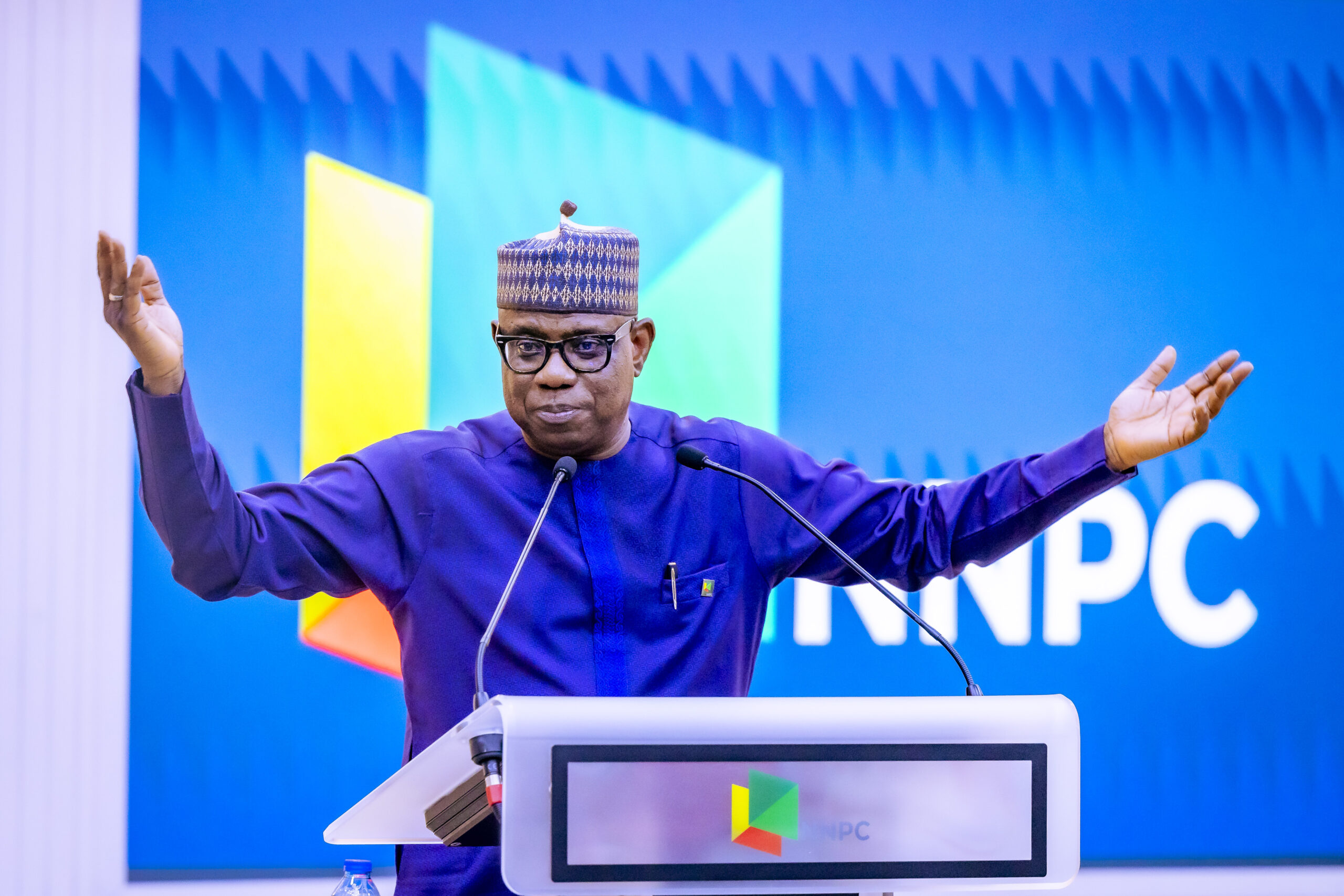
The Nigerian National Petroleum Company Limited (NNPC Ltd.) has revealed that it shut down Nigeria’s state-owned refineries after internal assessments showed they were operating at “monumental losses” and destroying national value.
The disclosure was made by the Group Chief Executive Officer of NNPC Ltd., Mr Bashir Ojulari, during a Fireside Chat on Securing Nigeria’s Energy Future at the Nigeria International Energy Summit (NIES) 2026 held in Abuja on Wednesday.
According to Ojulari, the decision followed a detailed technical and commercial review triggered by mounting public anger over years of heavy investment in the refineries with little to show in terms of performance, forcing the company to confront the economic realities of its operations.


What they are saying
Ojulari said the refineries became an immediate priority when his leadership team assumed office, given the intensity of public scrutiny and expectations surrounding their rehabilitation.
- “When we came in, refineries were a hot topic. Nigerians were angry, expectations were very high, and we were under extreme pressure.”
- “After a detailed review, it became clear that we were simply wasting money.”
- “When we looked at the net outcome, we were leaking value with no clear line of sight to profitability.”
- “That trajectory would have meant value destruction for the next 30 years. We were not going to do that.”
He explained that despite crude oil being supplied monthly, capacity utilisation averaged just 50 to 55 per cent, while operating expenses and contractor costs continued to escalate, making continued operations economically unjustifiable.
Backstory
Nigeria’s state-owned refineries in Port Harcourt, Warri, and Kaduna have long struggled with chronic underperformance despite repeated turnaround maintenance efforts and billions of naira in public spending.
- Over the years, successive administrations prioritised financing and engineering, procurement and construction (EPC) contracts, often without sufficient attention to long-term operations and maintenance.
- This approach, according to Ojulari, created a structure where multiple layers of contractors extracted value without being accountable for sustained performance.
- The refineries increasingly produced mid-grade petroleum products whose market value failed to justify the quality and cost of crude oil supplied to them.
These structural weaknesses, he said, meant that even when the refineries were running, they were eroding value rather than creating it.
More insights
Ojulari noted that his background in upstream oil and gas meant that his team had to undergo what he described as a “vertical learning curve” to fully understand the economics of the downstream sector.
- He identified the lack of “skin in the game” by operators as a key flaw, arguing that financing, EPC, and operations and maintenance contracts were all designed to extract value rather than sustain assets.
- To address this, NNPC plans to shift from contractor-led operations to an equity partnership model involving experienced refinery operators.
- Under this model, partners would acquire equity stakes, lead day-to-day operations, and help rebuild local technical capacity within Nigeria’s refining system.
Ojulari stressed that this approach was about commercial sustainability, not asset stripping.
- Ojulari said discussions were ongoing with potential investors, including a major Chinese petrochemical company, with site inspections expected in the near term.
- He also credited the Dangote Refinery with easing pressure on Nigeria’s energy system, describing it as timely and strategic for the country.
- “Whether you love Dangote or hate him, thank God for the Dangote Refinery,” Ojulari said, adding that its presence gives NNPC room to make better, less pressured decisions.
What you should know
NNPC’s comments come amid sustained scrutiny over the fate of Nigeria’s refineries and broader downstream reforms.
- In October 2025, Nairametrics reported that NNPC Ltd. commenced a detailed technical and commercial review of its three major refineries to determine their operational and financial viability.
- In August, the Independent Petroleum Marketers Association of Nigeria (IPMAN) publicly asked Ojulari to either fix the Port Harcourt Refinery or resign, following prolonged delays in its rehabilitation after it was shut down on May 24, 2025, for a 30-day repair that stretched beyond 80 days.
- In June, NNPC ruled out the sale of the Port Harcourt Refining Company, reaffirming its commitment to high-grade rehabilitation and retention of ownership, even as calls for privatisation persisted.
In December, the Nigerian Economic Summit Group (NESG) renewed calls for the Federal Government to fast-track the privatisation of state-owned refineries, arguing that it would boost domestic refining capacity and reduce Nigeria’s dependence on imported petroleum products.