
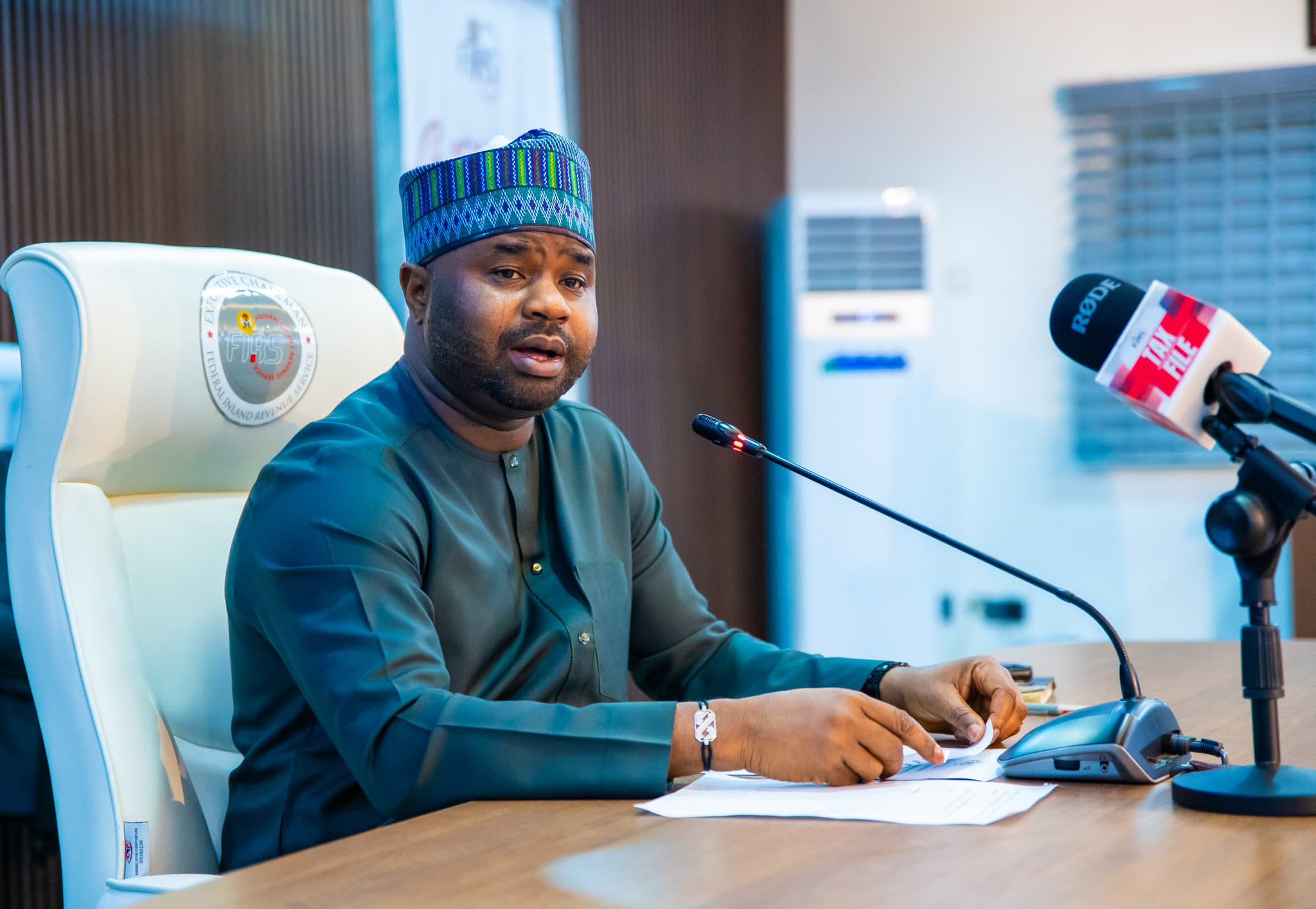
The Federal Government has discontinued the use of corporate tax credits to fund road construction, insisting that such projects must go through the proper appropriation process.
The disclosure was made by Mr. Zacch Adedeji, Executive Chairman of the Nigeria Revenue Service (NRS), during a joint sitting of the editorial boards of ThisDay and Arise News on Wednesday, according to ThisDay.
The decision signals a shift from the previous Road Infrastructure Development and Refurbishment Investment Tax Credit Scheme, which allowed major firms to fund federal road projects using tax credits.


Mr. Adedeji said the move aligns with constitutional requirements and financial regulations, stressing that the NRS cannot bypass legislative approval in funding infrastructure. The government has emphasized that future road projects will rely on centrally budgeted allocations.
What they are saying
Mr. Adedeji explained that while the road tax credit scheme was well-intentioned, it conflicted with the constitutional mandate of the revenue agency.
- “No matter how good a programme is, the first thing that it must have is good products. The remits of the Nigeria Revenue Service, as it were then or the Federal Inland Revenue Service, is to assess, to collect, and to account for taxes. Appropriation is not part of the remits of the Nigeria Revenue Service or Federal Inland Revenue Service.”
- “When you give tax credits for roads, it is an appropriation act, because you spent the money, but your remit is to collect and give it to the constitutional body that will sign that money, which is the Federation Account Allocation Committee (FAAC),” ThisDay quoted Adedeji as saying.
He noted that allowing companies to offset tax payments with road projects amounted to spending public funds without proper constitutional approval, which necessitated the discontinuation of the scheme.
Why the scheme was stopped
The NRS boss also highlighted technical limitations of the agency as a reason for ending the tax credit scheme.
He explained that the agency lacked the expertise to properly assess road construction projects.
He stressed that while companies could fund roads, the government must approve the appropriation of public funds.
The move reflects a return to centrally budgeted funding for federal road projects, ensuring all infrastructure spending complies with constitutional and financial regulations.
More insights
Before the discontinuation of the tax credit scheme, NNPC’s withdrawal in 2025 left N3 trillion worth of road projects without funding.
- NNPC had financed over 21 road projects covering more than 1,800 kilometers, including the Ilorin-Jebba-Mokwa/Bokani Junction Road and the Lagos-Badagry Expressway.
- Following this, the Minister of Works, David Umahi, announced that the Federal Government is exploring Public-Private Partnership (PPP) options to complete these projects.
The withdrawal highlighted the risk of relying solely on private contributions for federal road infrastructure.
What you should know
Several major firms were funding multiple federal road projects under the tax credit scheme before it was discontinued.
- Dangote Group handled projects such as the 53.7 km Side Lanes for the Lekki Deep Seaport in Lagos State and 105km Obelle-Ilaro-Papalanto-Shagamu Road Dualization
- BUA Group constructed the Bode-Saadu-Lafiagi Road, Eyinkorin Road and Bridge, and the Okura Road.
- MTN Nigeria focused on rehabilitating and reconstructing the Enugu-Onitsha Expressway, while NLNG funded the Bodo-Bonny Road and Bridge in Rivers State.
- Other contributors included Access Bank, Mainstream Energy Solutions, Transcorp Group, and GZI Industries, covering key roads in Lagos, Niger, Kebbi, Abia, and other states.
Historical participants included Lafarge Africa, Unilever Nigeria, and Flour Mills of Nigeria.