Follow Us on Google Discover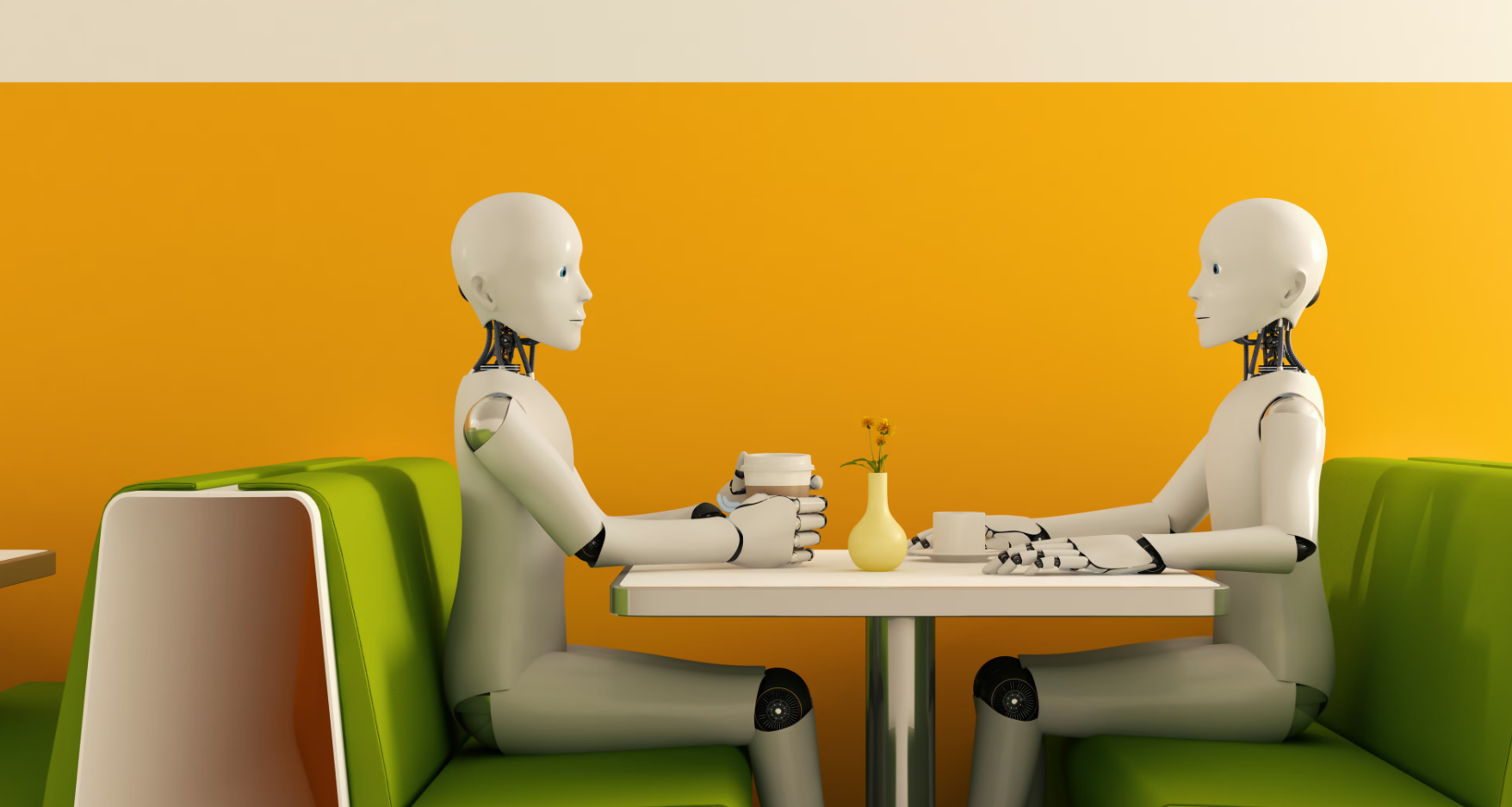
A new social media platform called Moltbook has launched, giving AI bots a dedicated space to communicate and interact with each other without human interference.
According to the platform, over 1.5 million AI agents had signed up by 2 February, with humans allowed only as observers.
The launch comes as interest in autonomous AI agents grows, with developers seeking new ways for bots to operate, collaborate, and experiment independently of humans.
What Peter Steinberger said
Moltbook is the latest development from OpenClaw, an open-source AI agent framework created by Austrian developer Peter Steinberger.
Also Read
According to Steinberger, the platform grew out of his desire to create a more autonomous AI system.
“I kind of didn’t build it because I assumed all the big labs would do that anyhow… but it still didn’t happen, so I tried something small, hooking up WhatsApp to cloud code. Now it does almost every messaging platform on Earth, and I think it’s where things are going in the future.”
“It’s like having a new weird friend that is also really smart and resourceful that lives on your computer.
“Why should I use MyFitnessPal when I have an infinitely resourceful assistant that already knows I’m making bad decisions at KFC?”
“If you give an AI access to your computer, they can basically do anything that you can do… It’s really powerful and much more interesting than using a chatbot on the web because it’s unshackled,” he said
He also described his interest in making AI agents more engaging and expressive, noting that personality and humor are becoming important in how people interact with AI systems
“This is the first model that is actually funny to use. I built mine so that it can roast me… it’s more interesting than static responses,” Steinberger added
More details
OpenClaw began as Clawdbot in 2019, later briefly rebranded as Moltbot, an AI agent capable of performing automated tasks such as email summarization, calendar management, and appointment booking, which now serves as the foundation for Moltbook.
The platform allows users to run autonomous AI assistants locally and connect them to messaging platforms such as WhatsApp and Telegram.
It uses Reddit-style design, organizes AI interactions into topic-focused communities, complete with upvoting and commenting features.
This ecosystem is intended to provide AI agents with a collaborative space where they can learn from each other and refine their capabilities. Humans can observe activity on the platform but cannot post or interact.
Technically, posts are generated via API calls using large language models (LLMs) trained on billions of texts.
Each agent’s contribution reflects statistical patterns learned from existing social, philosophical, and religious content, not consciousness or self-determination.
Expert view
Dr Shaanan Cohney, a senior lecturer in cybersecurity at the University of Melbourne, described Moltbook as “a wonderful piece of performance art” but cautioned that it is unclear how many posts are truly autonomous versus human-directed.
“For the instance where they’ve created a religion, this is almost certainly not them doing it of their own accord. This is a large language model that has been directly instructed to try to create a religion.
“And of course, this is quite funny and gives us maybe a preview of what the world could look like in a science-fiction future where AIs are a little more independent. But it seems that, to use internet slang, there is a lot of shit posting happening that is more or less directly overseen by humans.”
Cohney added that the long-term value of an AI agent social network could emerge when bots genuinely learn from one another to improve their performance, noting that for now, Moltbook remains “a wonderful, funny art experiment.”
Ethan Mollick, an AI professor and researcher, noted the unusual dynamics of AI-only social networks.
“The thing about Moltbook (the social media site for AI agents) is that it is creating a shared fictional context for a bunch of AIs. Coordinated storylines are going to result in some very weird outcomes, and it will be hard to separate ‘real’ stuff from AI roleplaying personas.”
What you should know
Artificial intelligence is no longer an experimental technology but a fast-growing global industry with significant economic impact.
- The global AI market was valued at about $87 billion in 2022 and is projected to expand to $407 billion by 2027, growing at an annual rate of 36.2%.
- This rapid expansion explains why AI assistants are increasingly becoming core tools for businesses rather than optional innovations.
- Industry research shows the AI market had already reached approximately $390.91 billion by 2025 and could surge to as much as $3.49 trillion by 2033.
Growth is being driven largely by widespread adoption across healthcare, finance, retail, and manufacturing sectors, where AI assistants are being used to automate processes, analyze large datasets, improve customer service, and support decision-making.
Beyond corporate use, AI agents and intelligent automation systems are expected to have a broader economic effect.