Follow Us on Google Discover
Delayed releases of capital funds in 2025 weakened Nigeria’s investment momentum and slowed progress toward the country’s long-term growth ambitions, according to PwC.
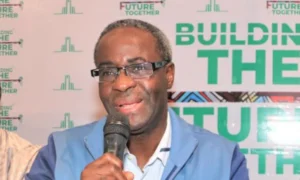
The assessment was made by Kenneth Erikume, Partner at PwC, during an Executive Roundtable on Nigeria’s 2026 Budget and Economic Outlook.
He said the funding delays disrupted project timelines, forced rollovers from the 2024 budget into 2025, and complicated economic planning at a time when Nigeria is pushing to accelerate growth and investment.
The roundtable, themed “Nigeria’s Economic Outlook 2026: The Executive Playbook for Growth, Resilience, and Efficiency,” focused on fiscal execution challenges, revenue mobilisation, and the outlook for public investment as the government prepares the 2026 budget.
Also Read
What Keneth Erikume is saying
Erikume said Nigeria’s recurring budget deficits are not the core problem, arguing instead that weak capital expenditure execution has had a bigger economic impact. He noted that delayed releases in 2025 meant government investments did not happen when planned, creating what he described as “a time reset on the ambition to build a $1 trillion economy.”
According to him, while revenue performance on recurrent spending has at times exceeded expectations, capital spending has lagged, especially in 2025.
“The slowness in the release of funding meant that we essentially carried over parts of the 2024 budget into 2025,” he said, adding that this placed “material pressure from an economic standpoint.”
He warned that delayed public investment has broader consequences, as infrastructure and other capital projects are central to stimulating growth and crowding in private investment.
“Government has to do certain things to address that risk,” Erikume said, pointing to revenue mobilisation as a key lever.
On revenue, he highlighted the government’s ongoing tax reforms, stressing that the focus is not on raising tax rates but on deepening tax administration. “There’s a lot of focus around efficiency, using data and using technology,” he said.
He added that without such a reset, closing the gap between revenue and expenditure would be difficult.
Other key issues
Erikume also spoke about Nigeria’s debt position, noting that with public debt at about N152 trillion as of mid-2025, borrowing remains unavoidable in 2026. However, he stressed that borrowing must be complemented by stronger revenue generation and improved efficiency at agencies such as Customs.
- On oil revenues, he said weak earnings, security challenges and underinvestment have continued to weigh on fiscal performance, despite divestments by international oil companies to indigenous operators. He cautioned that oil and gas investments have long lead times, meaning production gains will not be immediate.
- He pointed to exchange-rate stability in 2025 as a notable positive, attributing it to tight monetary policy and increased transparency in the FX market. According to him, these measures helped manage FX demand, boost reserves and moderate inflation, which he said has averaged around the mid-teens.
More insights
Looking ahead to 2026, Erikume said Nigeria will still need to borrow, but global developments—particularly US monetary policy could affect the attractiveness of its debt. He urged the government to monetise assets and expand private sector participation, especially in infrastructure, noting that even with a larger 2026 budget, Nigeria’s per-capita public spending remains far below that of peer economies.
He added that there is now clearer alignment between fiscal priorities and tax incentives, with healthcare, education, infrastructure and agriculture emerging as key focus areas for policy and investment going into 2026.
Get up to speed
Nigeria now routinely operates with overlapping budgets, a practice that intensified from around 2023 when the federal government began extending main and supplementary budgets into subsequent fiscal years.
By 2024, multiple budget instruments were active simultaneously, including the 2023 main and supplementary budgets, the 2024 main budget, and a 2024 supplementary budget, even as a new appropriation was introduced.
This overlap has contributed to delays in capital releases, which recently sparked renewed protests by indigenous contractors in Abuja.
- Earlier this month, the contractors staged demonstrations demanding payment of approximately N4 trillion owed by the Federal Government for completed 2024 capital projects. Contractors say these debts relate to projects that were fully executed, inspected, and certified by the relevant government agencies. A similar protest had taken place in December 2025.
- The Federal Ministry of Finance confirmed the payment of N152 billion following due verification to contractors for verified contracts.
What you should know
To address this, President Bola Tinubu has directed a transition to a single annual budget cycle beginning in April 2026, a move aimed at ending the practice of running multiple overlapping budgets that have distorted planning, slowed capital releases and weakened accountability across ministries, departments and agencies.
- He also proposed cutting the 2025 budget from N54.99 trillion to N48.32 trillion while still extending its lifespan to March 31, 2026 to allow outstanding capital liabilities to be funded and closed.
- Recall that Nairametrics reported in December 2025 the Federal Government directed ministries, departments, and agencies to roll over about 70% of their 2025 capital budget into the 2026 fiscal year to complete ongoing projects amid tight revenues.