Follow Us on Google Discover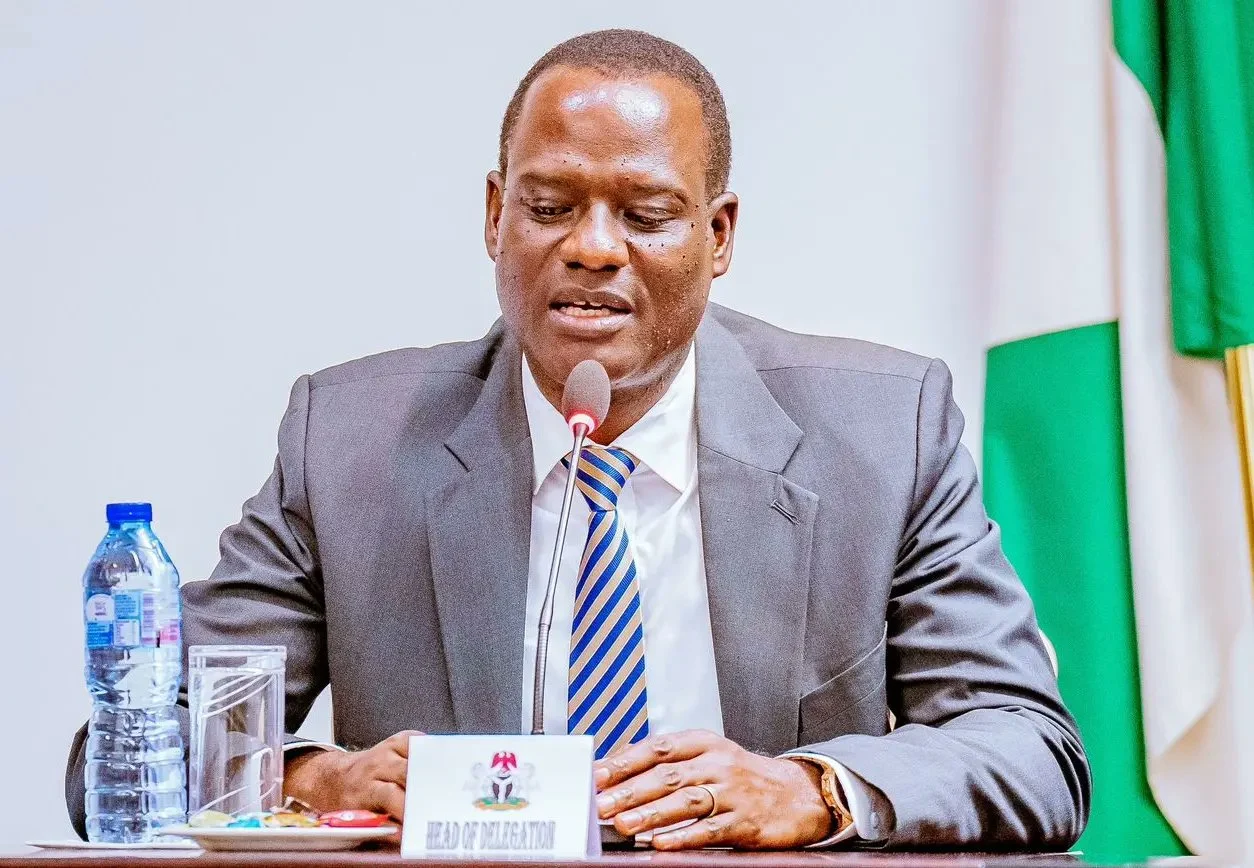
The Federal Government has dismissed reports that it spent more than ₦8 trillion outside the 2026 approved budget, describing the claims as inaccurate and a misrepresentation of the International Monetary Fund’s 2026 Article IV Consultation Report.
Minister of Finance and Coordinating Minister of the Economy, Taiwo Oyedele, issued the rebuttal in a statement he released on Sunday.
Oyedele said the allegations wrongly suggested that about two per cent of Nigeria’s Gross Domestic Product was expended outside the approved budget in a manner that contradicted the country’s constitutional and statutory framework.
What the FG is saying
Oyedele said the Federal Government does not operate a shadow budget or spend public funds outside the constitutional and statutory framework, calling the claims legally and factually incorrect.
- “The Federal Government has noted recent public commentary alleging that approximately two per cent of GDP amounting to over ₦8 trillion was spent outside the approved budget based on references to the IMF Representative in Nigeria and the Fund’s 2026 Article IV Consultation Report. These claims are incorrect and risk misleading the public regarding the government’s financial management,” the statement said.
- He explained that under Sections 80 to 83 and 162 of the 1999 Constitution, public funds can only be withdrawn and spent in accordance with the Constitution and laws enacted by the National Assembly, with Federal Government spending undertaken through duly enacted Appropriation Acts, Supplementary Appropriation Acts and other statutory authorities approved by the legislature.
Oyedele said multi-year capital projects implemented across different budget cycles and approved capital rollovers are recognised components of public financial management and should not be misconstrued as spending outside the budget.
- “It is inaccurate to suggest that trillions of naira have been secretly spent outside legislative approval. Such allegations should have identified the specific projects purportedly executed without appropriation or legal authority and present credible evidence in support of the claim,” he said.
He listed statutory transfers, debt service obligations, first-line charges and intervention mechanisms established by Acts of the National Assembly as among the expenditures authorised by law.
- “These expenditures are neither secret nor illegal. They are established by law, disclosed in various fiscal reports, and subject to applicable oversight, audit and accountability mechanisms,” he stated.
Oyedele also rejected suggestions that the reported spending represented an increase in Nigeria’s fiscal deficit.
- “A fiscal deficit is determined by the relationship between total government revenues and total government expenditures. Whether a capital project is financed through annual appropriations, supplementary appropriations, statutory transfers, approved intervention mechanisms, or other lawful financing arrangements does not, by itself, increase the fiscal deficit,” he said.
Backstory
The pushback by the federal government comes after IMF Resident Representative in Nigeria, Christian Ebeke, said in Lagos that roughly two per cent of GDP in government expenditure had not been reported in official budgets.
According to Ebeke, this creates a statistical discrepancy that makes Nigeria’s fiscal deficit appear smaller than it actually was.
Speaking to business executives in Lagos, he said the unreported spending was partly linked to large government projects executed outside the official budget framework, distorting assessments of Nigeria’s fiscal position and public investment.
- “So far we think that there are about 2% of GDP of expenditure that were not reported that should be reported and should be recorded, so that this statistical discrepancy will disappear,” Ebeke said.
He added that incomplete fiscal reporting could complicate coordination between fiscal and monetary authorities, as policymakers may not have a full picture of the government’s true financing needs.
Ebeke said the Nigerian government has begun addressing the issue by revising recent budget laws to incorporate previously unrecorded expenditures, although updated budget implementation reports are still required to fully reflect the changes.
More insights
This off-budget spending claim has since sparked widespread controversy and calls for an investigation into the country’s fiscal management.
Reacting, Taiwo Oyedele said the IMF’s observations were about improving the comprehensiveness and presentation of fiscal reporting rather than questioning the legality of the government’s expenditure.
- He noted that President Tinubu had already asked the National Assembly during the presentation of the 2026 Appropriation Bill on December 19, 2025, to end the practice of operating multiple and overlapping budgets and instead adopt a single, harmonised budget framework, signalling that the government had itself acknowledged the reporting gap before the IMF’s observations became public.
He said recent reforms had strengthened budget credibility, revenue administration, treasury management and the digitalisation of government financial processes, framing the IMF’s comments as part of an ongoing improvement process rather than a damning indictment of fiscal governance.
Atiku, Obi react
Former Vice President Atiku Abubakar and former Anambra State governor Peter Obi have both reacted to IMF’s claims, calling on the Federal Government to explain the alleged omission.
- Atiku urged anti-corruption agencies and oversight institutions, including the Economic and Financial Crimes Commission (EFCC), the Independent Corrupt Practices and Other Related Offences Commission (ICPC), the National Assembly and the Office of the Auditor-General for the Federation, to launch a thorough investigation into the alleged unreported spending.
Obi also reacted to the IMF’s findings, saying the report reinforced concerns about transparency and accountability in the management of public finances. He described the development as further evidence of what he termed “grand corruption” under the current administration.
- Writing on X, Obi argued that the reported ₦8.83 trillion expenditure was not appropriated by the National Assembly, placing it outside the country’s established budgetary oversight process.
- He said the IMF’s findings reflected a broader pattern of fiscal mismanagement and renewed his call for President Bola Tinubu to resign, arguing that the administration had failed to uphold accountability.
What you should know
Earlier this month, Nairametrics reported that the IMF Executive Board commended Nigeria’s monetary and fiscal authorities for implementing wide-ranging economic reforms over the past two years, following the conclusion of the 2025 Article IV Consultation.
- In a statement issued from Washington, D.C., on July 2, 2025, the Fund said the reforms had contributed to stronger macroeconomic stability and improved resilience, while urging policymakers to sustain the momentum.
- The IMF noted that the Central Bank of Nigeria’s (CBN) tight monetary policy stance remained appropriate and should be maintained until inflation is firmly on a downward path.
The Fund also welcomed ongoing efforts to strengthen the banking sector, including the industry’s recapitalisation programme. It praised initiatives aimed at expanding financial inclusion and deepening Nigeria’s capital markets, while recommending stronger risk-based supervision of mortgage and consumer lending, as well as the rapidly growing fintech and cryptocurrency sectors.