Follow Us on Google Discover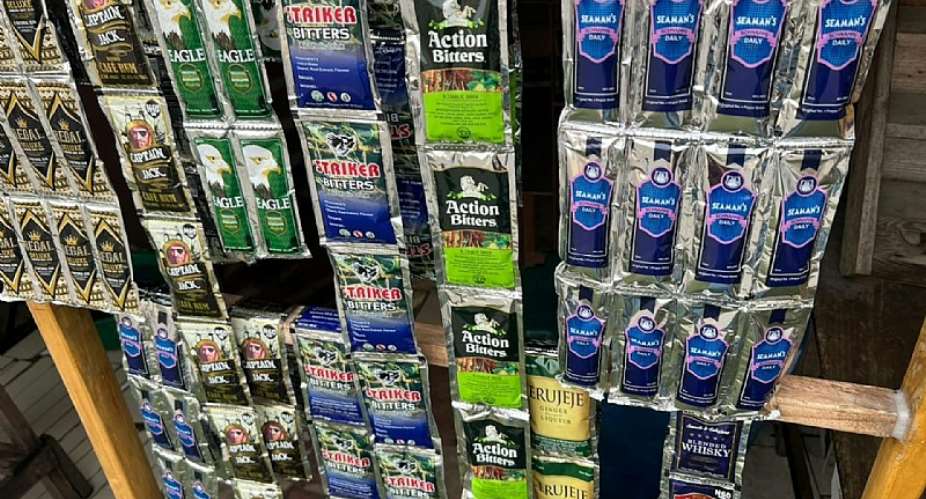
The Manufacturers Association of Nigeria (MAN) has cautioned that the National Agency for Food and Drug Administration and Control’s (NAFDAC) enforcement actions against sachet alcohol could trigger unintended consequences in the country.
The warning was issued by MAN’s Director-General, Segun Ajayi-Kadir, during an interview on Arise Television on Thursday.
While acknowledging concerns around underage alcohol consumption, MAN argues that an outright ban on sachet and small-volume alcoholic drinks is a blunt policy tool that could inflict significant economic damage without addressing the root of the problem.
The association maintains that sachet packaging is a legitimate and widely used business model designed to serve low-income consumers, and that better regulation—not prohibition—offers a more balanced solution.
Also Read
What MAN is saying
Ajayi-Kadir said the core issue with sachet alcohol is misuse, not the packaging format, stressing that similar packaging is used across multiple consumer goods sectors.
“There is no doubt that sachet production is a business model that has been used and is still being used in many products. You have milk and several other consumables in sachets to reach low-budget consumers,” he said.
“If sachet alcohol ends up in the hands of the wrong people, what we should do is take measures—and we are already taking measures, sometimes in conjunction with NAFDAC—to keep it away from children and those not supposed to consume it.”
“All over the world, there are concerns about alcohol consumption by children, and the solution identified is restriction of access. That is why I am surprised that what NAFDAC is ready and quick to do is something that will bring unintended consequences.”
“If the only instrument you have is a hammer, every object will look like a nail. That is not why regulatory agencies are established.”
He added that regulatory agencies are meant to work collaboratively with stakeholders to identify risks and implement proportionate solutions rather than imposing sweeping bans.
Backstory
Nigeria’s debate over sachet alcohol has been ongoing for several years, driven largely by concerns over abuse, underage consumption and public health risks associated with cheap, high-strength alcoholic beverages.
- Regulators and lawmakers have repeatedly raised alarms over the accessibility of alcohol to minors, particularly in informal retail environments where enforcement is weak.
- In response, NAFDAC and the National Assembly have pushed for stricter controls, culminating in policy proposals aimed at eliminating small-sized, high-alcohol products from the market altogether.
For manufacturers, however, sachet and small-volume packaging represents a critical link between producers and low-income consumers, especially at a time of declining purchasing power and rising inflation.
More insights
MAN argues that manufacturers have already been engaging regulators to address abuse concerns through targeted interventions rather than bans.
- Proposed measures include clearer labelling requirements, stronger on- and off-licence enforcement, and public awareness campaigns on responsible consumption.
- The association also points to stricter monitoring of producers, wholesalers and retailers to ensure compliance with age restrictions.
- Ajayi-Kadir said improved data usage and traceability tools could help regulators identify leakages and enforce access controls more effectively.
- He referenced a 2025 anti-substance abuse initiative involving MTN, the National Drug Law Enforcement Agency and the United Nations Office on Drugs and Crime, which reportedly prioritised restricting access over outright product bans.
According to MAN, these approaches align more closely with global best practices and would minimise economic disruption.
What you should know
NAFDAC recently commenced enforcement of a ban on the production and sale of alcoholic beverages in sachets and PET bottles below 200 millilitres.
The agency had earlier announced on November 11, 2025, that full enforcement would begin in December 2025 following a directive from the Senate.
Implementation was temporarily suspended after the Federal Government ordered a halt to enforcement actions pending further consultations and a final policy decision.