The Islamic Development Bank (IsDB) is set to fund a $163 million solar electrification project in Niger State, aimed at providing an alternative electricity source for communities across the state.
The announcement was conveyed in a statement issued by Bologi Ibrahim, Chief Press Secretary to the Governor of Niger State, on 26 January 2026.
The Niger State Solar Electrification Project, code-named NGA1063, is expected to cover 200 hectares and is designed to support industrialization, enhance agricultural productivity, and drive overall economic growth across the state.

What they are saying
According to the statement, the $163 million project is expected to generate 100 megawatts of solar power, providing a reliable electricity source for communities while supporting both industrial growth and agricultural productivity.
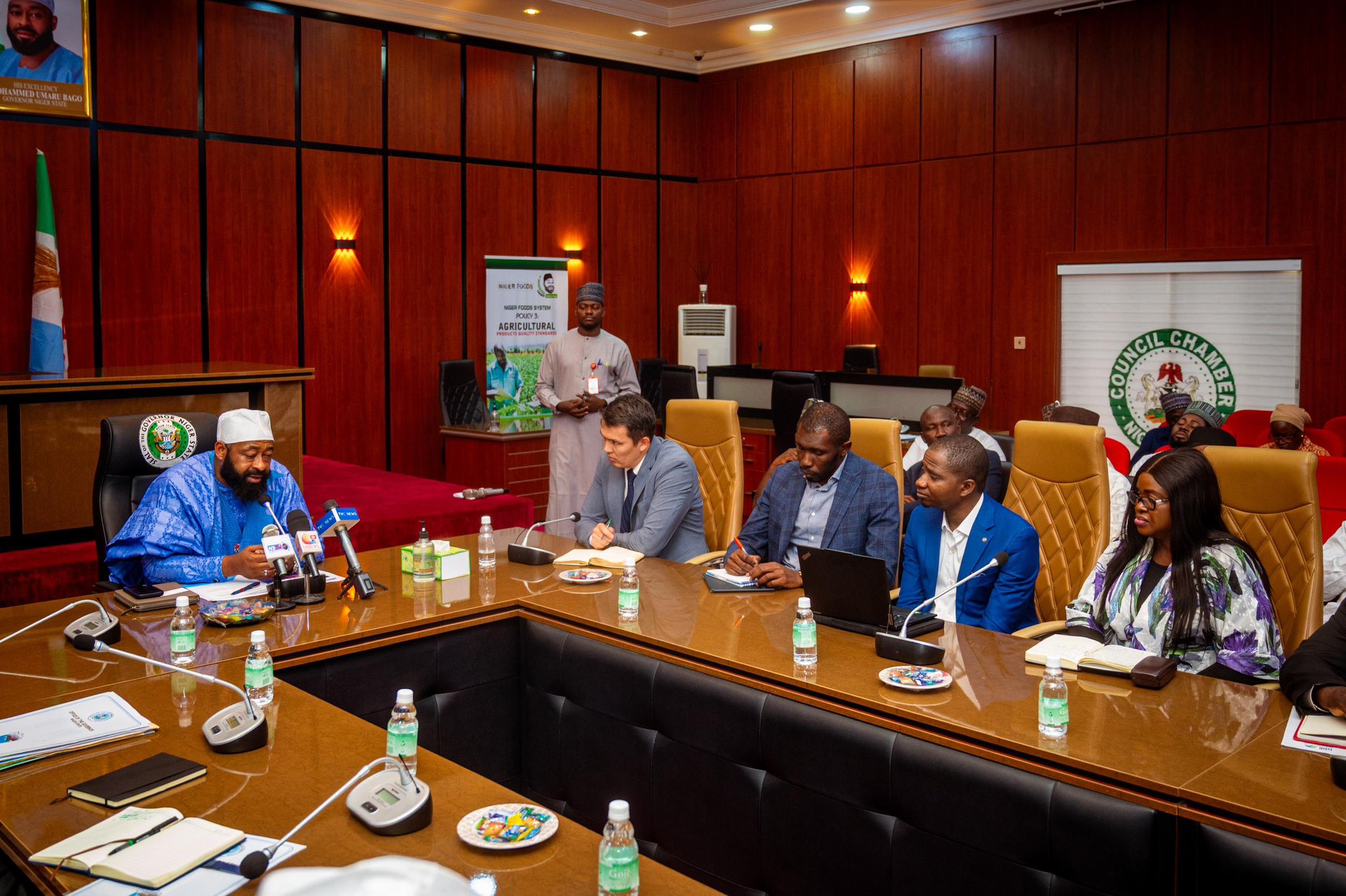
Governor Mohammed Umaru Bago, who received the IsDB preparation team, highlighted the state’s substantial investments in agriculture and said the solar project would complement these efforts by boosting food production and industrial development.
He also emphasized the pivotal role of the IsDB in Niger State’s progress, stating that the investment would enhance productivity, generate revenue, and address multiple sectoral challenges.
“The project, which is the first of its kind in Sub-Saharan Africa, is to cover 200 hectares of land with a cost of $163m to provide alternative source of power to many communities,” the statement read in part.
It added, “Farmer Governor Umaru Bago acknowledged the vital roles Islamic Development Bank has played in the State through various intervention projects. The Bank’s decision to build 100megawatts of solar power in the State is a huge investment that will help increase productivity and revenue generation as well as pay for itself,” the statement read in part.
Project preparation and technical insights
Daniyar Abylkhan, the IsDB Task Team Lead, said the project will leverage Niger State’s abundant sunlight to generate electricity and commended the Governor’s initiative to diversify energy sources.
- He also highlighted the Bank’s longstanding partnership with the state, noting that previous projects, including the reconstruction of the Minna/Bida road, influenced its decision to continue investing in Niger State.
- The Secretary to the State Government, Alh. Usman Abubakar, explained that the meeting was convened to kickstart the IsDB’s preparation process, which involves reviewing the state’s plans with stakeholders and producing the necessary documentation for project appraisal and approval.
- Project consultants Umar Faruk Batagarawa and Mohammed Mahdi Abubakar noted that Niger State is uniquely positioned for solar energy due to its complementary power-generating sites.
They added that the new solar project will help stabilize the national grid, complementing the state’s current 2,000-megawatt contribution, and stressed that community engagement and environmental and social impact assessments are critical for successful implementation.
More insights
The Niger State Government’s partnership with the Islamic Development Bank comes shortly after the World Bank approved $50 million to expand solar-powered agricultural solutions in Nigeria and five other African countries, aiming to boost productivity, reduce post-harvest losses, and increase clean energy access.
- The funding will support solar-powered cold rooms, refrigerators, water pumps, and grain mills across Kenya, Nigeria, Ethiopia, Sierra Leone, Uganda, and the Democratic Republic of Congo, implemented by Clasp, a Washington DC-based non-profit focused on clean energy and efficiency.
In January 2025, Akinwumi Adesina, then-President of the African Development Bank, announced that the AfDB and World Bank pledged $40 billion under Mission 300, which aims to provide electricity to 300 million Africans by 2030.
What you should know
The Niger State Government has, in recent times, entered into several major development partnerships to boost economic and industrial growth.
- One of these involves the Federal Government of Nigeria and Brazilian livestock company JBJ Brazil, working together to establish a 100,000-hectare cattle ranch in the state, intended to house 100,000 bulls and strengthen livestock production in Nigeria.
- The ranch, part of a $2.5 billion investment agreement, is planned to leverage Niger State’s vast land, abundant water, and favorable climate.
The state pledged 1.2 million hectares of land for livestock development initiatives, with 100,000 hectares earmarked for the JBJ ranch. So far, there has been no update on the progress or implementation of the project.