Follow Us on Google Discover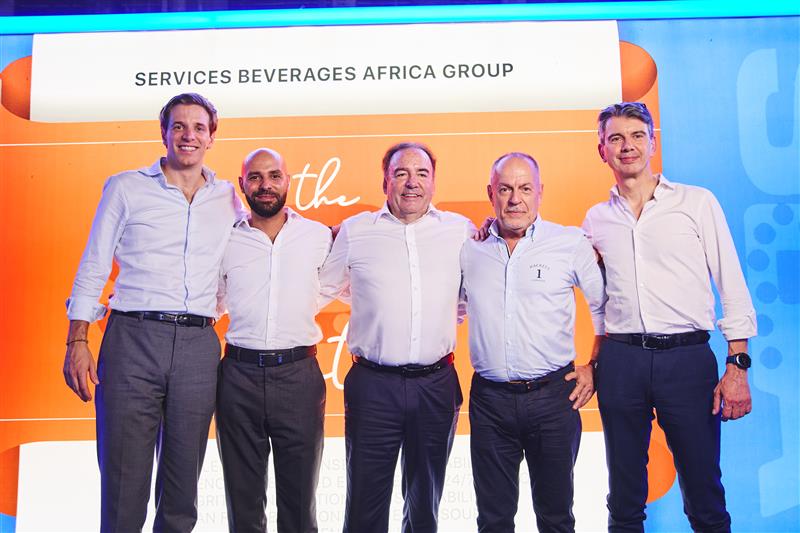
The Managing Director of the Services Beverages Africa (SBA) Group, George Sakalis, has said FMCGs in Sub-Saharan Africa can maintain operations only when technical support for equipment arrives quickly.
He said this at The SBA Solution Event, which held at the SBA Rooftop, Ikeja, Lagos, last Thursday.
Sakalis explained that in many African markets, infrastructure gaps, logistical challenges, and dispersed locations are common.
He noted that in such conditions, the speed of technical response is often more critical than the sophistication of the equipment itself for keeping FMCG operations running smoothly.
Other News
What the SBA Group MD is saying
Sakalis highlighted that in many Sub-Saharan African markets, a delayed technical response can halt distribution, disrupt national supply, and create cascading losses.
He emphasized that speed determines whether an issue becomes a minor interruption or a major operational failure.
“Because downtime compounds quickly. In many Sub-Saharan African markets, a delayed response can halt distribution, disrupt national supply, and create cascading losses.
“Speed determines whether an issue is a minor interruption or a major operational failure. Equipment sophistication matters far less if help arrives late,” Sakalis said.
Sakalis said companies producing everyday consumer goods such as food, beverages, and household items rely on regular equipment maintenance and fast technical fixes to keep factories running.
- He explained that rapid response to faults reduces downtime, extends machine lifespan, and stabilises production under challenging conditions.
He added that reliable engineering support has become essential industrial infrastructure, alongside power and logistics, enabling manufacturers to focus on production rather than equipment failures.
How FMCGs can keep operations stable
Sakalis said reliable and fast technical support reduces uncertainty for FMCG manufacturers, giving them the confidence to expand capacity, enter new markets, and commit long-term investments across Africa.
He noted that companies are more willing to scale when they are confident operations can be maintained without prolonged disruptions.
- He explained that SBA Group’s presence in more than 30 countries, supported by regional hubs, allows engineers and spare parts to be accessed quickly when issues arise.
- This local setup, he said, helps limit downtime and prevents production stoppages that could disrupt supply chains.
- Sakalis added that consistent service quality is achieved through OEM-trained engineers and standardized technical processes across markets.
By combining global engineering standards with local knowledge, he said FMCG manufacturers can keep equipment running reliably while adapting to local operating conditions.
More insights
Nigeria’s consumer goods sector showed strong resilience in 2025 despite inflation, currency volatility, and reduced consumer purchasing power.
Top FMCG companies on the Nigerian Exchange recorded significant gains, reflecting investor confidence and the importance of operational continuity.
- Unilever Nigeria rose 118%, from N32.95 to N72, while Nestlé Nigeria gained 124%, climbing from N875 to N1,958. Nigerian Breweries advanced 135% to N75.30, International Breweries surged 152% to N14, and Cadbury Nigeria rose 179% to N59.90.
- NASCON Allied Industries gained 243% to N107.50, Honeywell Flour Mills 248% to N21.90, Champion Breweries 267% to N14.00, Vitafoam Nigeria 300% to N92.00, with Guinness Nigeria emerging as the top performer.
These strong stock gains highlight the sector’s growth potential and reinforce why fast technical support is essential for FMCGs to maintain operations and meet consumer demand in challenging markets.
What you should know
FMCG growth in Africa highlights why fast technical support is essential. Nigeria led the continent in 2025 with 54.1% value growth, according to reports by NielsenIQ.
The top five markets, South Africa, Nigeria, Egypt, Morocco and Kenya, account for about $42 billion in FMCG value.
- Key categories driving sales include beer, soft drinks, spirits, powdered milk, noodles and biscuits, with contraceptives, flavoured milk, biscuits, spirits and energy drinks growing fastest.
- Consumers are spending more on essentials such as education, transport, utilities, groceries and childcare, while cutting back on non-essentials, the report noted.
Nigerian FMCG sales are projected to rise from N12.46 trillion in 2025 to N18.13 trillion by 2027, or up to N23.13 trillion in an aggressive scenario, showing why maintaining operational continuity is critical.