Follow Us on Google Discover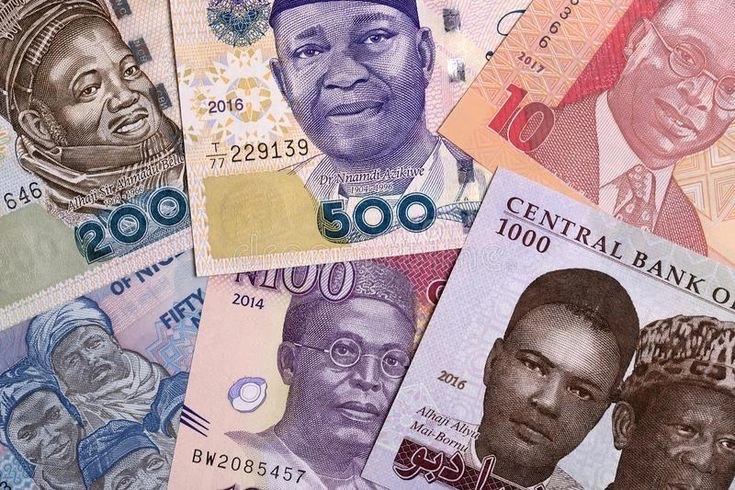
Nigeria’s currency outside the banking system closed 2025 at a record high of N5.4 trillion, underscoring a sharp rise in the amount of physical cash held by Nigerians.
This is according to money supply data released by the Central Bank of Nigeria (CBN), which tracks liquidity conditions across the economy.
The surge came alongside a broader expansion in money supply, with total money supply reported by Nairametrics at about N124.4 trillion, raising questions about the effectiveness of the country’s cashless policy ambitions.
Currency in circulation also climbed to an all-time high of N5.7 trillion by December 2025, indicating that only a small portion of cash remained within the banking system.
Also Read
The growing preference for cash comes despite years of policy efforts aimed at reducing cash usage and promoting digital payments.
What the data is saying
Nigeria’s currency outside banks, which represents physical cash held by individuals and businesses outside the formal banking system, rose to N5.4 trillion as of December 2025.
This is the highest level ever recorded, surpassing the previous peak of N5.125 trillion recorded in December 2024.
- Currency outside banks typically rises in December each year as central bank officials ensure sufficient cash is available to meet festive-season demand.
- Throughout 2025, currency outside banks averaged about N4.5 trillion, with a sharp climb toward the N5 trillion mark recorded in the final months of the year.
- Total currency in circulation also reached a record N5.7 trillion in December 2025, highlighting unprecedented levels of physical cash in the economy.
The sustained rise in currency in circulation appears to run counter to the CBN’s long-standing cashless policy objectives, although the current leadership has leaned more heavily on orthodox monetary tools to manage liquidity.
Backstory
The current surge in Nigeria’s currency in circulation marks a significant departure from the policy stance of the previous CBN leadership, which pursued a much tighter cash environment, particularly in the lead-up to the 2023 general elections.
- That approach culminated in one of the most dramatic contractions in cash availability in Nigeria’s recent history.
- In January 2023, currency outside banks fell to an all-time low of N792.1 billion following the launch of the controversial naira redesign policy under former CBN Governor Godwin Emefiele.
- The policy sharply restricted access to physical cash, triggering widespread economic disruption and public backlash.
- Many observers believed the move was partly aimed at limiting the use of cash to influence election outcomes, a claim the CBN denied at the time.
Under the current CBN Governor, Yemi Cardoso, the Bank has shifted focus toward orthodox monetary policy, prioritising currency and price stability while still maintaining policies that support financial inclusion through digital payment channels.
What you should know
The growing availability of cash outside the banking system has also fuelled the rapid expansion of Nigeria’s agency banking ecosystem, particularly Point-of-Sale (PoS) operations.
Access to cash has become a profitable business for thousands of PoS operators nationwide.
- Nairametrics recently reported that the cost of PoS terminals surged between 2023 and 2025, rising by between 30 per cent and 100 per cent, driven by inflation, foreign exchange pressures, and higher logistics costs.
- Entry-level PoS machines that previously sold for about N15,000 to N20,000 now cost roughly N21,500.
- More advanced Android and smart terminals have doubled in price, increasing from N30,000–N40,000 to between N62,000 and N85,000.
- The CBN has also tightened regulation of agent banking, mandating geo-tagging of PoS terminals and introducing a minimum penalty of N5 million, plus N300,000 per day for continued non-compliance.
These developments highlight how cash distribution has evolved into a regulated and increasingly capital-intensive business, even as Nigeria continues to balance financial inclusion goals with monetary stability concerns.