
- Africa’s energy transition cannot be a binary choice between fossil fuels and renewables; it must bepragmatic and sequenced, balancing energy access, industrialization, and emissions reduction.
- Natural gas remains critical as a bridging fuel to provide baseload power while renewables scale, ensuring stability and economic viability for industries, hospitals, and urban growth.
- Private-sector models, like Solad Power Group’s hybrid approach combining solar for decarbonization and gas for reliability, reflect Nigeria’s Energy Transition Plan and underscore the need for blended finance, local manufacturing, and scalable delivery to achieve a fair, integrated transition.
Africa’s energy transition is too often framed as a binary choice: fossil fuels or renewables.
This framing may suit campaign slogans, but it does not reflect realities on the ground.
From the oil fields of the Niger Delta to the solar microgrids powering rural communities, Africa’s energy future will be defined not by ideological purity, but by pragmatism.


I have had the unusual vantage point of working on both sides of this divide. Before chairing Solad Power Group (Solad), I helped build indigenous oil and gas businesses, including as a founder of both Afren plc, one of the first Africa-focused independent energy companies listed on the London Stock Exchange, and later First Hydrocarbon Nigeria Ltd., which in 2009 led the acquisition of upstream oil assets from Shell’s Nigerian joint venture. Alongside Seplat’s contemporaneous acquisitions, this marked the first major transfer of onshore oil assets to Nigerian independents.
That experience offered a clear lesson: a just energy transition in Africa cannot ignore industrialisation. Nor can it be achieved by importing models designed for advanced economies with mature grids, deep capital markets, and surplus capacity. Africa’s challenge is different. It must expand energy access, support industrial growth, and reduce emissions simultaneously.
The pressure on developing countries to leapfrog directly to 100 per cent renewables is understandable, but unrealistic in the near term. Power systems require stability.
Until grid infrastructure and energy storage are significantly scaled, natural gas will remain indispensable as a bridging fuel. It provides the reliable baseload power that allows intermittent renewables to function at scale.
This is not an argument for delaying decarbonisation. It is an argument for sequencing it correctly. Sustainable energy systems must also be economically viable. Clean power that cannot support factories, hospitals, data centres, or urbanisation risks entrenching energy poverty rather than ending it.
This hybrid logic increasingly informs private-sector investment. At Solad, our work began with decentralised solutions supporting Nigeria’s Rural Electrification Agency across Lagos, Ogun, and Kano States. Today, we are increasingly engaged with commercial and industrial clients, where emissions reduction must go hand in hand with reliability and cost efficiency.
One example is our work with partners in the OML 34 NNPC/ND Western Joint Venture, where solar installations are being deployed to decarbonise operations while maintaining operational resilience. The objective is not cosmetic “greening”, but measurable efficiency gains.
Gas continues to underpin baseload power, while renewables reduce emissions and operating costs. This approach closely mirrors Nigeria’s Energy Transition Plan, which recognises that gas and renewables are complements, not competitors, during the transition.
Policy momentum is beginning to catch up with this reality. Across West Africa, initiatives such as the World Bank’s $750 million Distributed Access through Renewable Energy Scale-Up (DARES) programme and the Mission 300 initiative are mobilising capital for decentralised power. Instruments such as the Universal Energy Facility and Distributed Renewable Energy funds are helping to de-risk early-stage projects.
Yet policy ambition will matter little without execution. The binding constraint is not technology, but capital; specifically patient, blended finance capable of absorbing early (including currency devaluation) risk. Without it, deployment will remain fragmented and uneven. Governments, multilaterals, and private investors must align around bankable structures, local manufacturing, and scalable delivery models. Capital is available. It just needs help to be optimally deployed.
Africa’s energy transition will not be defined by what it abandons, but by what it builds. From hydrocarbons to solar, from centralised grids to decentralised systems, the task is integration rather than substitution. If done well, Africa can pursue a transition that is not only cleaner, but fairer, and capable of powering long-term growth.
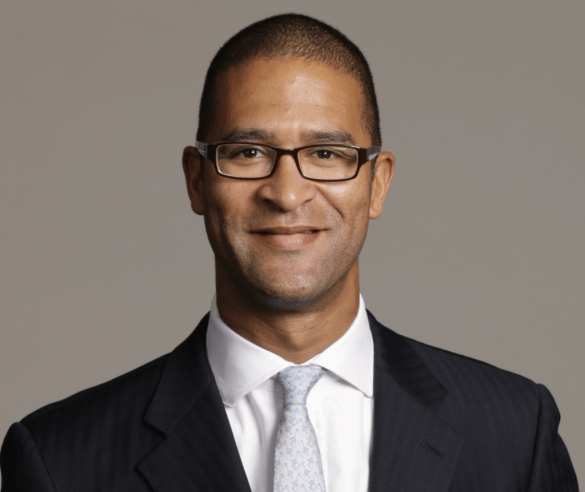
- Constantine ‘Labi Ogunbiyi is Chairman of Solad Power Group