Follow Us on Google Discover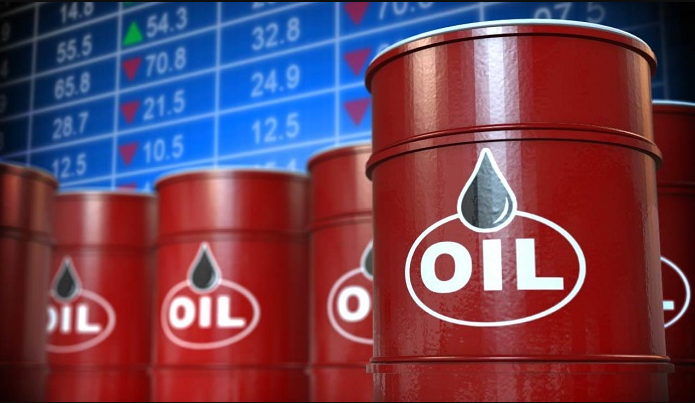
Global oil prices fell below levels critical to Nigeria’s fiscal planning on Wednesday, as fears of an oversupplied market combined with renewed geopolitical tensions to weigh on investor sentiment.
The slide comes amid heightened volatility in crude markets, driven by concerns that global supply could outpace demand in the near to medium term, Bloomberg reports.
Brent crude dropped toward $64 per barrel, dipping below Nigeria’s 2026 budget benchmark of $64.85, while US West Texas Intermediate (WTI) traded below $60 per barrel.
The decline was fuelled by a mix of geopolitical uncertainty and expectations of continued strong output from major oil producers.
What the IEA is saying
The market’s bearish tone is reinforced by signals from the International Energy Agency (IEA), which is set to release its monthly oil market outlook later on Wednesday.
Concerns about oversupply and sustained downward pressure on prices are mounting.
IEA Executive Director Fatih Birol said at a panel during the World Economic Forum in Davos that for “at least three to four years, we may well see downward pressure on oil and gas prices because of the huge amount of supply coming from the US and some other countries.”
Traders are closely watching Venezuelan crude exports, which could be redirected following recent US interventions, potentially adding excess barrels to an already saturated market.
Crude’s prompt spreads remain in backwardation, suggesting near-term tightness despite broader bearish sentiment.
The combination of oversupply risks and geopolitical tensions has created a fragile outlook for oil prices in 2026.
Backstory
Nigeria’s reliance on oil makes it particularly sensitive to price swings. Crude accounts for the bulk of government revenue and foreign exchange earnings, meaning prolonged price weakness can strain public finances.
- The Federal Executive Council (FEC) has set a 2026 oil price benchmark of $64.85 per barrel and an ambitious production target of 2.6 million barrels per day (mbpd).
- For budgeting purposes, a more conservative production level of 1.8 mbpd is assumed, reflecting persistent challenges such as oil theft, pipeline vandalism, and underinvestment.
- Historically, higher oil prices support stronger GDP growth and fiscal performance, while lower prices increase pressure on reserves, the exchange rate, and budgetary planning.
More insights
Market jitters intensified following US President Donald Trump’s remarks and actions concerning Greenland, which unsettled financial markets and raised questions about the US–EU alliance.
The dispute has dampened risk appetite across asset classes, including oil.
- Ahead of his expected Davos address, the US administration threatened 10% tariffs on eight European countries over the Greenland dispute.
Despite short-term supply tightness in parts of the physical oil market, the overall sentiment remains bearish.
What you should know
If global crude prices remain below Nigeria’s benchmark, policymakers could face difficult fiscal trade-offs in 2026.
Budget deficits may widen, borrowing could increase, and capital expenditure may be curtailed.
- Nigeria’s economy is heavily dependent on oil revenue, and any sustained price drop threatens foreign exchange inflows and public finances.
- Market watchers will closely monitor supply-demand dynamics and geopolitical developments for signals on future price movements.
Earlier, Nairametrics reported that Nigeria’s fiscal deficit jumped to N13.51 trillion in 2024, exceeding targets and breaching the FRA 2007 deficit-to-GDP limit.