Follow Us on Google Discover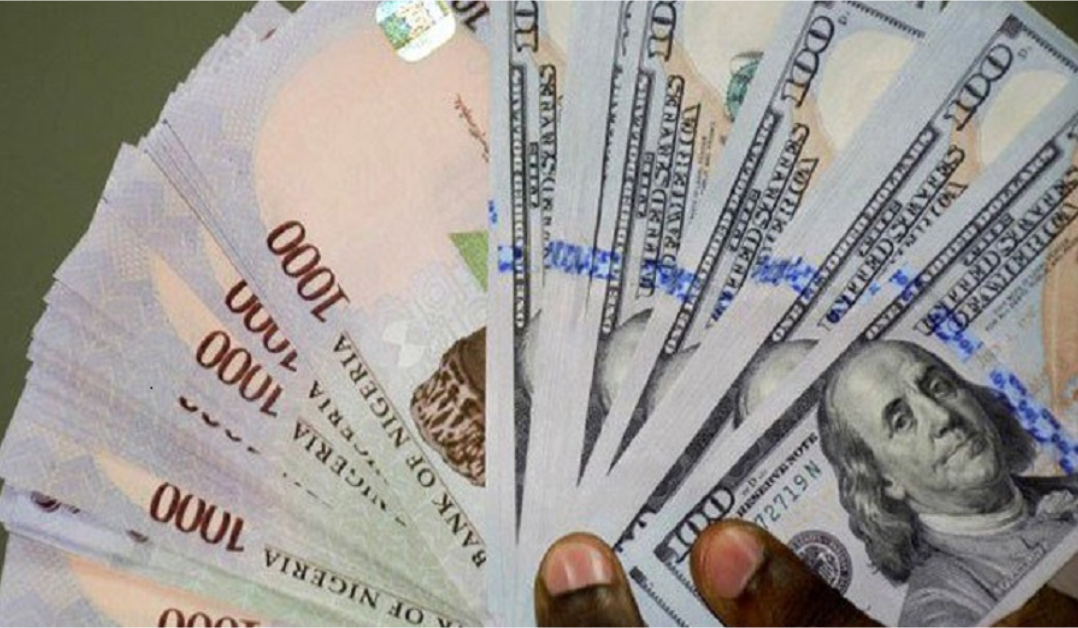
The naira weakened marginally at the official foreign exchange market on Monday, closing at N1,420.5 to the dollar as global dollar sentiment softened amid renewed concerns over U.S. economic and geopolitical risks.
Data published on the Central Bank of Nigeria (CBN) website showed the local currency depreciated slightly from its previous close, even as conditions improved in the parallel market.
The movement reflects continued divergence between Nigeria’s official and informal FX markets, against the backdrop of global volatility and lingering domestic liquidity challenges.
What the data is saying
The official exchange rate edged lower despite signs of modest relief in the parallel market, highlighting persistent structural pressures in Nigeria’s foreign exchange system.
Also Read
- CBN data showed the naira closed at N1,420.5/$ on Monday, compared with N1,417.95/$ at the end of trading on Friday.
- Parallel market data tracked by Nairametrics indicated the naira strengthened to N1,483/$, improving from N1,490/$ recorded late last week.
- Despite the improvement at the informal market, the gap between official and parallel rates widened to N73, the highest level since February 2025.
The widening spread demonstrates ongoing FX supply constraints and continued distortions between Nigeria’s formal and informal currency markets.
More insights
Nigeria’s exchange rate has largely stabilised in recent months, although it remains vulnerable to a combination of global currency movements and domestic policy adjustments aimed at improving market transparency and liquidity.
Nairametrics data show that the naira ended 2025 on a firmer note, closing at N1,429/$1 on December 31, representing a 7.4 per cent appreciation from the N1,535/$1 recorded on the final trading day of 2024.
- The naira has continued to face recurring pressure at the official market, even as intermittent gains have emerged in the parallel segment.
- Foreign exchange liquidity conditions remain uneven, contributing to periodic divergence between official and street exchange rates.
- Market confidence is still closely tied to sustained FX inflows, policy clarity, and the consistent implementation of ongoing reforms.
These factors have kept the naira sensitive to both external shocks and internal structural constraints, despite recent signs of relative stability.
What you should know
Global developments and Nigeria’s external buffers continue to play a critical role in shaping near-term currency expectations.
- The U.S. dollar retreated for a second consecutive session in Asian trading, with the dollar index falling about 0.3 per cent to 98.841, its lowest level since January 12, amid renewed policy and geopolitical uncertainty in the United States, according to Reuters.
- Analysts linked the dollar’s weakness to investor unease following fresh tariff threats and diplomatic tensions involving the U.S. and European allies.
- Nigeria’s external reserves stood at $45.9 billion last week, according to the CBN, offering some support for currency management despite global volatility.