Follow Us on Google Discover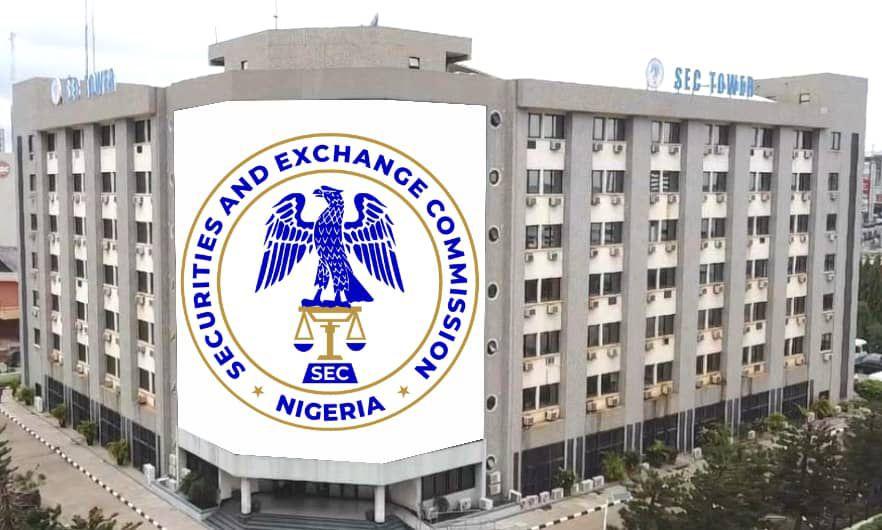
The Securities and Exchange Commission (SEC) has clarified that fund and portfolio managers will be required to hold 0.1% of Assets Under Management (AUM) as regulatory capital and not 10% as initially stated in its January 16, 2026, circular.
This is according to reliable sources within the SEC who confirmed the correction to Nairametrics, following strong feedback from capital market operators.
SEC DG, Dr. Emomotimi Agama, is also expected to make this clarification official next week.
The clarification significantly lowers the capital burden for large asset managers and averts what industry leaders feared could destabilise the investment management landscape.
What the data is saying
As part of its sweeping regulatory reforms, the SEC raised capital thresholds across virtually all capital market categories.
- Fund and portfolio managers under the Tier 1 category are now required to hold N5 billion in capital, with an additional 0.1% of AUM for firms managing over N100 billion.
- The Commission initially stated the AUM-linked rule as 10%, which would have required a firm like Stanbic IBTC Asset Management, with over N4 trillion in AUM, to raise N400 billion in regulatory capital.
- This would have been way more than the regulatory capital of Nigeria’s regional banks who carry more risk-weighted assets
- With the correction to 0.1%, the new requirement drops to N11 billion.
Other operators are also impacted: brokers (N600 million), dealers (N1 billion), broker-dealers (N2 billion), issuing houses (N2 billion–N7 billion depending on scope), and digital asset platforms (N2 billion). The implementation deadline is June 30, 2027.
Pushback from operators and calls for review
While the SEC’s goals of strengthening investor protection and improving market resilience were broadly welcomed, operators described the capital hikes—especially for fund managers—as aggressive.
- A detailed policy memorandum titled “Review of Tier 1 Fund and Portfolio Management Capital Requirements,” seen by Nairametrics, argues that the combination of a N5 billion minimum and the (now corrected) 10% AUM rule was out of step with industry economics and global benchmarks.
- It notes that fund managers are fiduciary agents, not risk-takers like banks, and therefore should not be subjected to capital rules designed for principal-based institutions.
- The report also uses financial modelling to show how the capital requirements could render the asset management business economically unattractive.
- A Tier 1 manager with N50 billion in AUM and a 1.5% management fee would earn about N750 million in revenue, resulting in a profit of roughly N350 million. That equates to just a 7% return on N5 billion capital—well below the risk-free rate in Nigeria.
For even larger managers, the result is the same: low returns on capital, even with efficient operations. The report warns that this may discourage scale, encourage asset fragmentation, and ultimately weaken competition in the industry.
Why this matters
The SEC’s correction of the AUM capital rule from 10% to 0.1% is a critical course adjustment. It ensures the Commission’s objectives—market stability and investor protection—remain intact without jeopardising the viability of top-tier fund managers.
- The initial version of the rule risked pushing firms to restructure, downsize, or artificially cap their growth to avoid steep regulatory costs.
- The correction also brings Nigeria closer to international practice. Global markets such as the UK, US, EU, and Australia typically apply capital requirements linked to operational risk or fixed overheads—not to the full value of client assets under management.
- Analysts say the revised rule is more proportionate and reduces the risk of capital misallocation in the sector.
However, concerns remain over the flat N5 billion floor for Tier 1 managers, which some argue could still favour large, bank-affiliated firms and reduce diversity in the industry.
Calls for a more risk-sensitive, graduated model are expected to persist as implementation approaches.
What you should know
Nairametrics understands that SEC Director-General, Dr. Emomotimi Agama, is expected to publicly clarify and confirm these changes during a stakeholder briefing scheduled for next week.
This follows days of consultations between the Commission and industry operators, and growing concerns about the potential impact of the original capital framework.
The SEC’s capital revision, announced in mid-January, is part of a broader regulatory reform that also includes the formal integration of fintechs, digital asset platforms, and new market infrastructure players into the capital market structure.
As implementation progresses toward the 2027 deadline, the focus will shift to how firms adapt and whether further regulatory fine-tuning will follow.
Editor’s note: This article has been updated to correct the assets under management (AUM) of Stanbic IBTC Asset Management, which is approximately N4 trillion and not N11 trillion as earlier stated. The initial figure inadvertently combined the AUM of Stanbic IBTC Asset Management with that of Stanbic IBTC Pensions.