
 Follow Us on Google Discover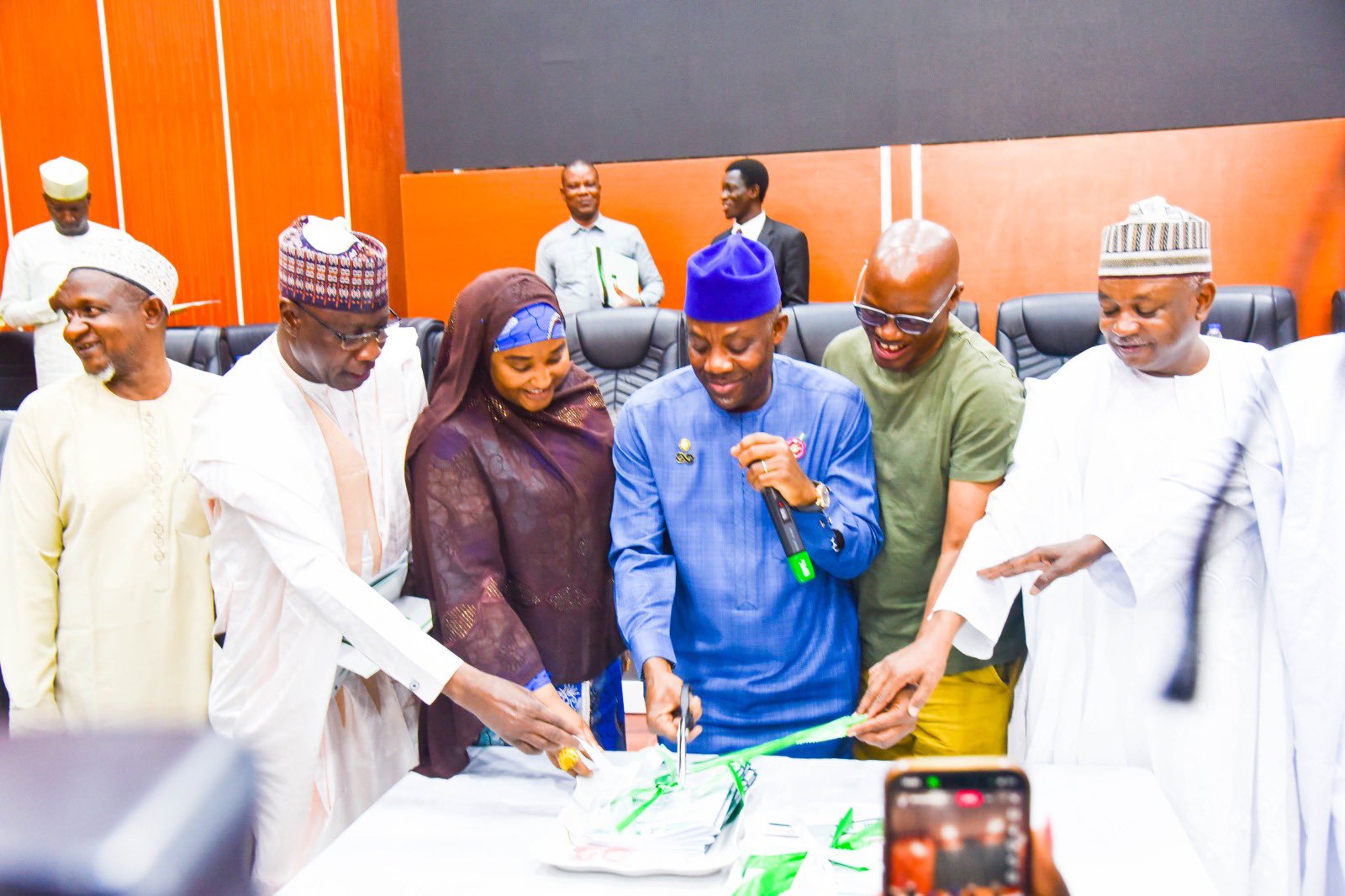
The Federal Government (FG) and the Academic Staff Union of Universities (ASUU) have signed a new 2025 FGN-ASUU Agreement, concluding renegotiations of the long-standing 2009 agreement.
One of the agreements reached concerned pensions and the funding of the Nigerian university system.
This will be a two-part report.
This report will focus on the pension agreement reached.
Also Read
It appears the FGN has signed an agreement with Nigerian professors enabling them to earn a pension equivalent to their final salary at retirement. I do not believe this is a good idea.
Some backgrounds
Before the passage of the Pension Reform Act in 2004, Nigeria operated a Pay As You Go (PAYG) Defined Benefit Scheme (DBS).
Under this system, a known set of variables, usually final salary and years of service, determined the final pension of a federal worker, and the FGN then made a budgetary provision to settle pension obligations as they arose.
This obligation was tagged PAYG because it was not funded by a dedicated sinking fund.
The long-term effect of the past DBS was that, as Nigeria faced funding constraints due to a decline in oil revenues, the fixed pension obligations continued to balloon unpaid.
At one point, Nigeria’s unfunded pension obligations were estimated at 25% of GDP.
These unfunded pension obligations were the impetus for transitioning to a Defined Contributory pension scheme (DCS).
Under the DCS, the government was obligated to make a monthly contribution to the worker’s Retirement Savings Account (RSA). The employee also contributed, and the final pension amount was based on the credit balance in the RSA.
Creating a dedicated account for funding pension obligations (RSA) allowed the FGN to avoid a PAYG trap. Once it contributed its portion, the funds were professionally managed, and the employee received a pension funded from that RSA.
The new agreement
If professors receive a defined benefit upon retirement—in this case, 100% of their annual salary at retirement—then they are not receiving a pension funded by the principal and investment returns in their Retirement Savings Account, but rather a pension also financed by a “differential” paid by the FGN.
Thus, irrespective of individual RSA balances, the FGN is committing to pay ASUU members a pension equivalent to their annual salary upon retirement, rather than a pension funded solely by their RSA balances.
The FGN will pay its 10% share into the RSAs of ASUU members, but remain liable for any differential where the RSA cannot cover 100% of the final salary.
- For instance, if a professor has an RSA balance of N35 million at retirement, but the obligation to pay 100% of final salary is calculated at a present value of N50 million, the FGN will fund the extra N15 million differential.
- This funding differential will continue to grow because RSA contributions (18% of Basic, Housing, and Transport) are not linked to the fixed promise of a pension equivalent to 100% of annual salary, but to investment returns.
- In effect, ASUU’s Defined Contributory Scheme (DCS) becomes a Defined Benefit Scheme (DBS) by default, meaning the final benefit is based on a pre-agreed condition (final salary) rather than the balance in the funded RSA.
In closing, recall that the impetus for converting Nigeria from its past PAYG Defined Benefit to a Defined Contributory scheme with funded RSA was the accumulation of pension benefits in the DBS. It’s my most humble submission that this promise to ASUU has created a new funding obligation for the FGN that will begin to balloon.
Should this agreement stand, then Nigeria should create a pension sinking fund to avoid an unfunded pension trap.
The pushback is to say the FGN can afford pension differential to Professors, but the message is that its not ok to strike an agreement on a pension equal to final salary in a Defined Contributory Scheme.
The problem with Nigeria has always been people using their privilege positions to garner benefits for themselves at the detriment of others.
When Nigeria began the CPS, it was as you rightly mentioned, to overstep the rising problems of the DBS. In the Federal Civil Service, the Hos and Federal Permanent Secretaries were guaranteed “salary for life” under the PRA(2014) (See sections 6 & 7 of the PRA(2014)). In 2019, they were exempted totally from CPS and placed on “salary for life” under the IPPIS. These are people who are at the head of the Federal Civil Service, who are responsible for formulating and implementing Federal Government policies. Thus, it is safe to say that they were responsible for formulating the CPS, so why were they exempted?
Back to the ASUU issue. ASUU had always been demanding the establishment of a university-based PFA. This would have been the way out for the FG and even state governments as the PFA would have been the one to carry the burden of the 100% salary for life of professors. The mechanics for doing that would not have been the problem of the FG. But then, these same federal officers who were always at the negotiating table always deadlocked the negotiations. Their reports and advisory roles were what the negotiating Ministers rely on to submit to the FEC. What they rejected for ASUU, they took for themselves through the backdoor.
Another sad reality of Nigeria is our duplicity in things we do. ASUU wanted a university-based PFA that would administer their funds. This request was based on what the FG did with ETF (later TETFUND) which was another of ASUU’s demands during the Babangida administration. Now, no ASUU, ASUP, COEASUU member is on board. Rejecting ASUU’s request for a university-based PFA but duplicitously passing a Judicial Workers Pension Act is evil.
In the JWPA, the CJN and other judicial workers who have served for at least 15 years are entitled to life pension for life at the rate of the last annual salary plus consolidated allowances and four domestic staff salaries! Haba!
This piece should not be given any attention. It is pleasing the writer understood fully that the policy didn’t apply to every University worker but to only retiring Professors, the most distinctive rank and position in the University system. This policy has for ages applied to retiring military generals and the writer never saw anything wrong with it.
Bad belle everywhere
Who asked the writer for his opinion or is he the one to pay?
Let him rewrite the Negotiated Agreement that has been signed.